Snap-On Dentures: Complete Guide to Cost, Pros & Cons
What Are Snap-On Dentures?
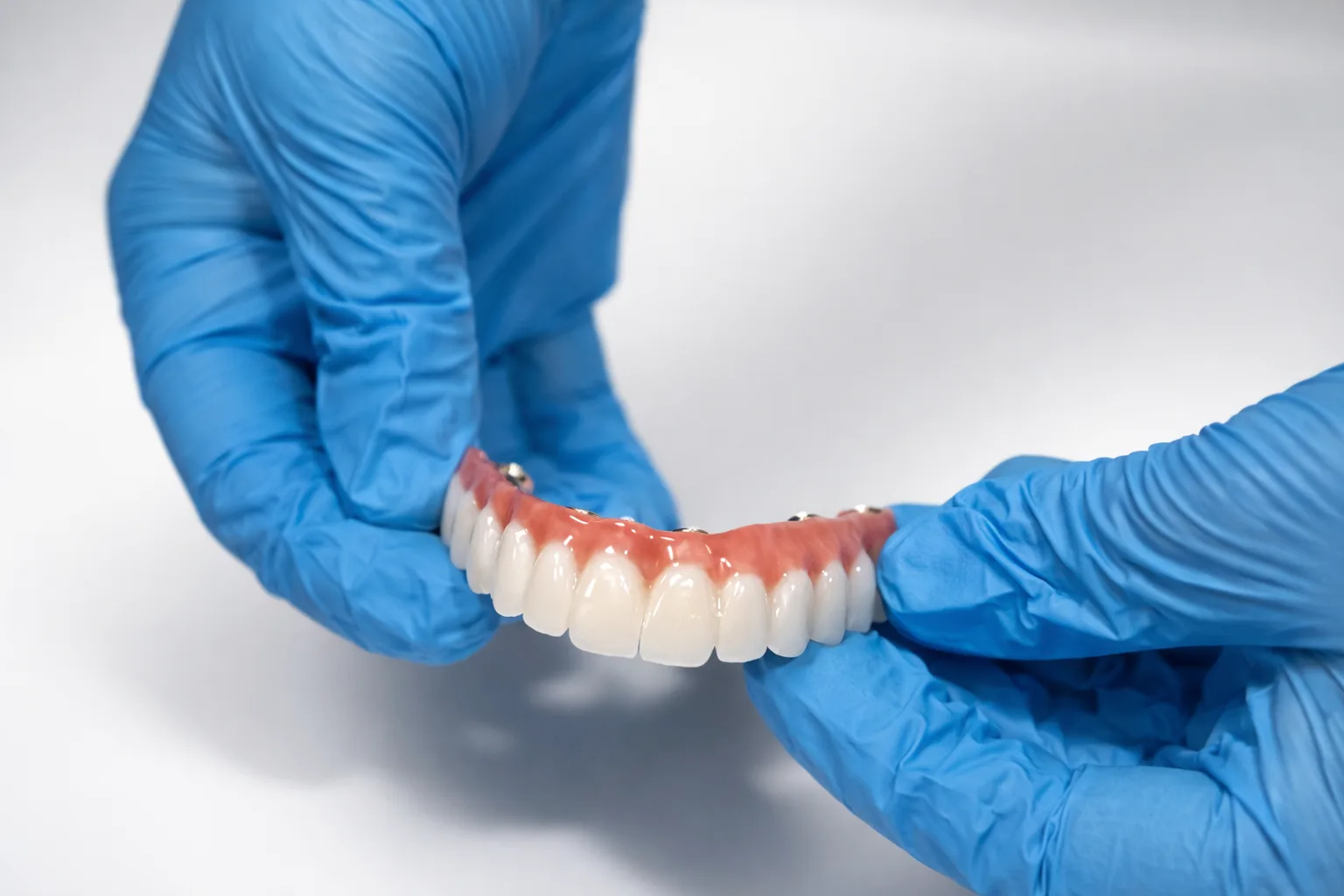
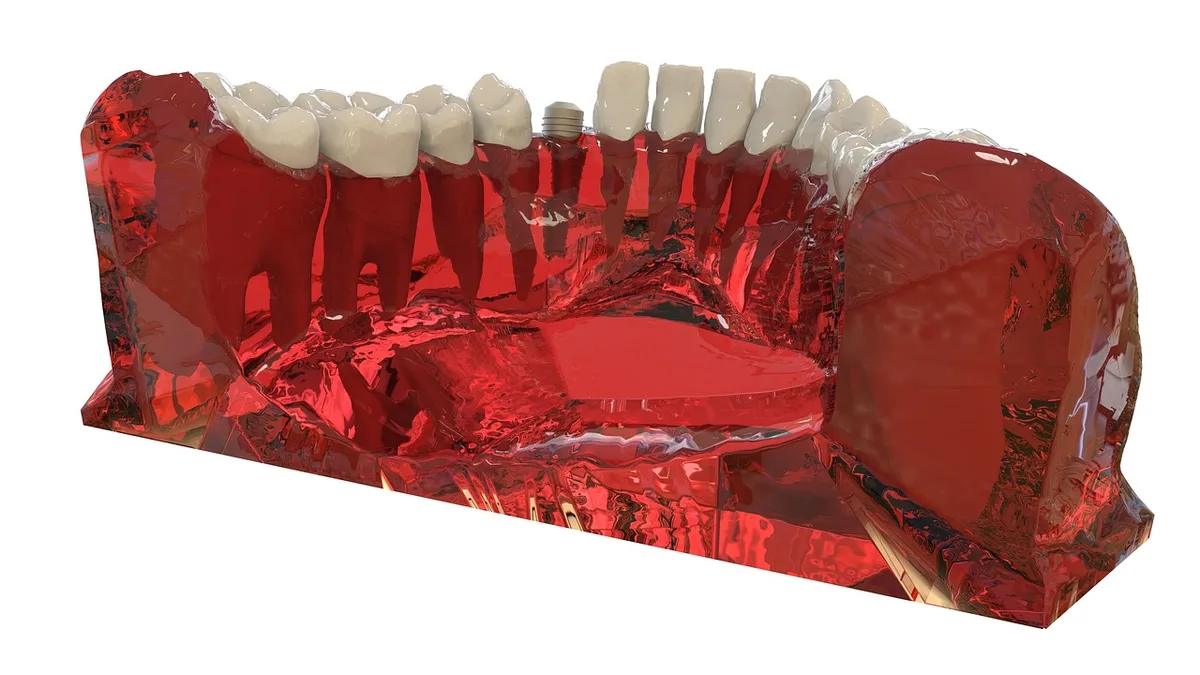
Snap-on dentures (also called implant-supported overdentures, clip-on dentures, or snap-in dentures) are removable dentures that attach to dental implants placed in your jawbone. Instead of relying on suction or adhesive, they snap securely onto small attachments connected to 2–4 implants per arch.
The result: dentures that don't slip, click, or fall out — but can still be removed for cleaning.
For many patients with traditional dentures who are tired of slipping, sore spots, and food restrictions, snap-on dentures are life-changing. They're also dramatically more affordable than full-arch fixed implants.
How Snap-On Dentures Work
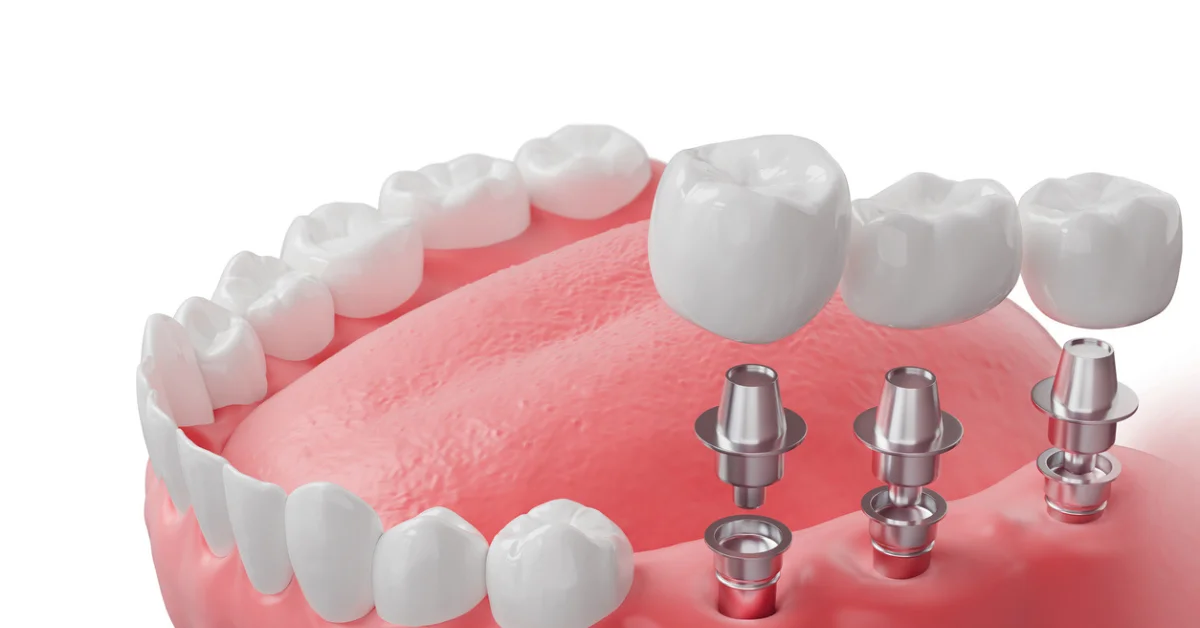
The system has three parts:
- Dental implants — usually 2 (lower jaw minimum) or 4 (upper jaw, or lower for more stability) titanium posts placed in the jawbone
- Attachments (abutments) — small ball-shaped or locator-style fixtures that screw onto the implants
- The denture — fitted with corresponding sockets that "snap" onto the attachments
You take the denture in and out daily for cleaning. When in place, it's locked onto the implants and feels stable like natural teeth.
Snap-On vs. Traditional Dentures
| Feature | Traditional Dentures | Snap-On Dentures |
|---|---|---|
| Stability | Slip, click, can fall out | Locked in place |
| Bite force | ~25% of natural teeth | ~75% of natural teeth |
| Foods you can eat | Soft, cut into small pieces | Most foods including apples, steak |
| Adhesive needed | Daily, multiple times | None |
| Bone loss | Continues over time | Largely prevented |
| Speech | Often affected | Natural |
| Cost | $1,000–$3,000 per arch | $7,000–$15,000 per arch |
| Lifespan | 5–7 years | Implants last 20+; denture re-relines every 3–5 years |
Snap-On vs. Fixed Implant Bridges (All-on-4)
| Feature | Snap-On Dentures | Fixed Implant Bridge (All-on-4) |
|---|---|---|
| Removable | Yes — for cleaning | No — permanent |
| Implants needed | 2–4 per arch | 4–6 per arch |
| Bite force | ~75% of natural | ~95% of natural |
| Feels like natural teeth | Close, but you know it's there | Yes, indistinguishable |
| Cleaning | Removed and brushed | Brushed in place + water flosser |
| Cost per arch | $7,000–$15,000 | $17,999+ |
| Best for | Budget-conscious, comfortable removing | Want fixed teeth, no daily removal |
Both are excellent options. The choice depends on budget, lifestyle, and personal preference.
Cost of Snap-On Dentures
Pricing varies by case complexity, materials, and how many implants are placed:
| Configuration | Typical Cost Per Arch |
|---|---|
| 2 implants + lower denture | $7,000–$10,000 |
| 4 implants + lower denture | $10,000–$14,000 |
| 4 implants + upper denture | $11,000–$15,000 |
| Both arches | $14,000–$28,000 |
Most patients use a combination of:
- Insurance — partial coverage for the denture portion is common
- HSA/FSA — fully eligible
- Financing — payment plans starting at $299/month for full-mouth restoration
Pros of Snap-On Dentures
1. Dramatically improved stability
No more slipping during meals or conversations. Most patients describe it as "like having my real teeth back."
2. Better chewing and nutrition
With 75% of natural bite force restored, you can eat foods you've been avoiding for years — apples, steak, corn on the cob, nuts.
3. Prevents bone loss
The implants stimulate the jawbone, slowing or stopping the bone resorption that traditional dentures accelerate.
4. No adhesive needed
Save the cost and hassle of daily denture adhesive.
5. Easier to clean
You can take them out for thorough cleaning at night, then snap them back in.
6. Less invasive than fixed implants
Requires only 2–4 implants per arch instead of 6+, and avoids the more complex procedures.
7. Significantly more affordable than fixed implants
Roughly half the cost of All-on-4, with most of the functional benefit.
8. Improved facial appearance
By preserving bone, snap-on dentures help maintain your natural facial structure over time.
Cons of Snap-On Dentures
1. Still removable
Some patients want teeth that never come out. If that matters to you, fixed implants are the answer.
2. Attachments wear out
The locator caps need to be replaced every 1–2 years. The replacement is quick and inexpensive ($30–$80 per cap).
3. Denture needs periodic re-lining
The denture itself may need re-lining every 3–5 years as your gums change.
4. Initial adjustment period
Most patients adapt within 2–4 weeks but the first few weeks involve learning new mechanics.
5. Requires adequate bone
Severely resorbed jaws may need bone grafting or zygomatic implants first.
6. Some food can still get under the denture
Less than with traditional dentures, but possible with some foods.
Who Is a Good Candidate?
You may be a good candidate if you:
- Currently wear traditional dentures and are unhappy with them
- Have lost most or all teeth in one or both arches
- Have adequate jawbone (or are willing to undergo grafting)
- Are in generally good health
- Want significant improvement without the cost of fixed implants
- Are comfortable removing the denture for cleaning
- Don't smoke heavily (or are willing to quit)
You may need preparation or alternatives if you:
- Have severe bone loss (may need bone grafting or zygomatic implants)
- Have uncontrolled diabetes or active gum disease (treat first)
- Are heavy smokers (quit before surgery for best outcomes)
- Are unwilling or unable to remove the denture daily for cleaning
What the Process Looks Like
- Consultation and 3D imaging — assess bone, plan implant positions
- Extractions (if needed) — remaining teeth removed; immediate temporary denture provided
- Implant placement — 2–4 implants placed in the jaw (1–2 hour visit)
- Healing period — 3–6 months for osseointegration
- Attachment placement — abutments connected to implants
- Denture conversion or fabrication — your existing denture is modified or a new one made to snap onto the attachments
- Adjustments — fine-tuning over the next few visits
For many patients, an existing well-fitting denture can be converted rather than replaced — saving cost.
Daily Care
- Remove nightly — gives gums time to rest, prevents bacterial buildup
- Brush the denture with a denture brush and mild soap (not toothpaste — too abrasive)
- Soak overnight in denture cleaner or water
- Brush around the implants and attachments in your mouth
- Use a soft-bristle brush on the gums where the denture sits
- Professional cleanings every 3–6 months
- Replace attachment caps as recommended (1–2 years)
How Long Do Snap-On Dentures Last?
- Implants: 20+ years (often a lifetime) with proper care
- Attachment caps: 1–2 years before replacement
- The denture itself: 5–10 years before replacement
- Denture re-line: every 3–5 years
The implants are the long-term investment. Everything attached to them is serviceable.
Common Concerns Addressed
"Will they look natural?"
Modern dentures are highly natural-looking. Many patients say they look better than their original teeth.
"Will eating feel different?"
Better — significantly. Most foods are accessible again.
"Can I sleep with them in?"
We recommend removing them at night to let gums recover and prevent bacterial growth.
"What if an implant fails?"
Modern success rates are 95%+. If one of multiple implants fails, the denture can often still function, and the failed implant can be replaced.
Frequently Asked Questions
How many implants do I need for snap-on dentures?
Typically 2 implants for a lower denture (minimum) or 4 implants for upper or for maximum lower stability. Some cases use 6 implants for the strongest hold.
Are snap-on dentures painful?
The implant placement involves typical post-surgical discomfort similar to a tooth extraction. The dentures themselves are not painful — they should fit comfortably.
Can I convert my current dentures to snap-on?
Often yes — if your current denture fits well, it can be retrofitted with the attachment housings. This saves cost.
Do snap-on dentures stay in when I sneeze or eat?
Yes. They're locked onto the implants. Removal requires intentional pressure.
How is this different from "snap on smile" or cosmetic snap-ons?
"Snap On Smile" is a thin cosmetic shell that snaps over your existing teeth — it doesn't replace missing teeth and doesn't use implants. Snap-on dentures are a true tooth replacement.
What's the difference between snap-on dentures and overdentures?
They're the same thing — different terminology. Implant-supported overdenture is the clinical term.
Curious if snap-on dentures are right for you? Schedule a consultation — we'll evaluate your bone, your goals, and your budget, and discuss every realistic option.
Related reading
Ready to Transform Your Smile?
Schedule your free consultation today and discover how dental implants can change your life.