

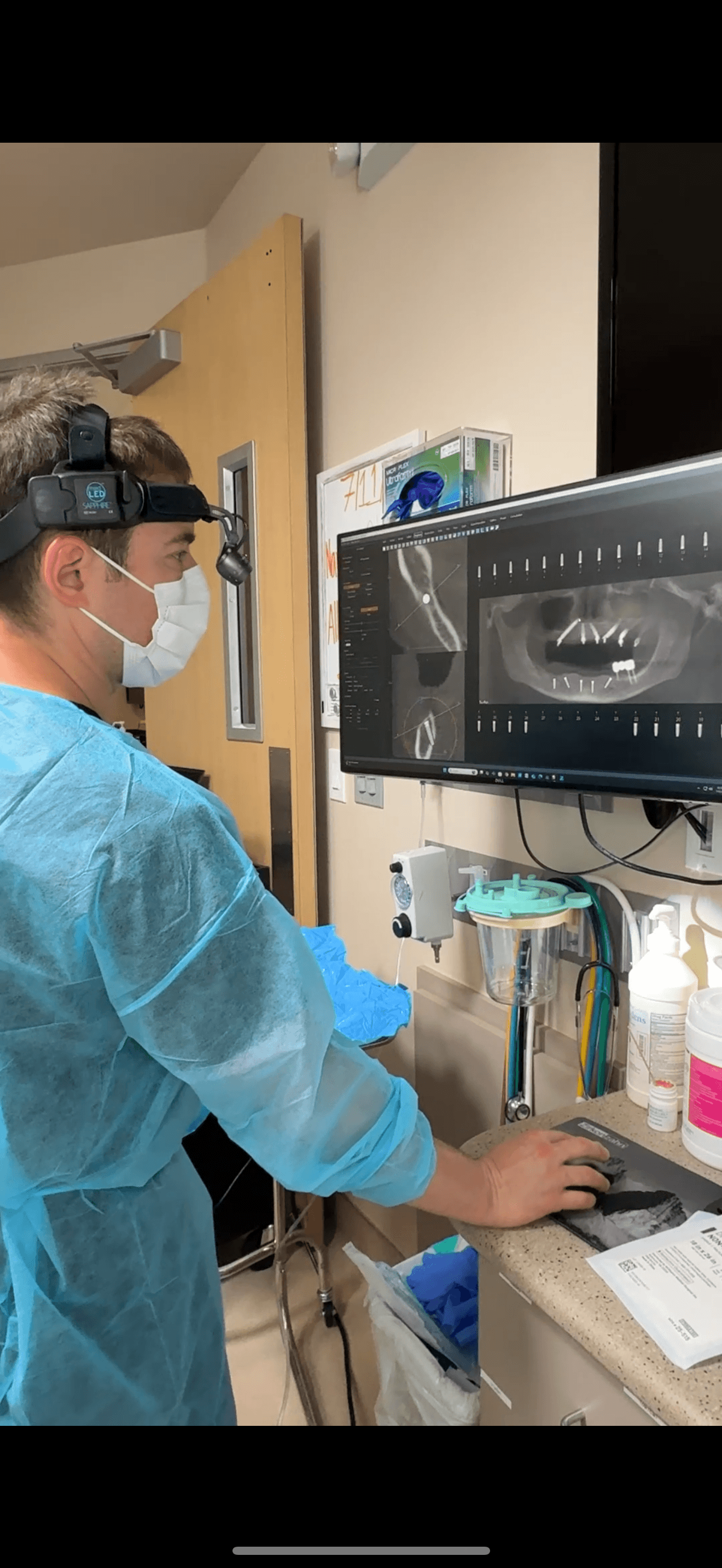
How Dental Implant Planning Is Done Using 3D Imaging
Modern implant planning relies on three-dimensional imaging to reduce risk and improve predictability. Guesswork is obsolete.
CBCT Imaging
Cone Beam Computed Tomography (CBCT) provides:
- Bone volume measurement
- Bone density estimation
- Visualization of nerves and sinuses
Two-dimensional imaging is insufficient for implant planning.
Virtual Implant Placement
Digital planning allows implants to be:
- Positioned virtually
- Evaluated for angulation and depth
- Assessed for prosthetic compatibility
Planning precedes surgery, not the other way around.
Surgical Guides
Guides translate digital plans into physical accuracy.
They:
- Reduce placement error
- Improve consistency
- Decrease surgical trauma
Guides do not replace judgment. They enhance it.
Risk Reduction
3D planning reduces:
- Nerve injury
- Sinus complications
- Poor implant positioning
It does not eliminate risk, but it narrows variability.
Planning Is the Surgery
Execution reflects planning quality. Poor plans produce predictable failures.
Benefits of Digital Planning
- Shorter surgery time
- More predictable outcomes
- Reduced complications
- Better patient experience
Advanced Technology in Sacramento
At Fusion Dental Implants, every case begins with comprehensive 3D imaging and digital planning. We use the latest technology to ensure precise, predictable outcomes.
About Fusion Dental Implants: Technology-driven care in Roseville and El Dorado Hills, serving Sacramento and Northern California.