How to Fix an Overbite: Treatment Options & Cost Guide
What Is an Overbite — Really?
An overbite is when your upper front teeth overlap your lower front teeth more than they should. A normal overbite is 1–3 mm of overlap. Beyond that, it's classified as:
- Mild overbite: 4–6 mm overlap
- Moderate overbite: 6–9 mm overlap
- Severe overbite (deep bite): 9+ mm or upper teeth touching the lower gum
Overbite is different from overjet (horizontal "buck teeth" projection), though they can occur together.
Why Fix an Overbite?
Beyond appearance, an untreated overbite can cause:
- Excessive wear on lower teeth
- TMJ pain and chronic jaw discomfort
- Headaches from muscle strain
- Speech difficulties
- Difficulty chewing
- Damage to gum tissue behind upper front teeth
- Increased risk of tooth fracture
Treatment is both cosmetic and functional.
What Causes an Overbite?
Overbites stem from one of two sources:
Dental overbite
The teeth are misaligned but the jawbones are normal. Caused by:
- Crowding pushing teeth out of position
- Missing back teeth letting front teeth over-erupt
- Childhood habits (thumb sucking, prolonged pacifier use)
- Tongue thrust patterns
Treatment: Orthodontic — braces or clear aligners.
Skeletal overbite
The upper jaw is too long, the lower jaw is too short, or both. The teeth follow where the bones place them.
Treatment: Often requires jaw surgery (orthognathic surgery) combined with orthodontics.
Determining which type you have requires a clinical exam plus 3D imaging.
Treatment Options
1. Clear aligners (Invisalign®, Spark®, others)
Best for: Mild to moderate dental overbites in adults and teens
How it works: A series of clear, removable trays gradually shifts teeth into position. New trays every 1–2 weeks.
Treatment time: 6–18 months Cost: $3,500–$8,500 Pros: Discreet, removable, comfortable Cons: Requires discipline (worn 22 hours/day), limited to dental cases
2. Traditional braces
Best for: Moderate to severe dental overbites, complex tooth movements
How it works: Brackets bonded to teeth, connected by wires that gradually move teeth.
Treatment time: 12–36 months Cost: $3,000–$7,000 Pros: Most powerful tooth-movement option, no compliance required Cons: Visible, dietary restrictions, harder to keep clean
3. Lingual braces
Best for: Adults wanting bracket-based treatment without visible appliances
How it works: Same as traditional braces but bonded to the back of the teeth.
Treatment time: 18–36 months Cost: $8,000–$13,000 Pros: Invisible from the front Cons: Speech adjustment period, more expensive, harder to clean
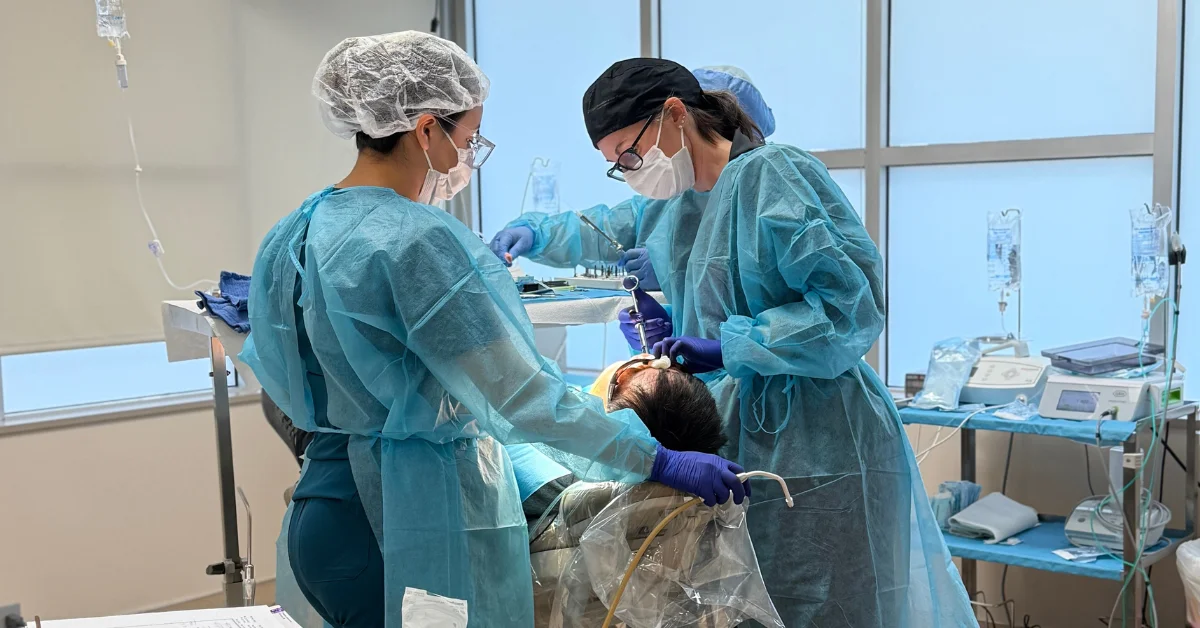
4. Orthognathic (jaw) surgery
Best for: Severe skeletal overbites where the jaw bones are misaligned
How it works: A maxillofacial surgeon repositions the upper jaw, lower jaw, or both. The bones are then secured with small plates and screws while they heal.
Treatment time: Surgery is one day; orthodontic preparation and post-op alignment add 12–24 months on either side.
Cost: $20,000–$60,000 for the full surgical + orthodontic plan Pros: Only treatment that addresses skeletal causes; permanent and stable Cons: Major surgery; significant recovery; higher cost
For severe overbites caused by jaw position, orthognathic surgery is the only treatment that produces lasting results.
5. Tooth extraction with orthodontics
Best for: Crowded mouths where there isn't room to move teeth into proper alignment
How it works: Selected teeth (usually premolars) are extracted to create space, then orthodontics moves remaining teeth into corrected position.
Treatment time: 18–30 months total Cost: $4,000–$8,000 (orthodontics) + $200–$500 per extraction
6. Restorative options for adults
Best for: Adults with mild overbites who want a fast cosmetic improvement
How it works: Veneers, crowns, or bonded composite can mask mild overbite appearance without moving teeth.
Treatment time: A few weeks Cost: Varies widely Important note: This addresses appearance, not function. Underlying issues may persist.
Can You Fix an Overbite Naturally?
Honest answer: mostly no, especially in adults.
Tooth and jaw position are determined by bone — and bone doesn't reshape with exercises in mature adults. Specifically:
- In children (typically before age 12), some overbite can be improved with growth-modification appliances during active jaw growth
- Mewing, jaw exercises, tongue posture — claimed online to fix overbites — have no evidence in adults and won't move teeth or bone meaningfully
- In adults, treatment requires orthodontics, surgery, or both
If you're an adult looking for a non-surgical, non-orthodontic fix, options are limited to cosmetic camouflage.
Choosing the Right Treatment
The right option depends on:
- Cause — dental vs. skeletal
- Severity — millimeters of overlap
- Age — children have more options than adults
- Other dental issues — crowding, missing teeth, TMJ symptoms
- Budget and insurance coverage
- Time you can commit
- Aesthetic preferences during treatment
A consultation with both an orthodontist and an oral/maxillofacial surgeon will give you the clearest picture for moderate to severe cases.
When Jaw Surgery Is the Right Answer
Consider jaw surgery if you have:
- Severe overbite (9+ mm)
- Skeletal cause confirmed by imaging
- Failed prior orthodontic treatment
- Functional problems (chewing, breathing, sleep apnea)
- Significant facial profile concerns
Read more: When jaw surgery is needed for severe overbite
Insurance and Financing
- Traditional braces and aligners: Often partially covered by orthodontic insurance benefits ($1,000–$3,000 lifetime maximum)
- Jaw surgery: Frequently covered by medical insurance (not dental) when functional impairment is documented
- Adult orthodontics: Coverage varies widely — check before starting
- HSA/FSA: Most treatments are eligible
- Payment plans: We offer in-house financing for surgical and restorative work
Recovery Timelines
| Treatment | Recovery |
|---|---|
| Clear aligners | None — discomfort with new trays for 1–2 days |
| Traditional braces | Soreness with each adjustment for 1–2 days |
| Lingual braces | Tongue irritation for 2–4 weeks |
| Jaw surgery | 6 weeks to return to work; 6–12 months for full bone healing |
| Tooth extractions | 1–2 weeks |
Frequently Asked Questions
Can adults still fix an overbite?
Yes. Adults are routinely treated with clear aligners, braces, jaw surgery, or combinations. Treatment may take longer than for teens.
Can an overbite get worse over time?
Yes. Untreated overbites can worsen with age due to tooth wear, missing teeth, and gradual jaw changes.
How long does it take to fix a severe overbite?
Severe overbites typically require 18–36 months total — orthodontic preparation, surgery (if needed), and post-surgical alignment.
Will I need to wear retainers afterward?
Yes — for life, in some form. Without retention, teeth gradually drift back. Most modern retainers are minimally noticeable.
Does fixing an overbite improve my facial profile?
For skeletal cases treated with jaw surgery, yes — significantly. For dental cases treated with orthodontics, profile changes are subtler.
Is fixing an overbite worth it?
For most patients with moderate to severe overbites, yes. Beyond aesthetics, treating an overbite prevents tooth wear, TMJ pain, and headaches that compound over time.
Wondering whether your overbite needs treatment? Schedule a consultation — we'll evaluate the cause, discuss every realistic option, and help you choose the right path.
Related reading
Ready to Transform Your Smile?
Schedule your free consultation today and discover how dental implants can change your life.