Zirconia vs Acrylic Full Arch: Which Lasts Longer?
The Short Answer
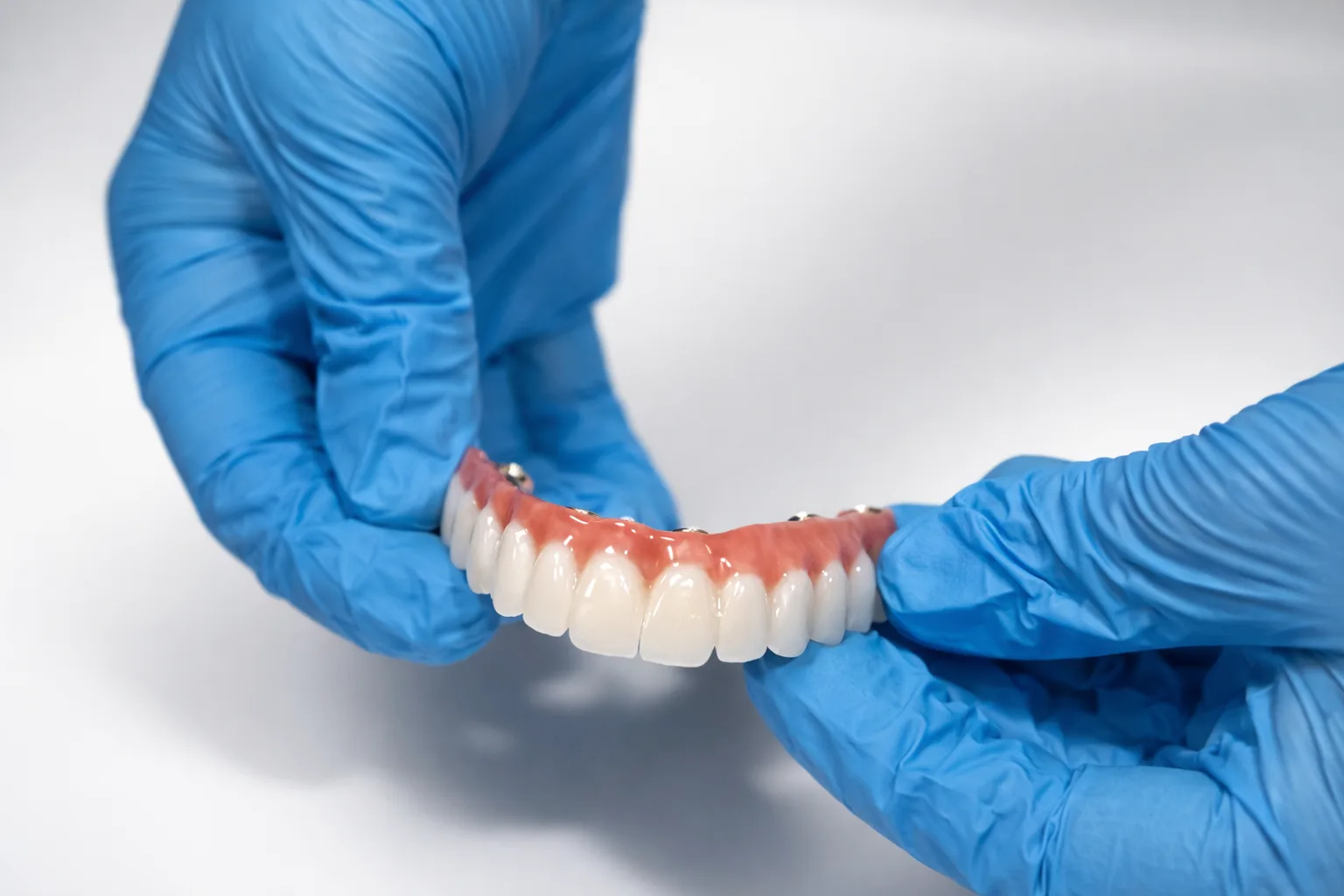
Zirconia full-arch prostheses last significantly longer than acrylic — typically 15–20+ years versus 5–7 years for acrylic. Zirconia also resists staining, doesn't wear down, and maintains aesthetics better.
That said, acrylic remains a valid option in some scenarios — particularly as a temporary or for patients prioritizing lower upfront cost.
Here's the complete comparison.
Material Properties
Zirconia
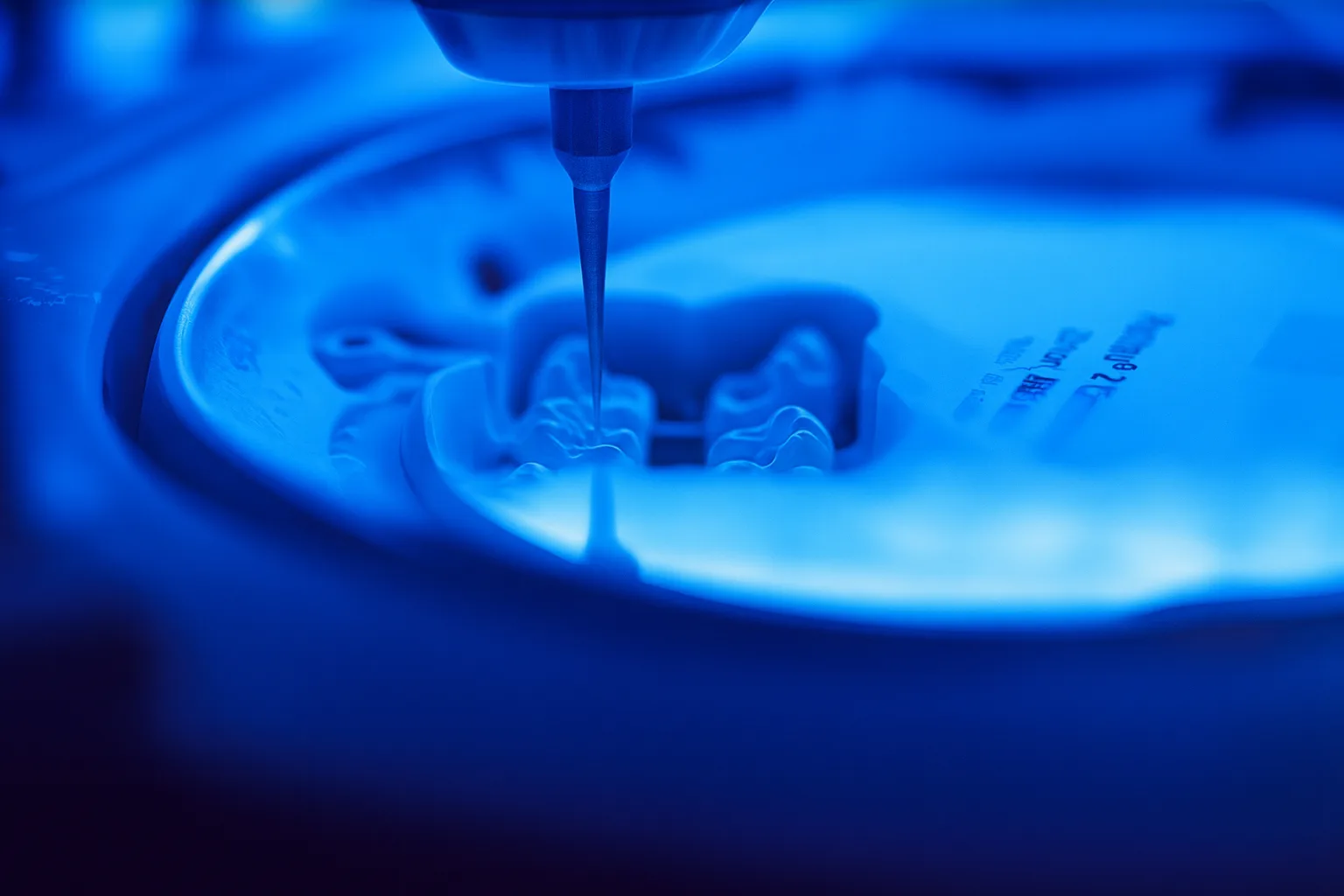
A medical-grade ceramic milled from a single solid block. Extremely hard, biocompatible, used in hip implants and aerospace.
- Hardness: ~1,200 HV (very hard, resists wear)
- Flexural strength: ~900–1,200 MPa
- Color: Built into the material; doesn't change
- Surface: Smooth, dense, bacteria-resistant
Acrylic (PMMA)
Polymethyl methacrylate, the same material used in traditional dentures. Often reinforced with a titanium framework or fiber to add strength.
- Hardness: ~20 HV (much softer, can wear and chip)
- Flexural strength: ~80–100 MPa (with reinforcement, up to ~200 MPa)
- Color: Stained surface that can dull over time
- Surface: More porous, can collect biofilm
The strength difference alone is dramatic — zirconia is roughly 10x harder and 5–10x stronger than reinforced acrylic.
Lifespan Comparison
| Aspect | Acrylic (PMMA) | Zirconia |
|---|---|---|
| Typical lifespan | 5–7 years | 15–20+ years |
| Common failure modes | Tooth fracture, wear, staining | Rare; usually requires major trauma |
| Adjustability | Easier to repair chairside | Repairs require removing the prosthesis; major changes need remilling |
| Wear over time | Teeth flatten, bite changes | Maintains shape decades |
| Need for replacement | Every 5–7 years | Once or twice in a lifetime |
Lifetime cost comparison:
- Acrylic at ~$18,000 replaced 3 times over 20 years = ~$54,000
- Zirconia at ~$25,000–$35,000 once = $25,000–$35,000
Zirconia typically has lower lifetime cost despite higher initial investment.
Aesthetics
Zirconia
- Modern zirconia is layered and stained for natural translucency
- Highly stain-resistant — coffee, wine, food don't discolor it
- Maintains aesthetics for decades
- Slightly less translucent than natural enamel (some practices use porcelain layering for highest aesthetics)
Acrylic
- Excellent aesthetics initially
- Can stain over time (more in heavy coffee/wine drinkers)
- Teeth can chip or fracture, requiring repair
- May need rebasing or replacement to maintain appearance
For long-term aesthetic stability, zirconia is the clear winner.
Comfort and Adaptation
Weight and feel
- Zirconia: Slightly heavier than acrylic. Most patients adapt within 1–2 weeks. Patients with severe TMJ issues may prefer the lighter option.
- Acrylic: Lighter; faster initial adaptation.
Speech
- Both materials allow normal speech once adapted.
- Differences are minimal between the two.
Bite feel
- Both feel like teeth when eating.
- Zirconia has slightly less "give" — some patients describe it as more solid.
Strength and Function
Bite force tolerance
- Acrylic: Can fracture or chip under heavy bite forces; requires patients to avoid certain foods (hard candy, ice, hard nuts)
- Zirconia: Can withstand normal and heavy bite forces; few dietary restrictions
Resistance to chipping
- Acrylic: Teeth can chip from biting hard objects. Repair is possible but disrupts aesthetics.
- Zirconia: Highly resistant to chipping. Very rare with normal use.
Wear on opposing teeth
- Polished zirconia: Gentle on opposing natural teeth or restorations
- Unpolished zirconia: Can wear opposing teeth (modern manufacturing typically polishes properly)
- Acrylic: Wears down faster than opposing teeth (creates uneven bite over time)
Hygiene and Bacterial Resistance
Surface characteristics
- Zirconia: Dense, non-porous surface — bacteria have fewer places to adhere
- Acrylic: More porous; biofilm builds up more readily
Long-term gum health
- Patients with zirconia often report better long-term tissue response
- Acrylic-related "denture stomatitis" can develop in some patients
- Both require diligent home care
Cleanability
- Both are cleaned similarly — brushing in place, water flosser, professional cleanings
- Zirconia's smooth surface tends to maintain cleanliness more easily
Cost Comparison
Typical pricing ranges:
| Configuration | Acrylic | Zirconia |
|---|---|---|
| Per arch (with implants) | $18,000–$25,000 | $25,000–$35,000 |
| Both arches | $35,000–$50,000 | $50,000–$70,000 |
| Annual maintenance | $200–$500 | $150–$400 |
| Replacement timeline | Every 5–7 years | 15–20+ years |
The upfront difference is real — but lifetime cost favors zirconia.
When Acrylic Is the Right Choice
Despite zirconia's advantages, acrylic remains a valid choice in some situations:
As a temporary prosthesis
Most full-arch cases use an acrylic provisional immediately after surgery. The final zirconia arch comes 3–6 months later after healing. The acrylic does its job temporarily and is then replaced.
Severe bruxism patients (some cases)
Some patients with extreme grinding may benefit from acrylic's slight "give" — though this is debated. Modern zirconia handles most bruxism cases.
Budget-constrained cases
For patients who genuinely cannot afford zirconia and need full-arch treatment, acrylic provides a functional solution.
Patients prioritizing easier in-office adjustments
Acrylic can be modified chairside more easily than zirconia, which may matter for patients needing frequent adjustments.
Light-weight preference
For patients with TMJ symptoms aggravated by weight, acrylic's lighter weight may be preferable.
When Zirconia Is the Right Choice
For most patients, zirconia is the superior long-term choice:
- Want a permanent solution that lasts decades
- Care about long-term aesthetic stability
- Have normal-to-heavy bite forces
- Can afford the upfront investment
- Want less frequent replacement
- Prioritize bacteria resistance and tissue health
What About Hybrid Materials?
Several intermediate options exist:
Acrylic with titanium bar reinforcement
Often called "hybrid dentures" — acrylic teeth on a titanium framework. More durable than pure acrylic, less than zirconia. Mid-range cost.
Composite-resin teeth on milled framework
Uses CAD/CAM milling for the framework with composite teeth. Combines durability with easier repair than zirconia.
PEEK frameworks
A high-performance plastic alternative to titanium for the substructure. Lighter than titanium, lower cost than zirconia. Limited long-term data.
These options bridge the gap between basic acrylic and full zirconia.
Decision Framework
Choose zirconia if you:
- Want the longest-lasting option
- Can invest upfront for lower lifetime cost
- Have bite forces that may damage softer materials
- Want long-term aesthetic stability
- Prioritize bacterial resistance
Choose acrylic (or hybrid) if you:
- Need a temporary or transitional prosthesis
- Have a tight budget for the initial case
- Have light bite forces
- Want lighter weight prosthesis
- Are okay replacing every 5–7 years
A good consultation includes a frank discussion of trade-offs — not just promotion of one option.
Frequently Asked Questions
Will my zirconia arch break?
Modern medical-grade zirconia rarely breaks under normal use. Catastrophic fractures usually involve trauma or significant misuse (chewing ice, opening packages with teeth).
Can I switch from acrylic to zirconia later?
Yes — if your existing implants are well-positioned, a new zirconia arch can be fabricated. Costs are similar to a fresh zirconia case.
Why do dentists recommend acrylic provisional first?
The provisional allows initial healing under function, lets you adapt to the new bite, and gives time for soft tissue to settle before final impressions for the zirconia.
Are zirconia arches worth the higher cost?
For most patients yes — lower lifetime cost, longer life, better aesthetics, better hygiene. The exception is patients who genuinely cannot afford the upfront investment.
Can zirconia be color-matched to my remaining teeth?
Yes — modern zirconia is custom-stained to match adjacent teeth precisely.
How do I know if my zirconia arch needs maintenance?
Annual exams should include arch evaluation. Loose retention, wear at attachment points, or any visible chips warrant attention.
Considering a full-arch implant case? Schedule a consultation — we'll discuss material options honestly, including what's right for your bite, budget, and long-term goals.
Related reading
Ready to Transform Your Smile?
Schedule your free consultation today and discover how dental implants can change your life.