
Dental Implant Financing: Complete Guide to Payment Options
Why Financing Matters
Dental implants are an investment that lasts decades — but the upfront cost (typically $4,000–$6,000 per single implant, $17,999+ for a full arch) can feel out of reach as a single lump-sum payment.
The good news: there are multiple realistic ways to finance dental implants, including options for patients with limited credit. Below is the complete picture.
Your Six Financing Options
| Option | Typical Cost | Credit Required | Best For |
|---|---|---|---|
| In-house payment plans | 0–9% APR | Often flexible | Most patients |
| CareCredit / dental credit cards | 0% promo or 14–27% standard | Fair–good | Short-term financing |
| Healthcare loans (LendingClub, Prosper) | 6–35% APR | Good–excellent | Larger amounts |
| Dental insurance | n/a | n/a | Partial coverage |
| HSA / FSA | n/a | n/a | Tax-advantaged savings |
| Personal loan / HELOC | 6–18% APR | Good–excellent | Lowest rates if you qualify |
Most patients combine 2 or 3 of these to fit their budget.
1. In-House Payment Plans
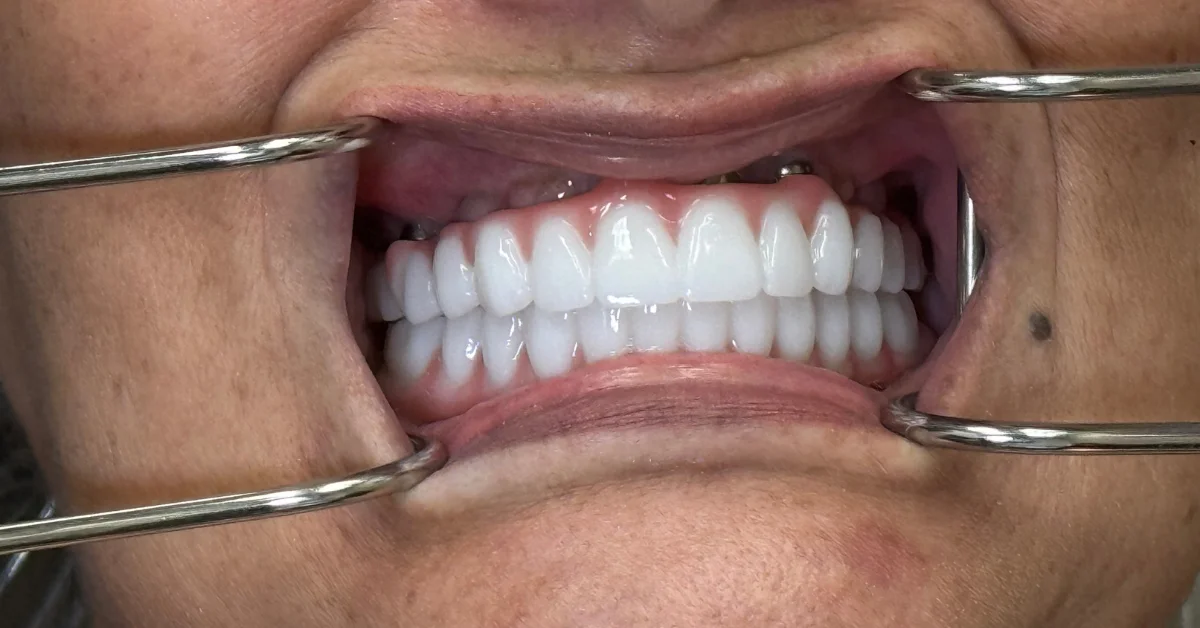
Many dental practices (including ours) offer in-house financing — payment plans you set up directly with the office, often without involving a lender or hard credit check.
Typical terms:
- $73/month for single tooth implant + crown
- $299/month for full-mouth restoration
- $17,999/arch for All-on-4 with structured payment options
- 0–9% APR depending on terms
- 12–84 month repayment
Pros:
- Often more flexible underwriting than third-party lenders
- No third-party fees
- Faster approval
Cons:
- Total amount may be smaller than third-party loans
- Terms vary by practice
This is usually the first option worth exploring because it's the simplest.
2. CareCredit and Healthcare Credit Cards
CareCredit is a healthcare-specific credit card accepted at most dental practices. It offers promotional financing options:
Promotional terms:
- 6, 12, 18, or 24 months at 0% interest if paid in full within the promotional period
- Longer-term plans at fixed APR (typically 14.9–17.9%)
Important: If you don't pay off the balance during the 0% promotional period, deferred interest applies — interest is calculated retroactively from the original purchase date. This can be a costly surprise.
Pros:
- Quick application
- 0% promotional rates if you can pay in full in time
- Widely accepted
Cons:
- Deferred interest is punishing if you miss the deadline
- Standard APR is high
- Requires fair-to-good credit
Use it if: You can confidently pay off within the promotional window.
3. Healthcare Loans
Several lenders specialize in healthcare financing — typically unsecured installment loans:
- Proceed Finance
- LendingClub Patient Solutions
- Prosper Healthcare Lending
- Cherry
- Sunbit
Cherry financing disclosure: Payment options through Cherry Technologies, Inc. are issued by its financing partners. View Cherry’s financing partners.
Typical terms:
- $1,000–$50,000 amounts
- 12–84 month terms
- 6–35% APR (depends on credit)
- No prepayment penalty
- Decisions in minutes
Pros:
- Higher loan amounts than promotional credit cards
- Fixed monthly payment
- Many offer soft credit pulls for pre-qualification
Cons:
- Rates can be high for fair credit
- Origination fees common
- Approval depends on credit profile
4. Dental Insurance
Most dental insurance plans cover portions of implant treatment but rarely the full procedure.
What insurance often covers:
- Initial exam and imaging
- Tooth extraction
- The crown attached to the implant
- Bone grafting (sometimes)
What insurance often doesn't cover:
- The implant itself (often considered "elective")
- Premium materials like zirconia arches
- Sedation in many plans
Typical coverage: $1,000–$3,000 annual maximum, often split across two calendar years for larger cases.
Tip: Ask your insurance about "alternative benefit" — coverage at the level of a less expensive treatment (like a bridge), with you paying the difference for the implant.
We verify benefits at consultation and present a clear breakdown of what insurance will cover and what you'll owe.
5. HSA and FSA Accounts
If you have a Health Savings Account (HSA) or Flexible Spending Account (FSA), dental implants are an eligible expense. This effectively gives you a 22–37% discount through tax savings.
HSA advantages:
- Tax-deductible contributions
- Tax-free growth
- Tax-free withdrawals for qualified medical expenses
- Funds roll over year to year
- Triple tax advantage
FSA advantages:
- Pre-tax payroll deductions
- "Use it or lose it" by year-end (some plans allow $640 rollover or 2.5-month grace period)
Pro tip: If you're planning a major implant case for next year, max out your HSA contributions now. The 2026 contribution limits are $4,300 for individuals and $8,550 for families (plus $1,000 catch-up for 55+).
6. Personal Loans and Home Equity
For larger cases (full-mouth restorations of $30,000+), traditional personal loans or HELOCs (home equity lines of credit) often offer the lowest interest rates:
Personal loans:
- 6–18% APR with good credit
- Unsecured, no collateral
- Fixed monthly payment
- 24–84 month terms
HELOC:
- 7–10% APR (variable)
- Secured by your home
- Interest may be tax-deductible if used for medical
- Lower rates but slower approval
These options require good-to-excellent credit but offer the best total cost for large cases.
What About No-Credit-Check Options?
Several lenders offer dental financing without traditional credit checks:
- United Medical Credit — soft pull only for pre-qualification
- Cherry — soft credit check for pre-approval
- Sunbit — quick approval with soft check
- In-house payment plans — often flexible underwriting
These can work for patients with poor credit but typically:
- Have higher interest rates
- Cap loan amounts lower
- May require larger down payments
We work with patients across the credit spectrum. Don't assume you can't afford treatment — talk to us first.
Strategies to Lower Your Out-of-Pocket Cost
1. Stage treatment over two calendar years
Maximize your insurance benefits by splitting the case across two annual maximums.
2. Combine HSA + financing
Pay the financed minimum monthly, use HSA pre-tax dollars for the remainder. This is the most tax-efficient approach.
3. Time treatment with insurance year start
Begin treatment in November or December to use the current year's benefits, with placement in January using the new year's.
4. Ask about cash discounts
Some practices offer a discount (5–10%) for full payment upfront.
5. Get a second opinion
Treatment plans vary widely. A second opinion can reveal more cost-effective options.
6. Look at total cost, not monthly payment
A low monthly payment over a long term can mean paying significantly more in interest. Compare total amounts paid.
Red Flags to Avoid
When evaluating financing offers, watch for:
- Deferred interest that retroactively applies if not paid in promotional window
- Origination fees of 5%+ that inflate the true cost
- Prepayment penalties that punish you for paying off early
- Variable rates that can rise during the term
- Balloon payments at the end of the term
- Mandatory insurance products added to the loan
Always read the truth-in-lending disclosure. Calculate the total amount paid, not just the monthly payment.
What If I'm Denied for Financing?
Several options:
- Apply with a co-signer — significantly improves approval odds
- Try in-house payment plans — more flexible underwriting
- Stage treatment — finance a smaller initial case, prove repayment, then qualify for the larger amount
- Improve credit and reapply in 6–12 months
- Combine multiple smaller financing sources
- Use HSA/FSA savings to fund part of the case
We help patients find a path even when the first option doesn't work.
Realistic Monthly Payment Examples
For a $5,000 single implant case at 9.99% APR:
| Term | Monthly Payment | Total Interest |
|---|---|---|
| 24 months | $231 | $544 |
| 36 months | $161 | $806 |
| 48 months | $127 | $1,073 |
| 60 months | $106 | $1,344 |
For a $30,000 full-mouth case at 9.99% APR:
| Term | Monthly Payment | Total Interest |
|---|---|---|
| 36 months | $968 | $4,837 |
| 60 months | $637 | $8,228 |
| 84 months | $498 | $11,860 |
Longer terms = lower payments but more total interest.
Frequently Asked Questions
Can I finance dental implants with bad credit?
Yes — though options are more limited and rates are higher. In-house payment plans and lenders like Sunbit and Cherry work with imperfect credit.
Does insurance ever cover 100% of dental implants?
Rarely. Most plans cover 30–50% of qualifying portions, up to an annual maximum. Some union or government plans have better coverage.
Is it worth financing dental implants?
For most patients, yes. Implants last decades, prevent bone loss, and improve quality of life. Spreading the cost over time is often more sensible than continuing to live with missing teeth or failing dental work.
Can I use my HSA for the entire procedure?
Yes — dental implants are a qualified medical expense for HSA and FSA. Save the receipts.
How fast can I get financing approved?
Most options decision in minutes. CareCredit and healthcare lenders use online applications with same-day approval. In-house plans take a single appointment to set up.
What's the cheapest way to get dental implants?
The cheapest total cost combines: maximum insurance benefit + HSA/FSA + cash payment for any remainder. Avoid long-term high-interest financing if possible.
Want a personalized financing plan? Schedule a consultation — we'll review your insurance, discuss financing options, and present a clear treatment plan with monthly payment options. Use our cost calculator for an instant estimate.
Related reading
Ready to Transform Your Smile?
Schedule your free consultation today and discover how dental implants can change your life.