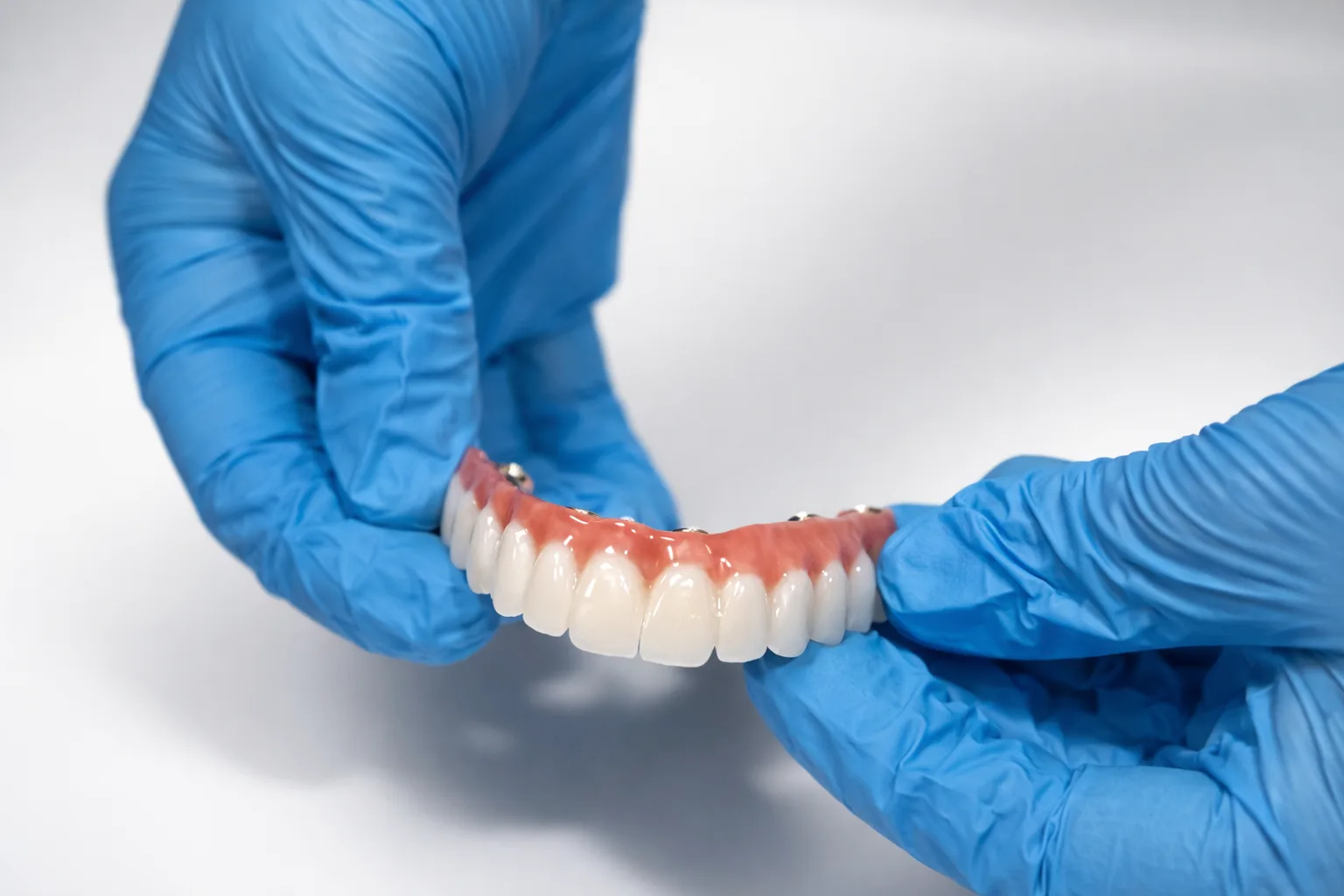

How to Get a Dental Implant Loan: Step-by-Step Guide
Step-by-Step: How to Get a Dental Implant Loan
The process is more straightforward than most patients expect. Here's the typical path:
- Get a treatment plan with a precise cost from your dental provider
- Estimate insurance and HSA contributions to determine the amount needing financing
- Pre-qualify with multiple lenders using soft credit checks
- Compare offers — APR, term, fees, monthly payment
- Submit a formal application for the best option
- Lender pays the practice directly for the treatment
- Make monthly payments to the lender over the loan term
Total time from application to funded: typically 1–3 days for healthcare lenders, 1–2 weeks for traditional banks.
Where to Get Dental Implant Loans
1. Healthcare-specific lenders
Specialized lenders for medical and dental procedures:
Cherry
Cherry financing disclosure: Payment options through Cherry Technologies, Inc. are issued by its financing partners. View Cherry’s financing partners.
- $200–$10,000 typical loan range
- 0–35% APR depending on credit
- 3–60 month terms
- Soft credit check for pre-qualification
- Some 0% promotional offers for short terms
Sunbit
- Up to $10,000
- 6–24 month terms
- Soft credit check
- Quick decisions
- Best for smaller cases
Proceed Finance
- Up to $50,000+
- 24–84 month terms
- Larger case specialty
- Soft credit check for pre-qualification
- Better rates for stronger credit
LendingClub Patient Solutions
- $1,000–$50,000
- 24–84 month terms
- Hard credit check at application
- Competitive rates for good credit
Prosper Healthcare Lending
- Marketplace approach
- Multiple lender offers from one application
- Up to $100,000 for large cases
2. Healthcare credit cards
CareCredit
- Most widely accepted at dental practices
- Promotional 0% periods (6, 12, 18, 24 months)
- Standard APR 14.9–17.9% after promotional period
- Deferred interest — if not paid in full during the promotional period, interest is calculated retroactively
- Hard credit check
Wells Fargo Health Advantage
- Similar concept to CareCredit
- Comparable terms
Best for: patients who can confidently pay off within the promotional window.
3. Personal loans from banks and online lenders
For patients with good credit, traditional personal loans often offer the lowest rates:
- SoFi — 8–35% APR, no fees, $5,000–$100,000
- LightStream — 8–25% APR, no fees, $5,000–$100,000
- Marcus by Goldman Sachs — 7–25% APR, no fees, $3,500–$40,000
- Discover Personal Loans — 7–25% APR, no fees, $2,500–$40,000
- Local credit unions — often lowest rates for members
Best for: good-to-excellent credit, larger amounts, lowest total cost.
4. Home equity loans and HELOCs
If you own a home with equity:
- Lower interest rates than unsecured loans (typically 7–10%)
- Larger amounts available
- Interest may be tax-deductible for medical use (consult your tax advisor)
- Slower approval (2–6 weeks)
- Secured by your home — defaulting risks foreclosure
Best for: large cases ($30,000+), homeowners with equity, patients with discipline to make payments.
5. 401(k) loans
Some retirement plans allow loans:
- Borrow from your own retirement funds
- Repay yourself with interest
- 5-year repayment typical
- No credit check
- Risk: if you leave your job, the loan may need to be repaid quickly
- Risk: opportunity cost of removing money from retirement
Best for: patients who maximize their 401(k) and have little credit access.
6. In-house payment plans
Many practices offer financing without involving third parties.
- Decisions in a single visit
- Often no credit check for smaller amounts
- Flexible terms
- Direct relationship with practice
- Lower amounts than third-party loans typically
Best for: most patients as a starting point, especially those with credit concerns.
How to Get Pre-Qualified
Pre-qualification gives you loan offers without affecting your credit. Steps:
1. Gather basic information
- Your full name, address, date of birth
- Social Security number (for soft credit pull)
- Annual income
- Monthly housing payment
- Employment information
2. Visit the lender's website
Most healthcare lenders have a "pre-qualify" or "check rate" link. This uses a soft credit check.
3. Enter the requested loan amount
Pre-qualify for the amount your treatment plan requires.
4. Receive offers within minutes
You'll see APR, term, monthly payment, and total cost.
5. Compare multiple offers
Pre-qualify with 3–5 lenders to compare. Soft pulls don't accumulate to hurt your credit.
6. Apply formally for the best option
Once you choose, submit a formal application. This typically involves a hard credit pull and detailed verification.
How Much Can You Borrow?
Loan amounts depend on your credit, income, and existing debt:
| Credit Profile | Typical Maximum |
|---|---|
| Excellent (740+) | $50,000–$100,000 |
| Good (700–739) | $25,000–$50,000 |
| Fair (640–699) | $10,000–$25,000 |
| Poor (580–639) | $2,000–$10,000 |
| Bad (under 580) | $500–$5,000 (specialty lenders) |
These are general ranges. Income and existing debt also matter.
What Lenders Evaluate
Beyond credit score:
1. Debt-to-income ratio
Total monthly debt payments divided by monthly income. Most lenders want under 40%.
2. Income stability
Steady employment 1–2 years preferred. Self-employment requires more documentation.
3. Length of credit history
Longer history with good payment record is favorable.
4. Recent credit applications
Many recent applications can lower approval odds.
5. Existing debt
High balances on other loans or credit cards reduce capacity.
6. Banking history
Active checking account in good standing.
Improving Your Approval Odds
Before applying:
1. Check your credit reports
- Get free reports from AnnualCreditReport.com
- Dispute any errors
- Verify the information lenders will see
2. Pay down credit card balances
Even temporary paydowns can improve your score before applying.
3. Avoid new credit applications
Each hard pull lowers your score temporarily. Save credit applications for the loan you actually want.
4. Increase your reported income
- Update your employer information
- Document side income or self-employment
- Include any government benefits
5. Consider a co-signer
A co-signer with strong credit dramatically improves approval and reduces interest rates.
6. Reduce existing debt
Paying down other loans before applying improves debt-to-income ratio.
Comparing Loan Offers
When you have multiple offers, compare:
Total cost over the loan
Multiply monthly payment by number of months. The cheapest monthly payment isn't always the cheapest total cost.
APR (not just interest rate)
APR includes fees and gives a true comparison between lenders.
Term length
Shorter terms = lower total cost but higher monthly payments.
Fees
- Origination fees (typically 0–10%)
- Late payment fees
- Prepayment penalties (avoid if possible)
Flexibility
- Can you change due dates?
- Can you skip a payment in hardship?
- Can you pay off early without penalty?
Lender reputation
- Customer reviews
- Better Business Bureau rating
- Years in business

Common Mistakes to Avoid
1. Focusing only on monthly payment
Long terms with low monthly payments often cost much more in total interest.
2. Accepting the first offer
Pre-qualifying with multiple lenders takes minutes and can save thousands.
3. Ignoring deferred interest
Promotional 0% offers often have deferred interest that applies retroactively.
4. Borrowing more than needed
Some lenders push higher amounts. Borrow only what your treatment costs.
5. Underestimating insurance
Get a precise insurance estimate before financing. You may need less than expected.
6. Skipping the pre-qualification step
Going straight to a hard credit pull lowers your score unnecessarily.
7. Missing the truth-in-lending disclosure
This document shows total cost, APR, and all fees. Always read it.
What If You're Denied?
Denial doesn't end your options:
1. Apply elsewhere
Different lenders have different criteria. A denial from one doesn't mean denial from all.
2. Apply with a co-signer
The single most effective way to gain approval.
3. Try in-house payment plans
Practices have flexibility that third-party lenders don't.
4. Reduce the loan amount needed
- Use HSA/FSA savings
- Maximize insurance benefits
- Stage treatment over time
- Choose less expensive options
5. Improve credit and reapply
- 6–12 months of focused improvement can change your options
- Pay down debt
- Establish positive payment history
- Check for and dispute errors
6. Wait for better offers
Lender terms change. Check back periodically.
Frequently Asked Questions
How long does it take to get a dental implant loan?
Healthcare lenders: minutes to days. Personal loans: days to weeks. Bank loans and HELOCs: 2–6 weeks.
Will applying for a loan affect my credit score?
Pre-qualification (soft pull): no impact. Formal application (hard pull): typically 5–10 point temporary drop.
Can I get a loan for the full cost?
For most cases yes — depending on credit and income. Larger cases may require a down payment or co-signer.
Should I use savings or get a loan?
Depends on your interest rate and savings rate. If your loan rate is lower than your investment returns, it may make sense to finance and keep savings invested. If loan rates are high, paying cash is often better.
Can I use multiple loans for one treatment?
Yes — patients sometimes combine in-house plans with healthcare loans, or use HSA savings plus financing. Combining can optimize total cost.
What if I lose my job during repayment?
Contact the lender immediately. Most have hardship programs. Don't miss payments without communicating.
Ready to plan your treatment financing? Schedule a consultation — we'll provide a precise treatment plan, help you understand financing options, and connect you with the right lenders for your situation.
Related reading
Ready to Transform Your Smile?
Schedule your free consultation today and discover how dental implants can change your life.