
Why Patients Fly Home From Turkey and Mexico and Come to Us to Fix It
Every month, patients walk through the doors of Fusion Dental Implants in Roseville and El Dorado Hills with the same story: they traveled to Turkey or Mexico for cheap dental implants, something went wrong, and now they need help. Sometimes the problem is a failed implant. Sometimes it is a chronic infection. Sometimes it is a prosthetic that was never right from day one.
This article is not meant to shame anyone who considered dental tourism. With dental implants costing thousands of dollars in the United States, the appeal of all-inclusive packages in Cancun or Istanbul is completely understandable. But before you book that flight, you deserve to know what can and does go wrong, and what it actually costs to fix it.
How Big Is the Dental Tourism Problem?
The numbers are striking. Turkish dental clinics performed dental procedures on more than 400,000 international patients in 2023 alone. Even by the dental industry's own conservative estimate of a 3 to 5 percent complication rate, that means thousands of patients per year experience serious problems after treatment abroad.
A 2025 survey published in the British Dental Journal found that 86% of dentists reported treating patients with complications from overseas dental work, with failed implants and crowns topping the list.
These are not rare edge cases. They are the visible tip of a growing crisis.
Why Is Dental Work Cheaper in Turkey and Mexico?
The price difference is real. Dental procedures can be 50 to 70 percent cheaper abroad than in the U.S. A full-arch implant restoration that runs $20,000 to $30,000 in California might be advertised for $5,000 to $8,000 in Turkey or Mexico. Veneers that cost $1,000 to $1,500 per tooth in the U.S. can run $200 to $300 in Istanbul.
The cost difference comes from several factors: lower labor costs, lower malpractice insurance requirements, weaker regulatory oversight, and, critically, compressed timelines. Implant procedures that in the U.S. take months to complete properly are often compressed into one or two weeks of vacation time. That compression is one of the most significant clinical risks in dental tourism.

What Actually Goes Wrong
Failed or Poorly Placed Implants
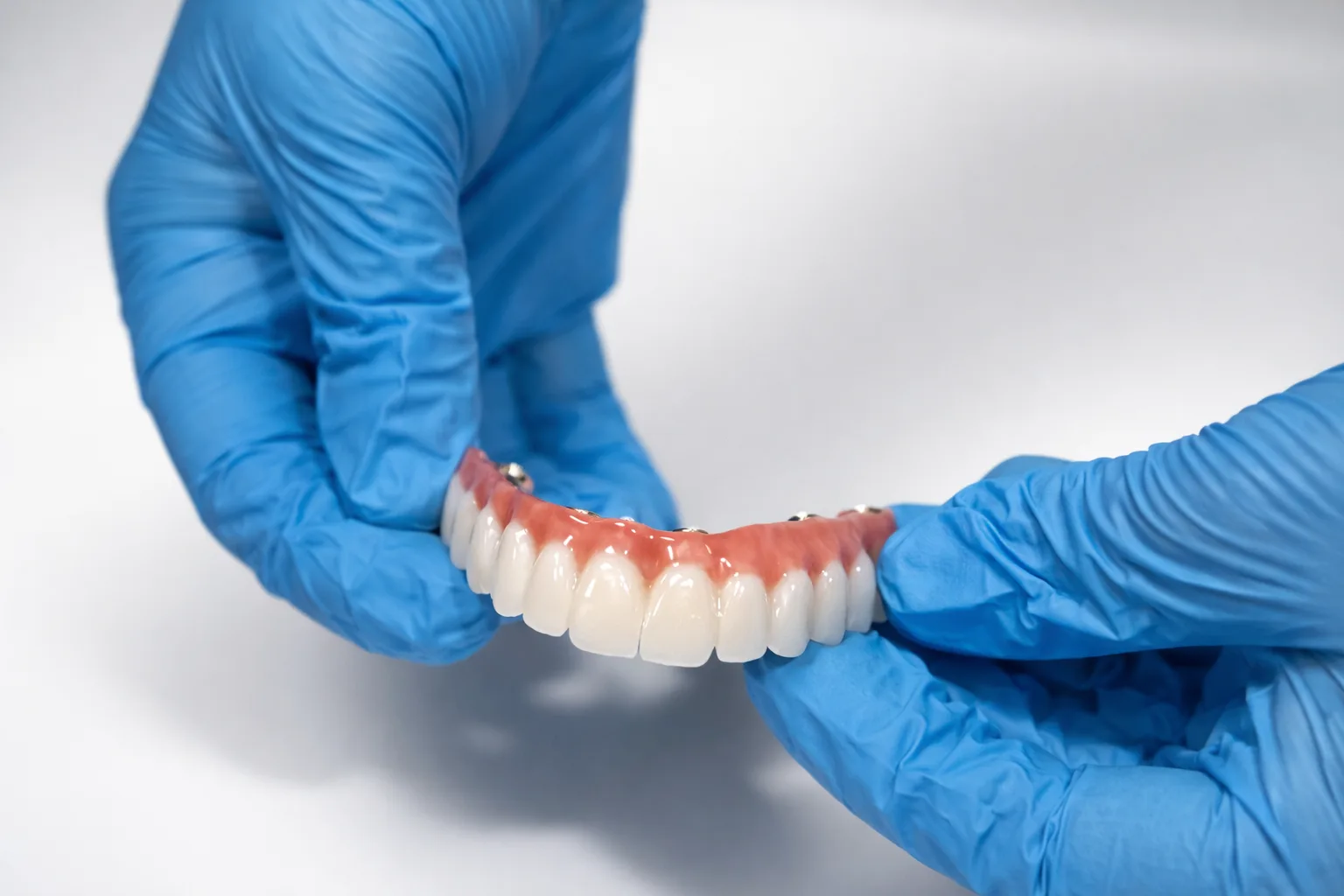
Proper implant placement requires detailed 3D imaging, precise surgical planning, and careful attention to bone density, sinus anatomy, nerve locations, and bite mechanics. When procedures are rushed, as they often must be in a vacation-timeline context, implants are sometimes placed in the wrong position, at the wrong angle, or without adequate bone support.
Failed implants must be removed, a complex procedure, and the bone must heal (often with grafting) before replacement can be attempted. This costs more than doing it right the first time. Learn more about the causes and prevention of implant failure.
Infections
Infection is one of the most common complications reported by dental tourism patients. Causes include inadequate sterilization protocols, aggressive surgical timelines that do not allow for proper healing between stages, and the simple reality that by the time symptoms appear, the patient is back home and far from the clinic that treated them.
Infections around implants, a condition called peri-implantitis, can be aggressive. Left untreated, they destroy bone and can require implant removal. Know the warning signs of implant infection.
Ill-Fitting Prosthetics
A crown, bridge, or full arch prosthetic that does not fit correctly is not just uncomfortable. An improper bite distributes force unevenly across your jaw, causing pain, premature wear on remaining teeth, and jaw joint problems. Ill-fitting restorations also trap bacteria in gaps, accelerating decay and gum disease.
Correcting a poorly made prosthetic requires starting over with new impressions, new fabrication, and new fittings. If the underlying implants were placed incorrectly, the prosthetic cannot be made to fit properly without addressing the implants first.
No Recourse When Things Go Wrong
This is the hidden cost that the brochures never mention. When a dental procedure in the U.S. results in complications, you have legal recourse, dental board oversight, and the ability to return to your provider for follow-up. When your clinic is in another country, none of that applies. Most overseas dental tourism clinics offer limited warranties, but enforcing them means flying back at your own expense.
The Real Cost of Dental Tourism
Consider a patient who spends $7,000 on full arch implants in Mexico, including flights and hotel. They return home, and within 6 months, two implants fail and an infection develops. Corrective treatment, including implant removal, bone grafting, infection management, new implants, and a new prosthetic, runs $18,000 to $25,000 in the U.S.
The cheap option ended up costing three times more than doing it correctly from the start. And that is before accounting for the months of pain, missed work, and emotional toll.
We Fix Dental Tourism Complications, But We Would Rather Prevent Them
At Fusion Dental Implants in Roseville and El Dorado Hills, we regularly see and treat the aftermath of dental tourism. We do this without judgment. Our goal is always to get the patient to a healthy, functional, comfortable outcome, regardless of how the situation started.
But we would always rather be your first call than your last resort.
If you are considering dental tourism for implants or any major dental work, we invite you to come in for a free consultation first. We will give you a transparent, honest assessment of your situation and a clear cost breakdown for treatment in our Sacramento-region offices. In many cases, especially when financing is factored in, the total difference in cost is far smaller than you would expect. And the peace of mind is worth every dollar.
What We Offer That Overseas Clinics Cannot
- Continuity of care. Your treatment begins and ends with the same clinical team.
- 3D cone beam CT imaging. Precision planning before a single incision.
- U.S.-regulated implant systems. FDA-cleared components from proven manufacturers.
- Follow-up and warranty. We are here after your treatment, not 6,000 miles away.
- Financing options. Making treatment accessible without leaving the country.
Schedule your free consultation today
Frequently Asked Questions
Is dental work in Turkey or Mexico safe?
Complications from dental tourism are increasingly common, with surveys showing 86% of dentists treating patients who had problems after overseas procedures. While some patients have good experiences, the risks of failed implants, infections, and no local recourse are significant and worth understanding before making a decision.
What happens if my dental implants from Mexico fail?
Failed implants from Mexico or other countries can be treated in the U.S., but the corrective process is complex and often more expensive than the original treatment would have been locally. Fusion Dental Implants in Roseville and El Dorado Hills treats dental tourism complications. Call (916) 292-9998.
Can dental implants from Turkey be fixed?
Yes, but it depends on the nature of the complication. Fusion Dental Implants offers consultations for patients experiencing problems with overseas dental work. We assess the situation and outline a corrective treatment plan.
Where can I get dental implants near Sacramento without going to Mexico?
Fusion Dental Implants offers competitive pricing, flexible financing, and expert implant care at our Roseville and El Dorado Hills offices. Call (916) 292-9998 or visit fusiondentalimplants.com.
About Fusion Dental Implants: We specialize in advanced dental implant solutions with locations in Roseville and El Dorado Hills, California. Call (916) 292-9998 to schedule your free consultation.
Ready to Transform Your Smile?
Schedule your free consultation today and discover how dental implants can change your life.