Before Surgery: Preparation
On the day of your implant surgery, preparation typically includes:
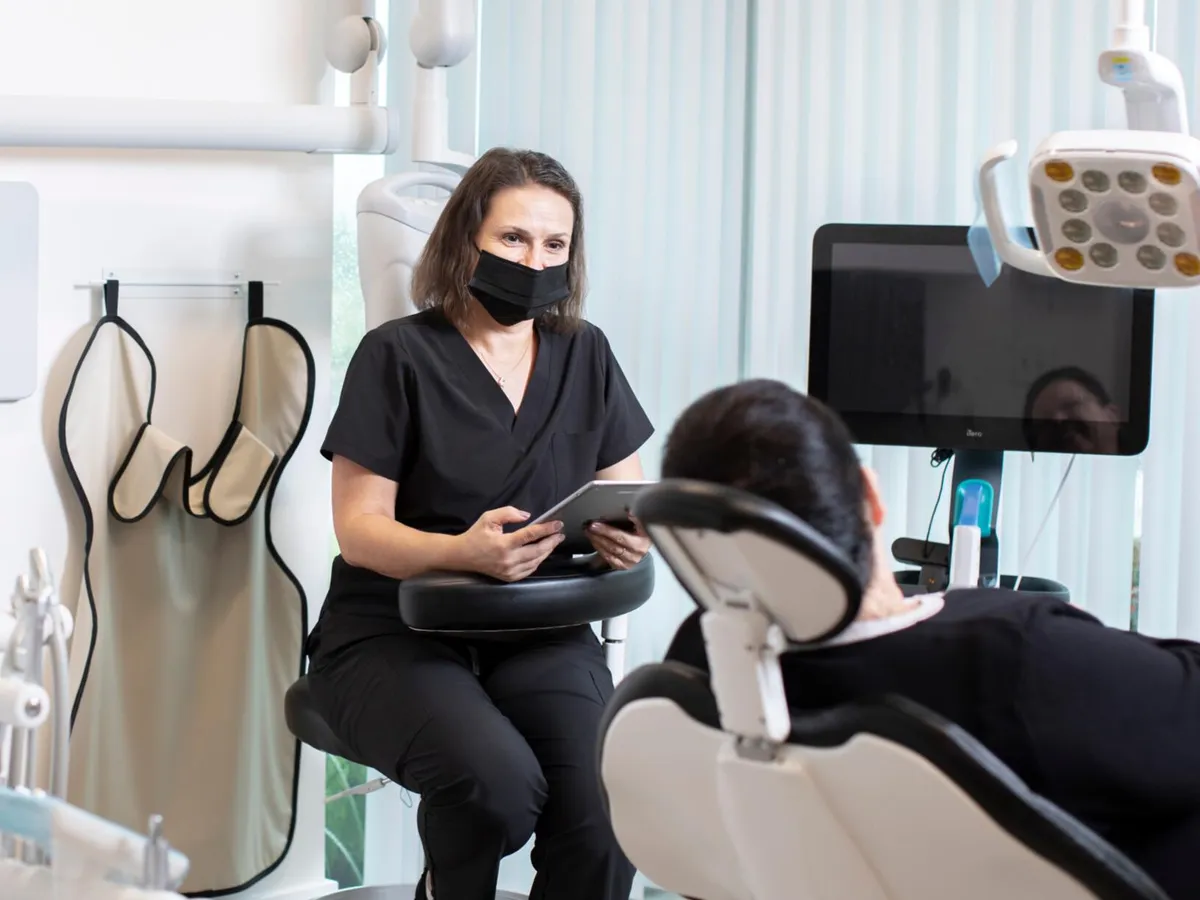
- Pre-operative review - Your surgeon reviews your 3D CT scan one final time and confirms the surgical plan.
- Anesthesia administration - Local anesthesia is injected to completely numb the treatment area. If IV sedation was chosen, the anesthesiologist begins sedation.
- Surgical guide placement - For computer-guided cases, a custom surgical guide (3D-printed template) is positioned in your mouth. This template has precise holes that direct the drill angle and depth for each implant.
During Surgery: The Placement Process
Here's exactly what happens during implant placement:
- Gum tissue incision - A small incision is made in the gum tissue to expose the underlying jawbone. In some cases, a flapless technique (no incision) is used with the surgical guide.
- Pilot hole - A small pilot drill creates an initial channel in the bone at the planned location and angle.
- Sequential drilling - Progressively larger drills widen the channel to match the implant diameter. This is done at low speed with constant irrigation to prevent heat damage to the bone.
- Implant insertion - The titanium implant post is threaded into the prepared channel using a torque-controlled handpiece. The surgeon verifies proper position, depth, and stability.
- Abutment or healing cap - Depending on the protocol, an abutment (connector for immediate temporary teeth) or a healing cap is attached to the implant.
- Closure - Gum tissue is repositioned around the implant and sutured closed. Dissolvable sutures are typically used.
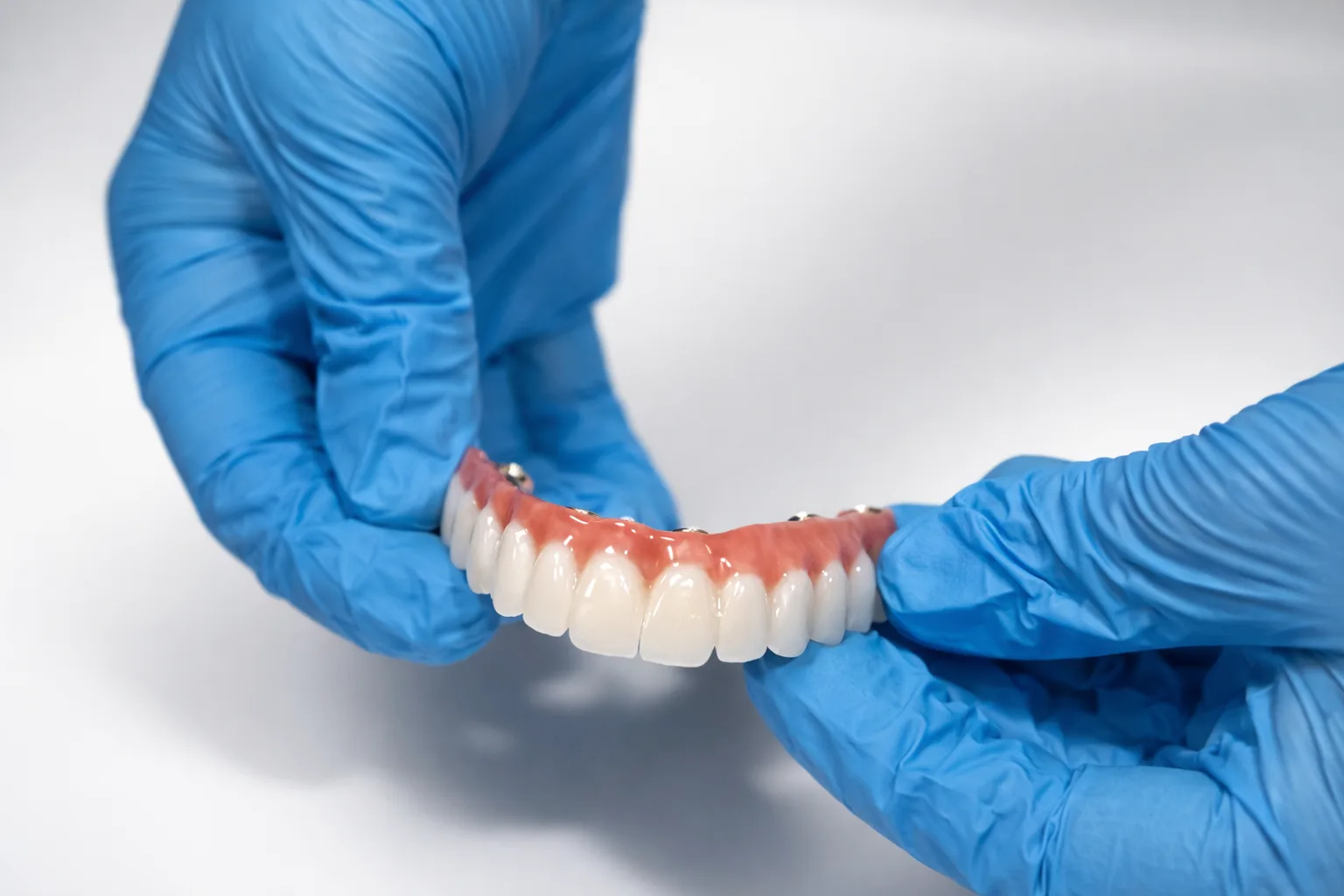
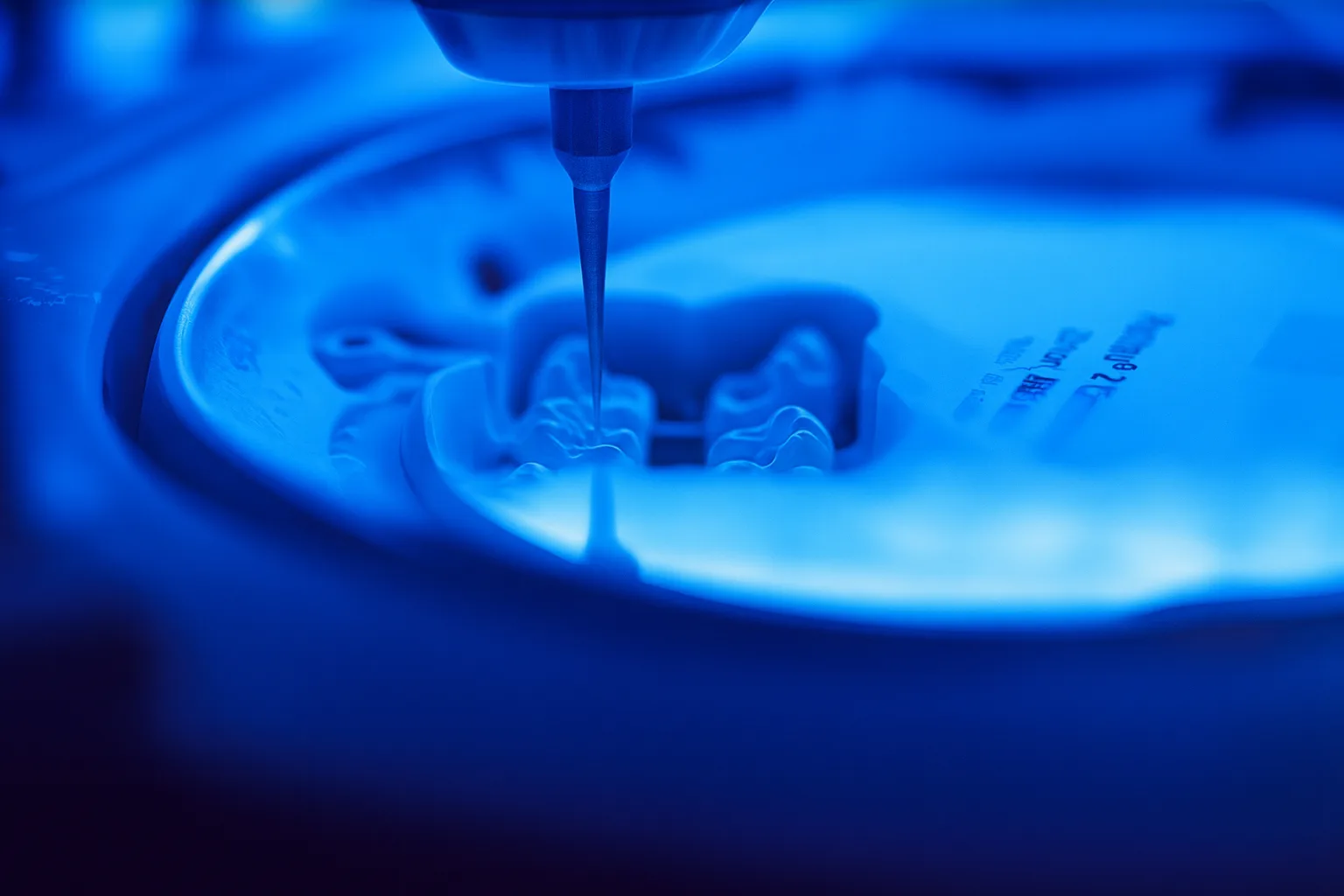
For All-on-4 full-arch cases, this process is repeated for each implant (4-6 per arch). Our in-house lab then fabricates temporary teeth during the procedure, which are attached before you leave.
Computer-Guided Implant Surgery
At Fusion, we use computer-guided surgical protocols for enhanced precision:
- Virtual planning - Before surgery, your 3D CT scan data is used to virtually plan each implant's position, angle, and depth using specialized software.
- Custom surgical guide - A 3D-printed template is created that fits precisely over your teeth or gums, guiding the drill to the planned positions.
- Benefits - Computer guidance reduces surgical time, minimizes tissue disruption, improves implant positioning accuracy, and can enable flapless surgery (no incision required).
After Surgery: Immediate Post-Op
Immediately after surgery, you can expect:
- Gauze and pressure - Bite on gauze pads for 30-60 minutes to control initial bleeding.
- Ice packs - Apply ice to the outside of your face for 20 minutes on, 20 minutes off to minimize swelling.
- Prescriptions - Antibiotics (to prevent infection) and pain medication (often just ibuprofen) are prescribed.
- Temporary teeth - For full-arch patients, your temporary prosthesis is already in place.
- Post-op instructions - Detailed written and verbal instructions for the first 24-72 hours, including diet, oral care, and activity restrictions.
Why Patients Choose Fusion Dental Implants
- ✓In-House Lab & Same-Day Results - Our on-site lab crafts your custom zirconia prosthetics, so you can walk out with a new smile the same day. No waiting weeks for an outside lab.
- ✓Lifetime Warranty on Full Arch Prosthetics - We back our full-arch zirconia prosthetics with a lifetime structural warranty. If it cracks or breaks under normal use, we replace it free. View warranty terms.
- ✓Price-Match Guarantee - Because we own our lab and employ our specialists directly, we keep costs lower than corporate chains. We'll match any competitor's quote for comparable treatment.