TMJ: What Jaw Clicking, Pain, and Locking Can Mean
TMJ stands for temporomandibular joint—the joint connecting your jaw to your skull on each side. Painful conditions involving those joints or chewing muscles are called temporomandibular disorders, or TMD. Clicking by itself is not the same as a diagnosis, and jaw pain can have several causes.
On this page
Separate noise from pain and loss of movement
Many people notice clicking without pain. A noise alone does not establish joint damage or mean treatment is needed. More useful information includes whether opening is painful, whether the jaw locks, and whether eating or speaking is affected.
The NIDCR overview of TMD describes joint and muscle disorders and notes that painless sounds can occur without needing treatment. Avoid repeatedly opening wide just to reproduce a click; tell the clinician what happens during normal activities.
Symptoms worth describing carefully
| Symptom | Useful detail to record | Why it helps |
|---|---|---|
| Pain near the ear or jaw | One side or both; chewing triggers | Helps localize the concern |
| Locking or limited opening | Frequency and whether it releases | Shows the functional impact |
| Morning muscle soreness | Sleep and clenching history | May identify contributing patterns |
| Clicking without pain | Whether movement remains normal | Distinguishes noise from disability |
| Swelling or fever | Onset and associated tooth symptoms | May point to another urgent problem |
Headaches, ear symptoms, and facial pain can overlap with TMD but are not proof of it. A tooth infection, sinus condition, nerve problem, or another illness may need a different clinician or treatment.
What happens during an evaluation?
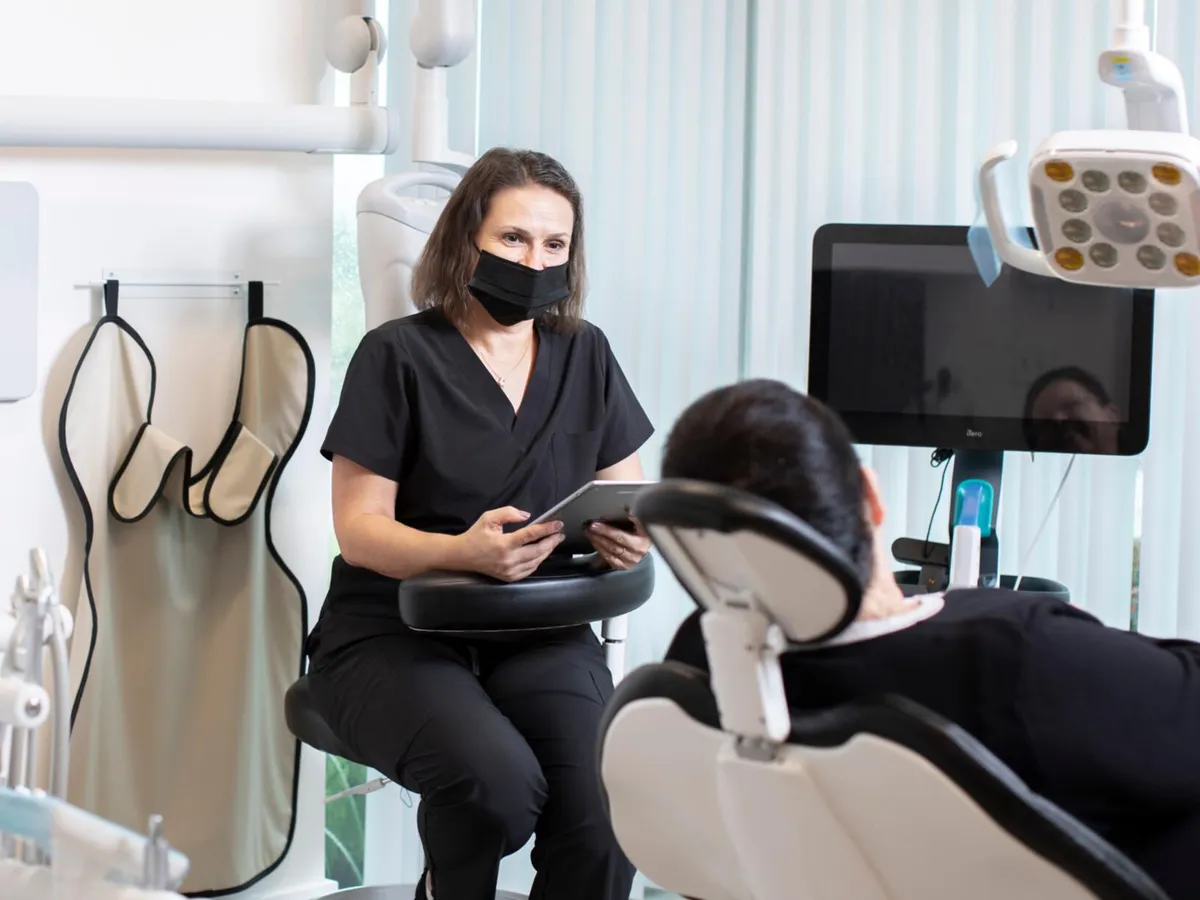
The clinician asks about onset, injuries, dental history, medicines, and previous treatments. An examination may include the teeth, bite, jaw movement, joints, and muscles. Imaging is considered when it could answer a clinical question rather than being a universal requirement.
Bring a short symptom diary and avoid arriving with only a product or procedure in mind. The MedlinePlus overview provides additional background on jaw-joint dysfunction. Tell the team about pain elsewhere, sleep problems, or any treatment that made symptoms worse.
What to do while arranging advice
Avoid gum chewing, extreme opening, or habits that clearly aggravate discomfort. Choose comfortable foods temporarily and do not force a locked jaw. Medication advice should take account of your health conditions and other medicines.
See our TMJ treatment guide for conservative approaches and questions about referral. Seek prompt care after an injury, with fever or facial swelling, or if you cannot close your mouth. Jaw pain accompanied by chest pressure, breathlessness, or sweating can be a medical emergency and should not be self-labeled as TMD.
Frequently Asked Questions
What does TMJ stand for?
Temporomandibular joint. You have one on each side of the jaw. TMD is the term for related joint and muscle disorders.
Is painless clicking dangerous?
Not necessarily. Painless clicking with normal movement often does not require treatment. New pain or locking should be evaluated.
Can TMD cause pain near the ear?
It can, but ear-area pain has other causes too. A clinical assessment helps distinguish them.
Does jaw pain mean I grind my teeth?
No. Grinding or clenching may contribute in some cases, but jaw pain has multiple possible explanations.
Do I need an X-ray for every click?
Not automatically. Imaging is chosen when it can help answer a question raised by your history and examination.
Should I force my jaw open if it locks?
No. Avoid forcing movement and seek professional advice, especially if you cannot eat, open, or close normally.
What should I record before an appointment?
Note when symptoms occur, their location, triggers, locking episodes, and effects on eating, sleep, and daily activities.
Could jaw pain be a medical emergency?
Yes. Jaw discomfort with chest pressure, breathlessness, or sweating needs emergency medical attention. Trauma or fever with swelling also warrants prompt assessment.
Talk with Fusion about your next step
Bring your questions to our general dentistry team or explore our implant services. We see patients at our Roseville and El Dorado Hills offices. Review our providers, payment options, and first-visit information before your appointment.
Why patients choose Fusion: Care in two local offices | An individualized treatment plan | Clear discussion of options and follow-up
Request an appointment. For urgent symptoms, call (916) 292-9998 rather than waiting for an online reply. Appointment availability must be confirmed; we do not advertise 24-hour emergency coverage.
About Fusion Dental Implants: Dental implant and general dental care in Roseville and El Dorado Hills, California.
Related reading
Ready to Transform Your Smile?
Schedule your free consultation today and discover how dental implants can change your life.