
All-on-4 Dental Implants Recovery: A Day by Day Guide
Medically reviewed byDr. Alexander Antipov— 2026-07-13
All-on-4 recovery follows a predictable path: the first 72 hours are about rest, ice, and clot protection, the first three months are about a soft food diet while the implants fuse with your jawbone, and by month six most patients are enjoying their final teeth with no restrictions. At Fusion Dental Implants in Roseville and El Dorado Hills, our board-certified oral surgeons guide every patient through this timeline with a written aftercare plan and local follow-up visits.
This guide is for general information and does not replace your surgeon's instructions. Your written aftercare plan is tailored to your case and always takes priority. Call your surgical team whenever you are unsure.
Here is the whole recovery at a glance:
| Phase | What Is Happening | Your Job |
|---|---|---|
| First 24 hours | Blood clots form; implants held by bone grip only | Bite on gauze, rest with head elevated, no straws or spitting |
| Days 2 to 3 | Swelling peaks at 48 to 72 hours | Ice 20 minutes on, 20 off; stay ahead of pain medication |
| Days 4 to 7 | Inflammation recedes; bruising may appear | Switch to warm compresses; short walks are fine |
| Weeks 2 to 12 | Osseointegration: bone fuses with the implants | Fork-tender soft foods only; gentle cleaning routine |
| Months 3 to 6 | Fusion completes; final bridge is placed | Normal diet returns; regular professional cleanings |
The First 24 Hours: Protect the Foundation
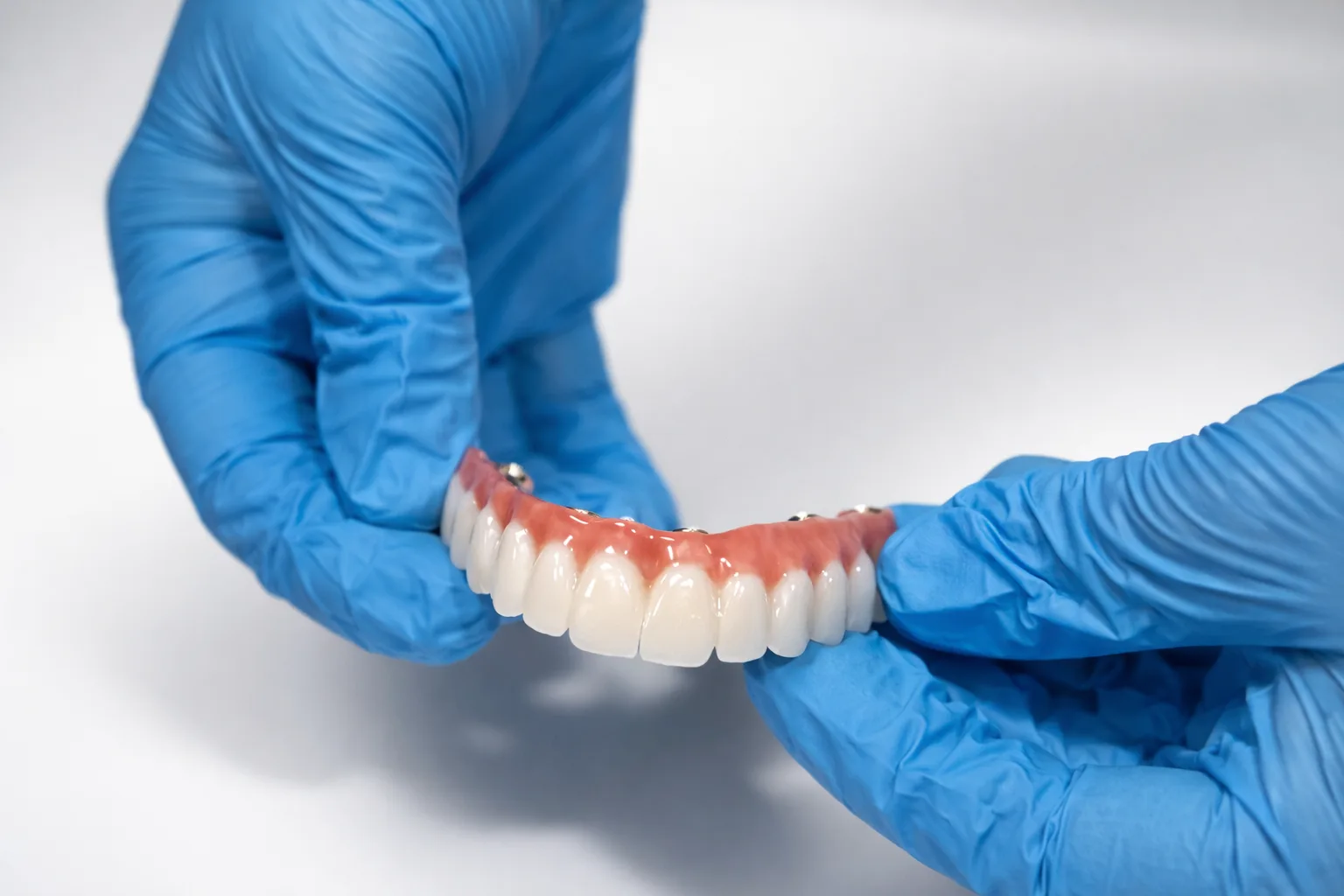
You will leave the surgical suite groggy from IV sedation and, for most patients, feeling a wave of relief at seeing a full smile in the mirror. But even though your new teeth look permanent, the implants underneath are in a delicate state called primary stability: held by the physical grip of the bone before biological fusion begins.
Your first priority is protecting the blood clots forming at the surgical sites. Bite down with firm, steady pressure on the gauze for 30 to 45 minutes, replacing it with a fresh dampened piece if oozing continues. Those clots are the foundation for everything that follows.
Set up a recovery station before surgery day: a wedge pillow or several firm pillows to keep your head at roughly a 45 degree angle (elevation reduces facial blood pressure, which directly limits swelling), your medications, water, and a timer within arm's reach. Take pain medication on schedule rather than waiting for discomfort to peak.
Strictly avoid on day one:
- Straws. The suction can dislodge clots, similar to how dry socket develops
- Spitting or vigorous rinsing. Let liquid fall gently into the sink instead
- Physical activity, including light housework. Anything that raises your heart rate can restart bleeding
Days 2 to 7: Swelling, Bruising, and the 3-3-3 Rule
Swelling peaks between 48 and 72 hours after surgery, which surprises patients who felt fine on day one. It is the normal inflammatory cycle, not a setback. Manage it in three stages:
- Days 1 to 3: maximum ice therapy, 20 minutes on and 20 minutes off, with your head elevated
- Day 4: switch to warm compresses to stimulate circulation and help your body reabsorb the fluid
- By day 7: expect a clear, steady decline in puffiness
Bruising in purple, blue, or yellow patches is common and may drift down toward the chin or neck with gravity. That is normal and fades within one to two weeks.
Call your surgeon if you notice: a fever over 101 degrees Fahrenheit, throbbing that gets worse after day four instead of better, a foul-tasting discharge, or any looseness in the bridge. Your one-week follow-up visit is where we confirm the soft tissue is healing well and the implants are stable.
The Recovery Diet: Liquid First, Then the Fork Test
Chewing force is the biggest risk to healing implants, even when nothing hurts. The diet progresses in two stages:
First 48 hours, liquids only. Choose lukewarm or cool options; very hot liquids increase blood flow to the surgical sites and can worsen swelling. Good choices: smoothly blended protein smoothies (skip seedy fruits like strawberries and raspberries, since seeds can lodge in surgical sites), lukewarm pureed soups, Greek yogurt, and protein-fortified puddings. Sip from a glass, never a straw.
Weeks 2 to 12, fork-tender foods. The rule of thumb is the Fork Test: if you cannot cut it easily with the side of a plastic fork, it is not ready for you yet. Scrambled eggs, mashed avocado, baked sweet potato, soft-cooked salmon, well-cooked pasta, and soft cheeses all pass. Nuts, chips, crusty bread, and sticky candy stay off the menu until your surgeon clears you. Our soft food diet guide has full meal ideas for the entire healing window.
Protein and vitamin C do real work here: they are the raw materials your body uses for tissue repair, so treat nutrition as part of the treatment.
Months 1 to 6: Osseointegration, Quietly Making It Permanent
The true success of All-on-4 happens invisibly beneath the gum line, where bone cells grow into the microscopic surface of the implant posts over three to six months. A systematic review of the All-on-4 treatment concept reports high survival rates for the approach, and patient compliance during healing is one of the biggest factors you control.
Protect the fusion by managing the two biggest external threats:
- Smoking constricts blood vessels and starves the healing bone of oxygen. It is a leading cause of early implant failure; see our guide on smoking and implant surgery for an honest look at the risk
- Uncontrolled blood sugar slows tissue repair and weakens the immune response, so keep any diabetes management on track during this window
Hygiene during integration: for the first days, only the prescribed rinse; then gentle brushing of the bridge with an ultra-soft manual brush. Once the surgical sites have closed, typically around week three, you will add a water flosser on a low setting to clear debris from under the bridge. Professional cleanings at our offices during this period are essential, not optional.
Lifestyle: light walking usually resumes by day three, but wait at least 14 days before high-impact cardio or heavy lifting. If you grind your teeth at night, a custom night guard protects the healing implants from clenching pressure. For the broader biology of what happens at each stage, see our dental implant healing stages guide.
Why Surgical Precision Shapes Your Recovery
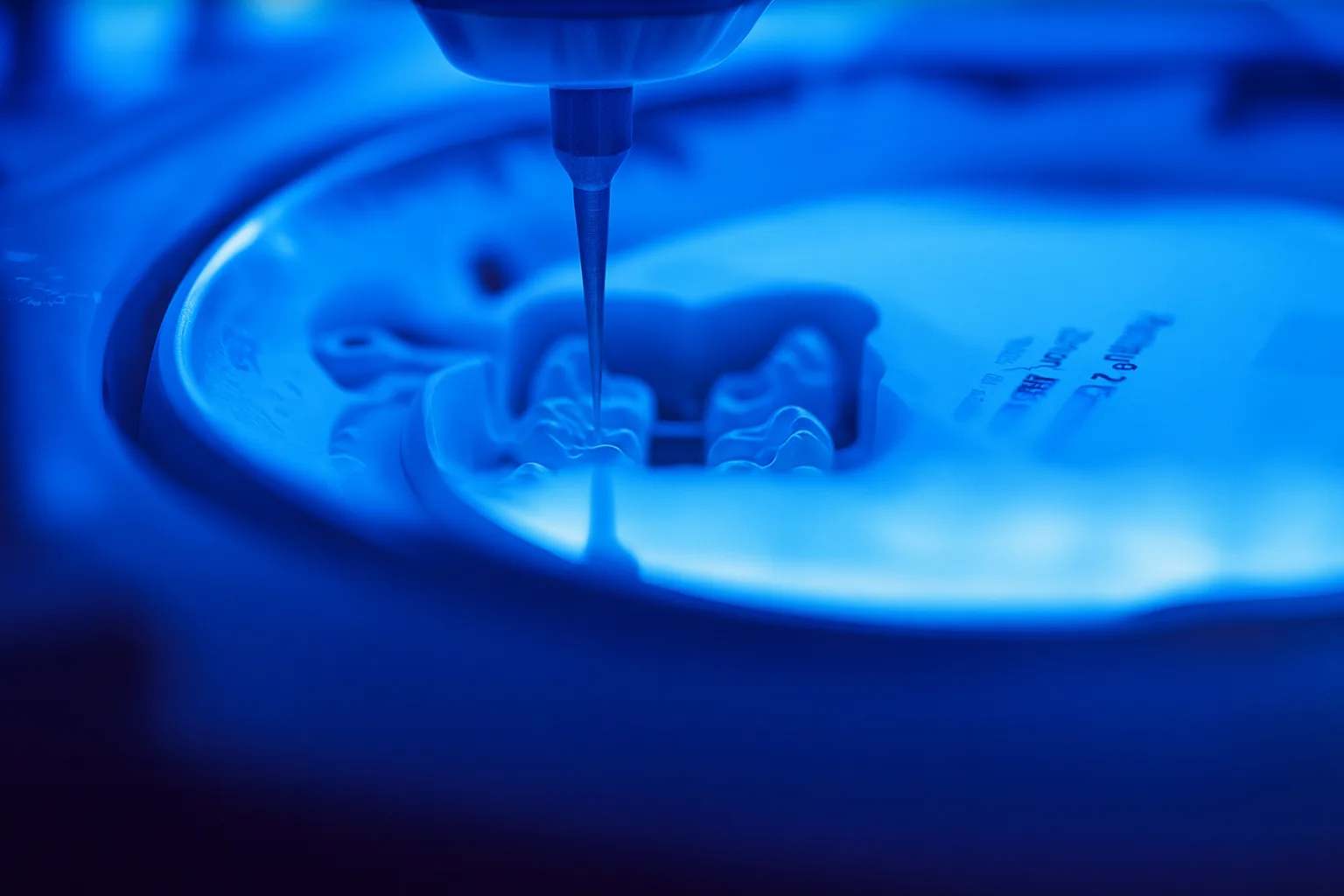
How you heal is directly linked to how precisely the surgery was performed. When each implant is placed with digital planning into the best available bone, there is less tissue trauma, which means measurably less swelling, less bruising, and an easier first week. IV sedation contributes too: keeping your heart rate and blood pressure stable during surgery reduces the rebound inflammation that a stressful procedure can trigger.
At Fusion Dental Implants, our board-certified oral surgeons perform same-day full-arch procedures with a fully digital workflow, and your aftercare stays local: follow-up visits happen at our offices in Roseville and El Dorado Hills, a short drive for patients across Sacramento, Folsom, Rocklin, and the surrounding communities. Every plan comes with a transparent all-inclusive quote backed by our price match guarantee.
Schedule your free consultation
Frequently Asked Questions
How much pain should I expect after All-on-4 surgery?
Most patients describe moderate discomfort, more of a dull ache or pressure than sharp pain, and many say it is easier than they expected. Prescribed medication taken on schedule keeps you ahead of it, and the discomfort typically fades noticeably after the first 48 to 72 hours.
When can I return to work after getting All-on-4 implants?
Most patients with desk jobs return within three to five days. Because swelling peaks around day three, many find day four or five the most comfortable return point. If your work involves heavy lifting or strenuous activity, plan on a full week off to avoid heart rate spikes that can cause throbbing or bleeding at the surgical sites.
How do I clean my All-on-4 bridge during the first week?
For the first 48 hours, do not brush the surgical sites; use only the prescribed medicated rinse. After that, gently clean the bridge with an ultra-soft manual toothbrush. Hold off on water flossers and electric toothbrushes until your surgeon confirms the soft tissue has healed, usually at your first follow-up.
Can I smoke during All-on-4 recovery?
No. Nicotine constricts the blood vessels in your gums, starving the healing bone of the oxygen it needs to fuse with the implants, and smoking is one of the leading causes of early implant failure. Plan to avoid smoking for at least two months, and ideally use the surgery as a quit point.
What if my temporary bridge feels loose during healing?
Call your surgeon right away and stop chewing on it. A loose feeling usually means a prosthetic screw needs a simple professional adjustment. Do not try to tighten anything yourself, because micro-movement is exactly what disrupts the bone fusion process.
Is it normal to have a lisp or speech changes during recovery?
Yes, very. Your tongue needs time to learn the new contours of the bridge, and speech typically returns to normal within one to two weeks. Reading aloud at home is a simple way to speed up the adjustment.
How long do I have to stay on a soft food diet after All-on-4 surgery?
Plan on roughly three months. The implants are held by the physical grip of the bone until biological fusion completes, and chewing hard foods too early creates micro-movements that can cause failure. Your surgeon confirms when the implants are stable and clears you for a normal diet with your final teeth.
Why is my swelling worse on day three than on day one?
That is the normal inflammatory cycle. Fluid builds gradually as your immune system sends healing cells to the area, so swelling peaks between 48 and 72 hours, not immediately. Switch from ice to warm compresses on day four and the swelling will begin to recede. It is not a sign of infection unless paired with fever or worsening pain.
About Fusion Dental Implants: We specialize in advanced dental implant solutions with locations in Roseville and El Dorado Hills, California. Call (916) 292-9998 to schedule your free consultation.
Related reading
Ready to Transform Your Smile?
Schedule your free consultation today and discover how dental implants can change your life.