IV Sedation for Oral Surgery: A Patient's Guide to a Comfortable Experience
Medically reviewed byDr. Alexander Antipov— 2026-07-13
IV sedation makes oral surgery comfortable by delivering sedative medication directly into your bloodstream, placing you in a relaxed "twilight" state where you feel no pain and typically remember nothing, while remaining safe and responsive. At Fusion Dental Implants in Roseville and El Dorado Hills, IV sedation is administered by board-certified oral surgeons for implant placement, full-arch surgery, and other complex procedures.
This article is for general information and does not replace a medical evaluation. Whether IV sedation fits your case depends on your health history and the procedure planned. Your surgical team will confirm candidacy at your consultation.
If you have delayed necessary treatment because of fear of pain or worry about losing control, you are not alone. Dental phobia is one of the most common reasons patients put off oral surgery. Here is how the main comfort options compare:
| Method | How It Is Given | Control During Surgery | Drive Yourself Home? | Best For |
|---|---|---|---|---|
| Nitrous oxide | Inhaled gas | Limited, light effect | Yes | Minor procedures, mild anxiety |
| Oral sedation | Pill before appointment | Cannot adjust once swallowed | No | Moderate anxiety, shorter visits |
| IV sedation | Medication through a vein | Adjustable second by second | No | Oral surgery, implants, high anxiety |
| General anesthesia | Hospital setting | Full control, fully unconscious | No | Select complex hospital cases |
What Is the "Twilight" State?
IV sedation places you in a deeply relaxed, semi-conscious state. You are not unconscious the way you would be under general anesthesia. You keep breathing on your own and can follow simple instructions like "tilt your head." But the medications have powerful amnesic properties: your brain does not encode the sounds, smells, or sensations of the surgery into long-term memory.
That is why most patients say the same thing afterward: it felt like the procedure lasted a few minutes, and then it was over. For a deeper look at how the medications work and what the full before-and-after timeline looks like, see our complete guide to what to expect with IV sedation dentistry.
The amnesia effect is more than a comfort feature. For patients with past dental trauma, it breaks the cycle of negative reinforcement. You do not have to endure the surgery. You simply wake up when the work is done.
The IV Sedation Experience, Step by Step
Before your surgery
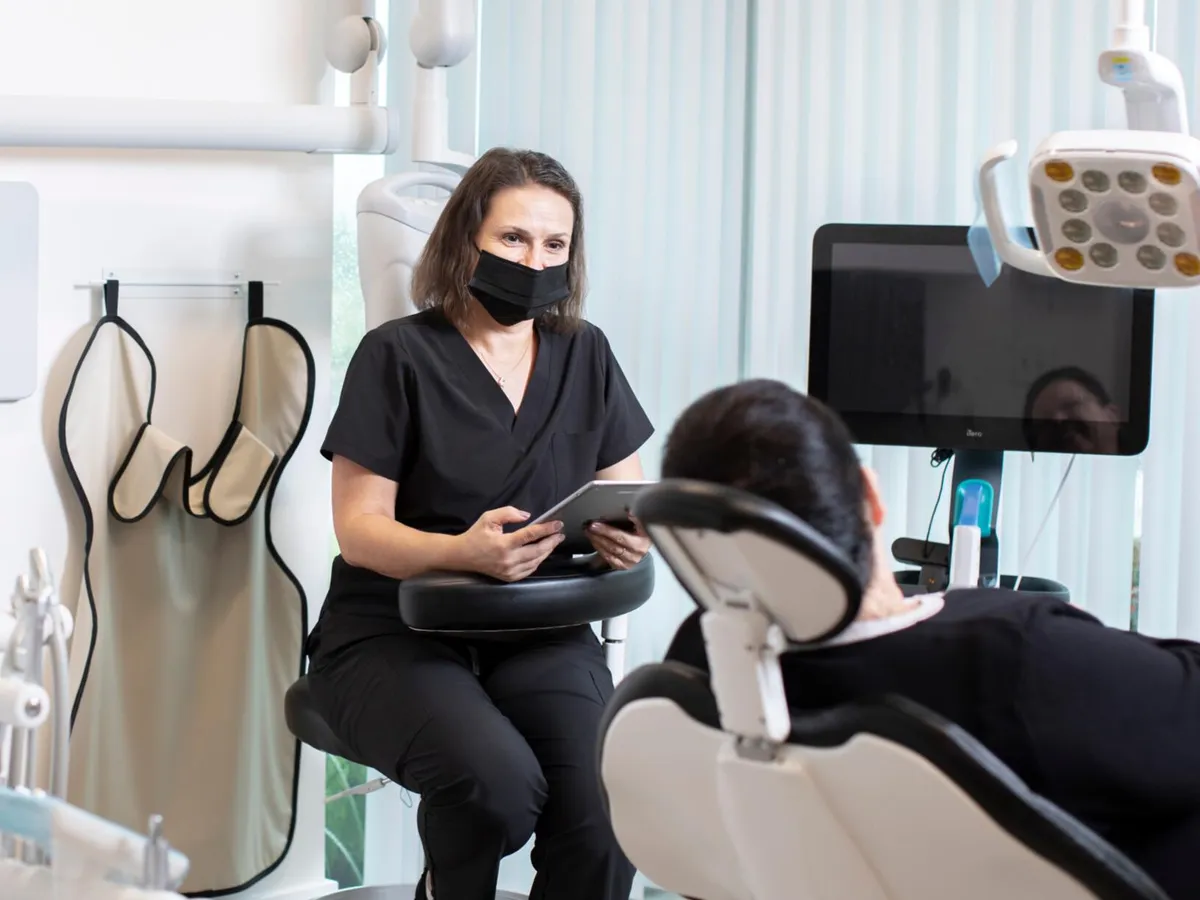
The process starts at your consultation, where your surgeon reviews your full health history, current medications, and supplements. Be complete and honest here: even common herbal products can influence how your body processes sedatives. You will receive fasting instructions, typically no food or drink for 8 hours before surgery.
On the day of your procedure, wear loose, comfortable clothing with sleeves that roll up easily. Arrange for a responsible adult to drive you and stay with you afterward. This is not optional.
During the procedure
Once you are settled, a clinician places a small IV line, usually in your arm or the back of your hand. You may feel a tiny pinch, and then a warm calm arrives within about a minute. Local anesthetic numbs the surgical area completely, so pain is handled separately from the sedation itself.
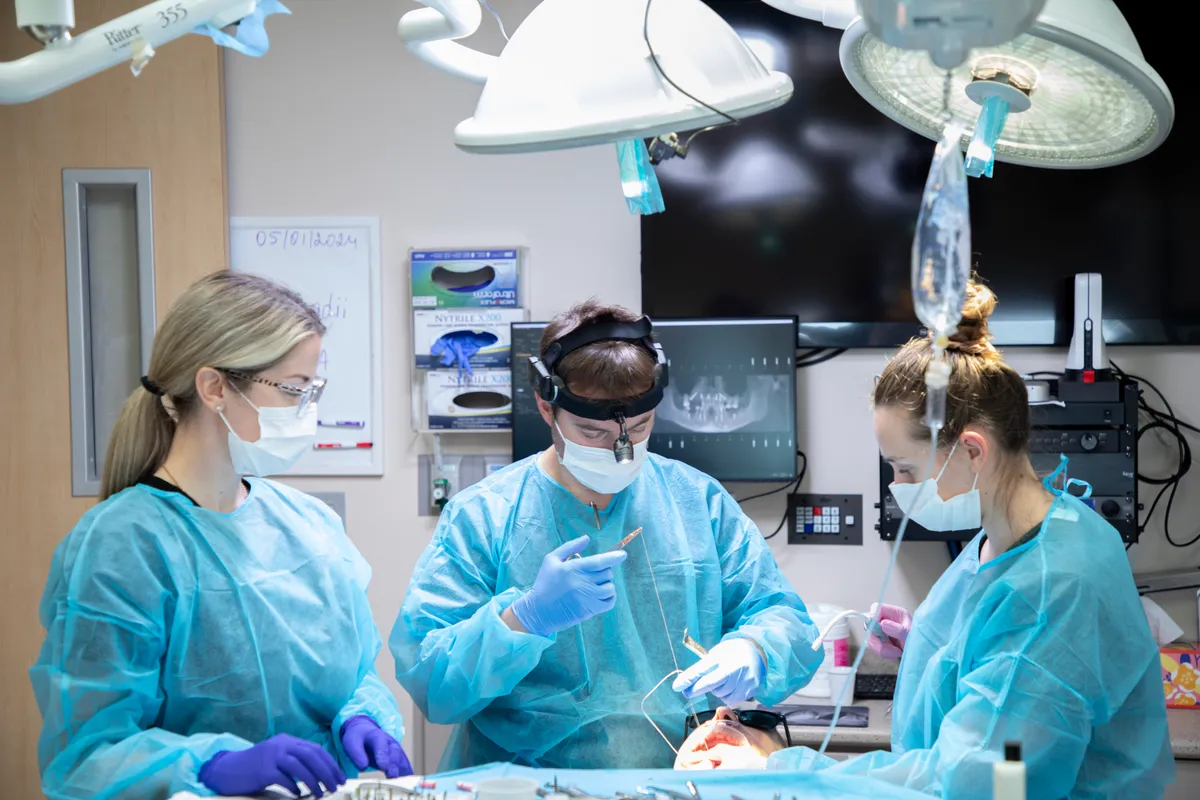
Throughout the surgery, monitors track your oxygen level, blood pressure, and heart rate continuously, and a trained surgical assistant stays at your side alongside the surgeon. Because the medication is delivered through the vein, your surgeon can adjust your sedation level in real time. If your body processes the medication faster during a longer stretch of the procedure, a small adjustment keeps you comfortable without interruption. That second-by-second control is the reason IV sedation is the standard for implant surgery rather than a pill, which cannot be adjusted once swallowed.
After the procedure
The IV comes out, and you move to a quiet recovery area until you are alert enough to leave with your driver. Expect to feel foggy for several hours. You cannot drive, operate machinery, or sign legal documents for 24 hours. Most patients rest for the remainder of the day and feel back to normal the next morning.
Safety and Candidacy
Most people with well-managed health conditions are good candidates for IV sedation, and age alone is rarely disqualifying. Modern protocols use weight-based dosing and continuous monitoring designed to keep sedation safe for older adults. Conditions that need extra evaluation include severe heart or lung disease, severe sleep apnea, and pregnancy.
Credentials matter as much as protocols. Anesthesia and sedation practice in dentistry follows American Dental Association guidelines, and in California, administering IV sedation requires a sedation or general anesthesia permit from the Dental Board of California. Board-certified oral surgeons hold the highest anesthesia credentials in dentistry, and offices providing IV sedation maintain emergency equipment, reversal medications, and trained staff.
IV sedation is especially valuable for:
- Patients with severe dental phobia or past medical trauma
- Patients with an overactive gag reflex
- Long procedures, such as full-arch restorations completed in a single visit
- Anyone who simply prefers not to remember the procedure
What Does IV Sedation Cost?
IV sedation typically adds $300 to $800 for the first hour and $100 to $300 for each additional hour, depending on the length of the procedure. Medical or dental insurance sometimes covers a portion when sedation is medically necessary, and HSA or FSA funds can be used. Most patients find one longer sedated appointment preferable to multiple shorter visits under local anesthesia alone. For payment plans and financing details, see our costs and financing options.
IV Sedation at Fusion Dental Implants
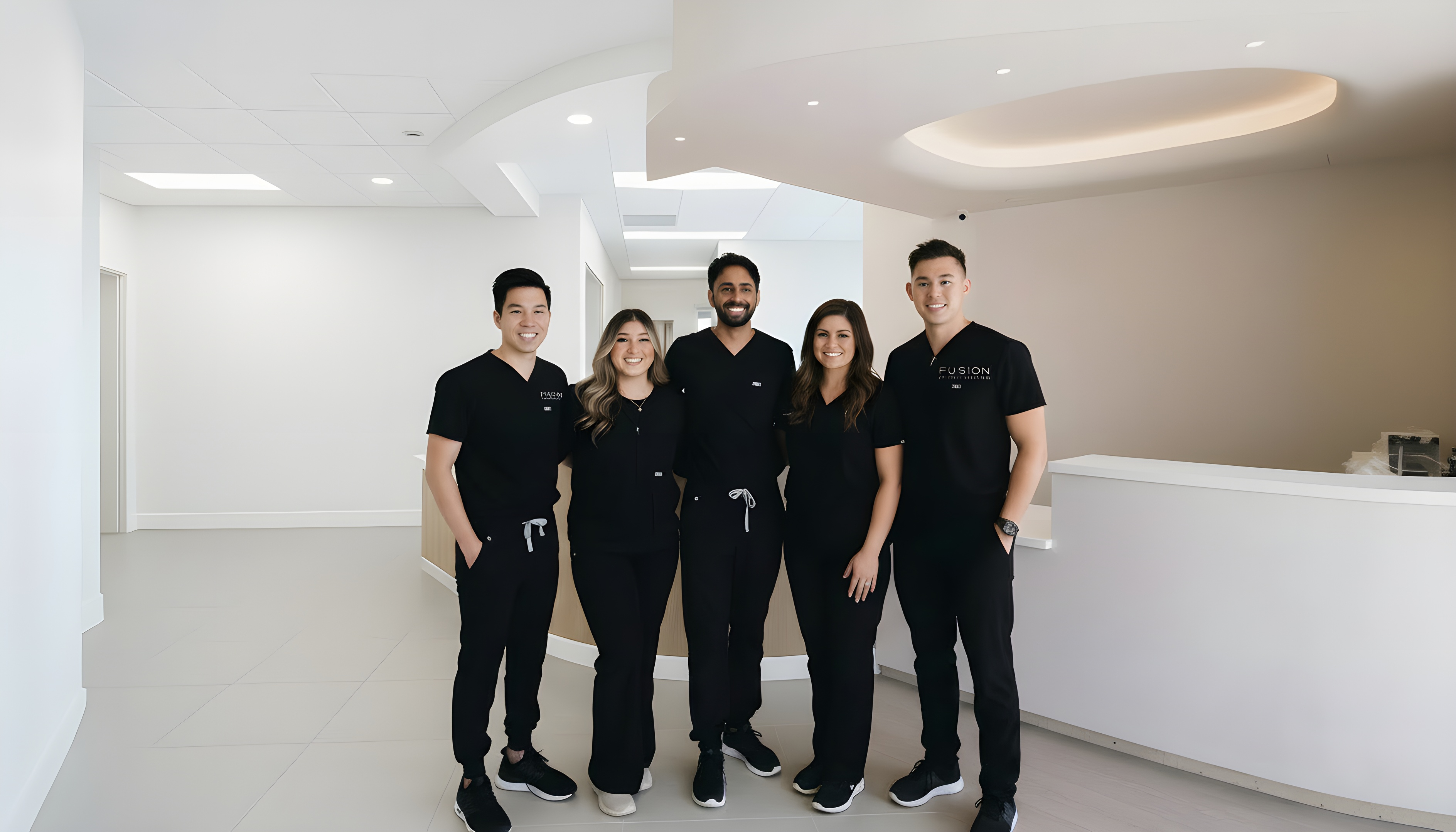
Our board-certified oral surgeons administer IV sedation for implant placement, full-arch surgery, extractions, and complex revision cases at our offices in Roseville and El Dorado Hills, serving Sacramento, Folsom, Rocklin, and the surrounding communities. Every plan starts with a consultation where we review your health history and walk you through your comfort options.
Schedule your free consultation
Frequently Asked Questions
What does IV sedation feel like during oral surgery?
Most patients describe a warm, heavy calm that arrives within a minute of the medication starting, followed by waking up with no memory of the procedure. A two-hour surgery often feels like it lasted five or ten minutes. You remain able to respond to simple instructions, but the experience does not get stored in long-term memory.
Is IV sedation safer than general anesthesia for dental procedures?
IV sedation keeps you breathing on your own and responsive, which avoids some of the risks of full general anesthesia. With a properly credentialed provider, continuous monitoring, and reversal medications on hand, serious complications are rare. Your health history determines which option is appropriate for your case.
How do I prepare for IV sedation before oral surgery?
Fast from food and drink for 8 hours before surgery, wear loose clothing with sleeves that roll up, skip makeup and jewelry, bring your medication list, and arrange for a responsible adult to drive you home and stay with you afterward. Your surgical team will give you exact instructions for your case.
How long does it take to recover from IV sedation?
You will feel foggy for several hours after the procedure and cannot drive for 24 hours. Most patients rest for the remainder of the day and are back to their normal routine by the following morning.
Can I be too anxious for dental work if I have a phobia or a strong gag reflex?
No. Severe dental phobia and an overactive gag reflex are two of the most common reasons patients choose IV sedation. The medication suppresses the gag reflex and the amnesia effect means you do not carry the memory of the procedure, which helps break the cycle of dental fear.
Am I too old for IV sedation?
Age alone is rarely the deciding factor. Modern protocols use weight-based dosing and continuous monitoring designed to accommodate older adults safely. What matters is your overall health picture, which is reviewed in detail before you are cleared for sedation.
Who is allowed to administer IV sedation for oral surgery in California?
California requires a sedation or general anesthesia permit from the Dental Board of California. Board-certified oral surgeons carry the highest anesthesia credentials in dentistry, typically including hospital-based anesthesia training during residency.
About Fusion Dental Implants: We specialize in advanced dental implant solutions with locations in Roseville and El Dorado Hills, California. Call (916) 292-9998 to schedule your free consultation.
Related reading
Ready to Transform Your Smile?
Schedule your free consultation today and discover how dental implants can change your life.