How to Verify a Board Certified Dental Implant Surgeon in California
Medically reviewed byDr. Alexander Antipov— 2026-08-14
In California, any licensed dentist may legally place dental implants — so "board certified" is a voluntary credential that documents formal surgical residency training and independent peer examination, and it's a claim you can verify yourself. Two free public lookups — the Dental Board of California's license search and the ABOMS Diplomate verification service — generally take only a few minutes and can tell you more than marketing copy alone.
The path: Verify license + certification → free consultation + 3D CBCT scan → written all-inclusive quote → surgery planned and performed under one roof
What "board certified" means in implant surgery
Dentistry regulates who may practice; specialty boards document who trained further. For surgical implant care, a credential many patients look for is Diplomate of the American Board of Oral and Maxillofacial Surgery (ABOMS). Earning it typically involves:
- A hospital-based surgical residency of several years after dental school, covering implant surgery, bone grafting, anesthesia, and management of surgical complications
- Written and oral board examinations assessed by independent examiners rather than the surgeon's own practice
- Ongoing certification requirements rather than a one-time diploma
That's a different pathway from a weekend or short-course implant curriculum. It doesn't mean every general dentist placing implants is out of their depth — straightforward single-implant cases are commonly handled well in general practices. But the more complex the surgery, the more the depth of training tends to matter, which is why complex and revision cases are typically referred to surgeons in the first place.
How to verify credentials in California — in minutes
Credentials worth advertising are credentials you can check. Here's how:
- License status: The Dental Board of California participates in the Department of Consumer Affairs license search. Enter the provider's name and you can see whether the license is current and whether formal disciplinary actions are on record.
- Board certification: ABOMS provides a Diplomate verification service on its website. If a practice says "board certified oral surgeon," this is where the claim is checkable.
- Sedation permitting: California ties sedation permits to the intended level of sedation — moderate sedation and deep sedation/general anesthesia each have their own permit requirements. If sedation matters to you, ask what level is planned, what permit the practice holds for it, and who monitors you — and read up on what IV sedation involves before your visit.
- Ask directly. A practice built on real credentials generally answers credential questions happily and specifically.
Independent reading helps too: the FDA's patient guide to dental implants covers benefits and risks in plain language, and the NIDCR's oral health resources provide research-based background.
Titles vs. credentials: reading past the marketing
Not every impressive-sounding title is a regulated one. A quick decoder:
| What you'll see | What it tells you |
|---|---|
| Diplomate, ABOMS | Completed surgical residency and passed independent board exams — verifiable via ABOMS |
| Oral & maxillofacial surgeon | Completed a hospital-based surgical residency after dental school |
| Prosthodontist | ADA-recognized specialist in restorations and prosthetics (the teeth on the implants) |
| "Implantologist" / "implant dentist" | Marketing terms, not recognized specialties — any licensed dentist may use them |
| "Fellow" of various implant organizations | Varies widely; some fellowships require examined casework, others mainly membership — worth asking about specifics |
None of this makes non-surgeons bad providers. It means the title alone doesn't settle the question — the differences between implant specialists and general dentists come down to training pathway and case exposure, and those are fair things to ask about directly. If you're unsure what kind of provider you're looking at, our guide to what an oral surgeon actually does is a good starting point.
Why training depth matters more as cases get harder
For a single implant in healthy bone, many providers can deliver a good result. The gap between training pathways tends to show in situations like:
- Significant bone loss, where grafting, sinus lifts, or zygomatic implants may be needed to create a stable foundation
- Failed or failing previous implants, where revision surgery is generally more demanding than primary placement
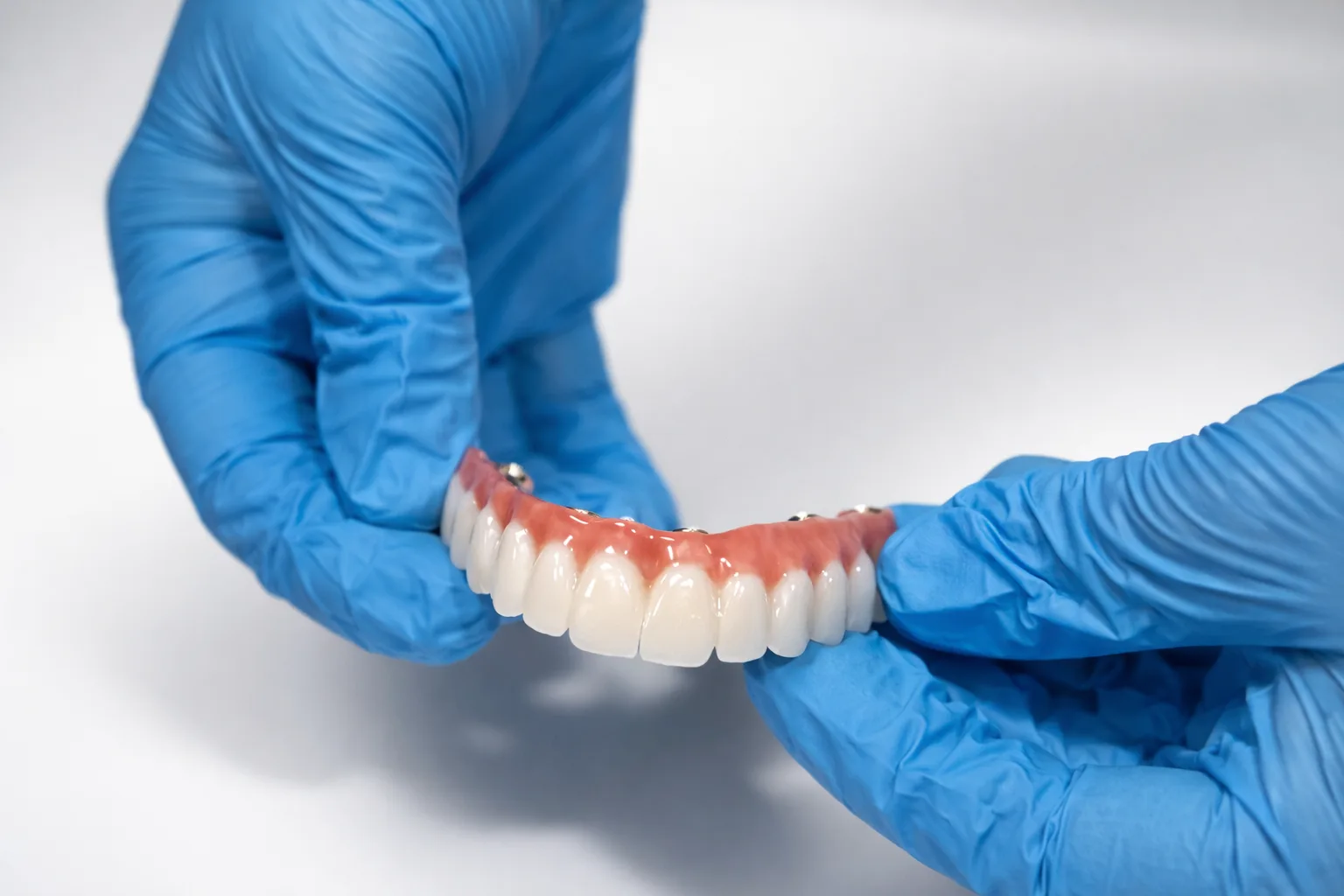
- Full-arch cases, such as All-on-4 treatment, where implant positions, bite forces, and the prosthetic design have to be planned together
- Medical complexity, where health history affects healing and sedation planning
Modern planning tools can help — 3D CBCT imaging lets a surgeon visualize bone volume and vital structures before any incision — but the scan is only as useful as the training of the person reading it.
The cost question, answered honestly
A common worry is that surgeon-led care means paying dramatically more. Pricing varies between practices, so the honest answer is: get specific written quotes and compare what's actually included. At Fusion Dental Implants, pricing is published and all-inclusive:
- Single implant — starts at $1,850, including the implant, abutment, and crown
- Snap-On Dentures — $9,999 per arch
- Full-arch All-on-4 — $17,999 per arch, backed by a lifetime warranty on full-arch restorations
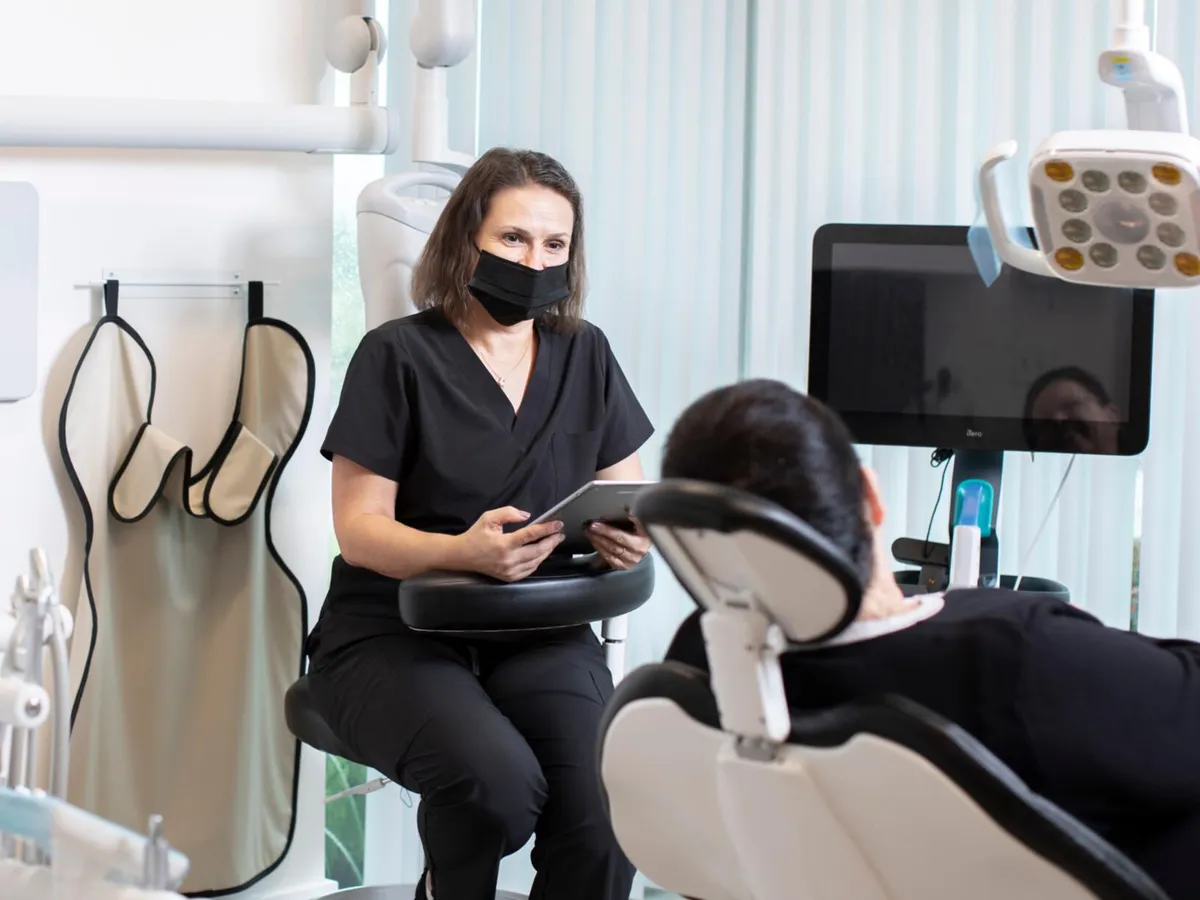
Every plan begins with a free consultation and 3D CBCT scan, the quote is provided in writing before anything is scheduled, and a price match guarantee applies to comparable local quotes. 0% financing is available for qualified patients through third-party lenders. If you're comparing offers, our guide to reading dental implant quotes line by line shows where quotes commonly differ.
In-House Dental Lab | Same-Day New Teeth | Transparent All-Inclusive Pricing | Lifetime Full-Arch Warranty | Price Match Guarantee
Surgeon-led implant care in Roseville and El Dorado Hills
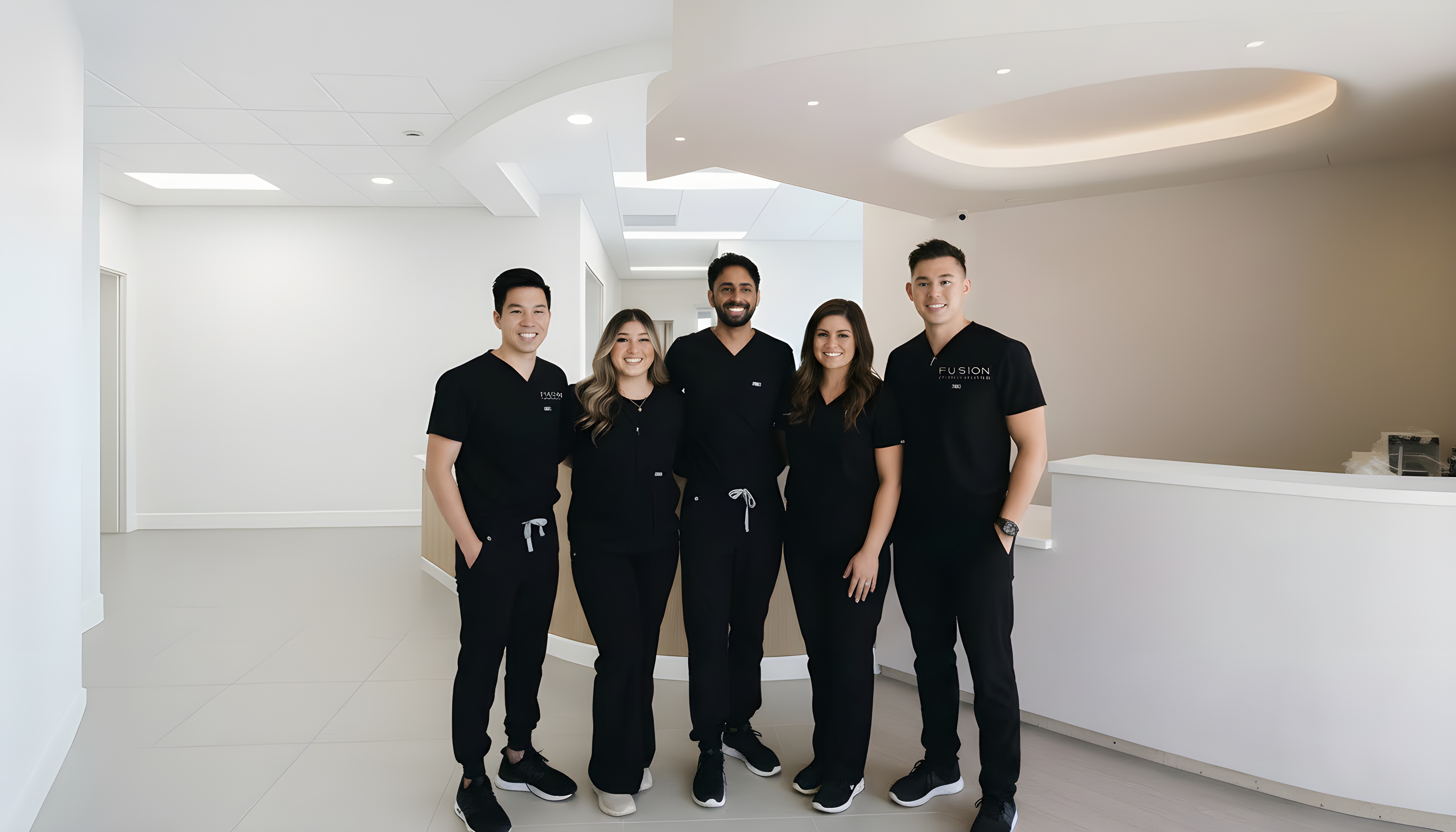
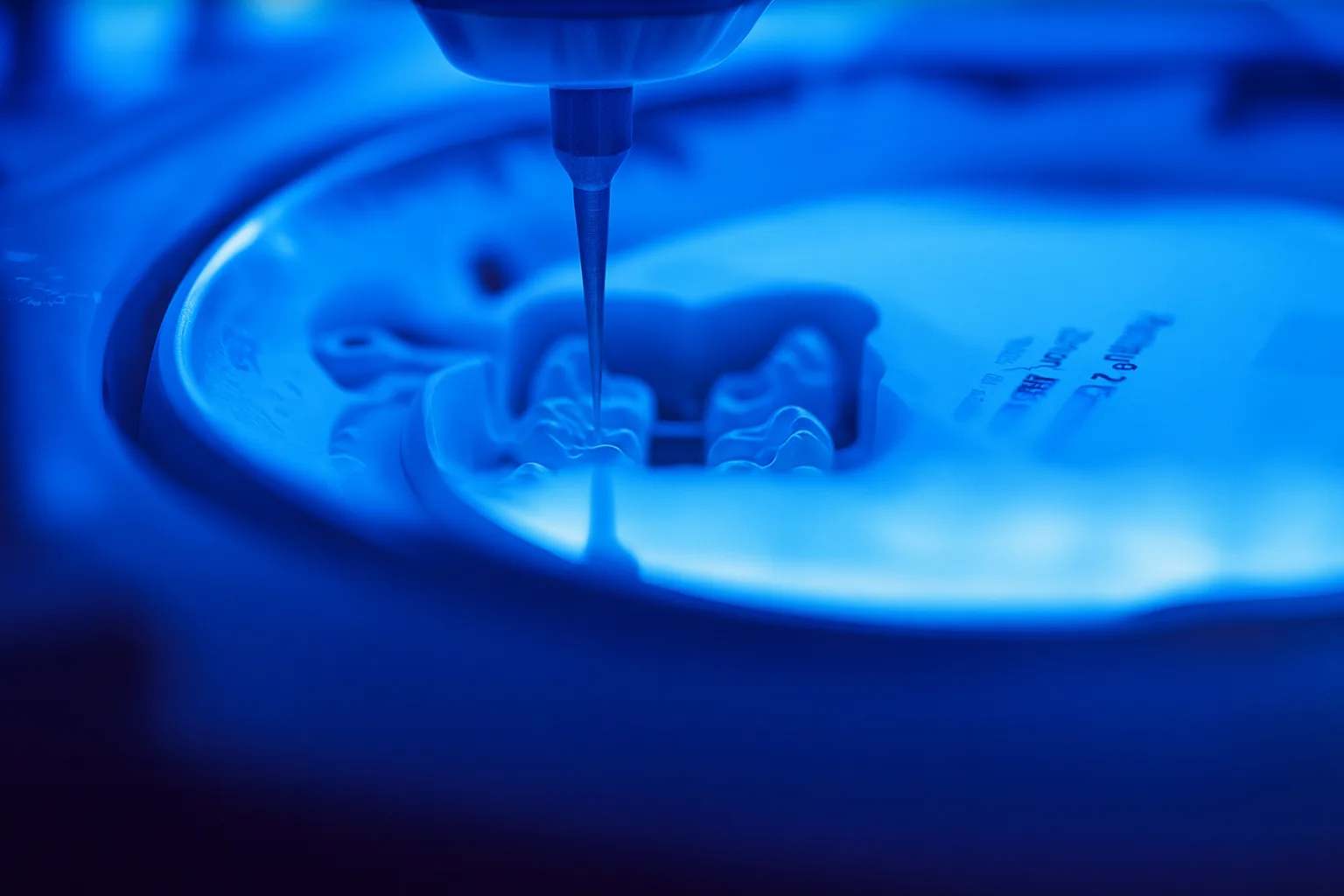
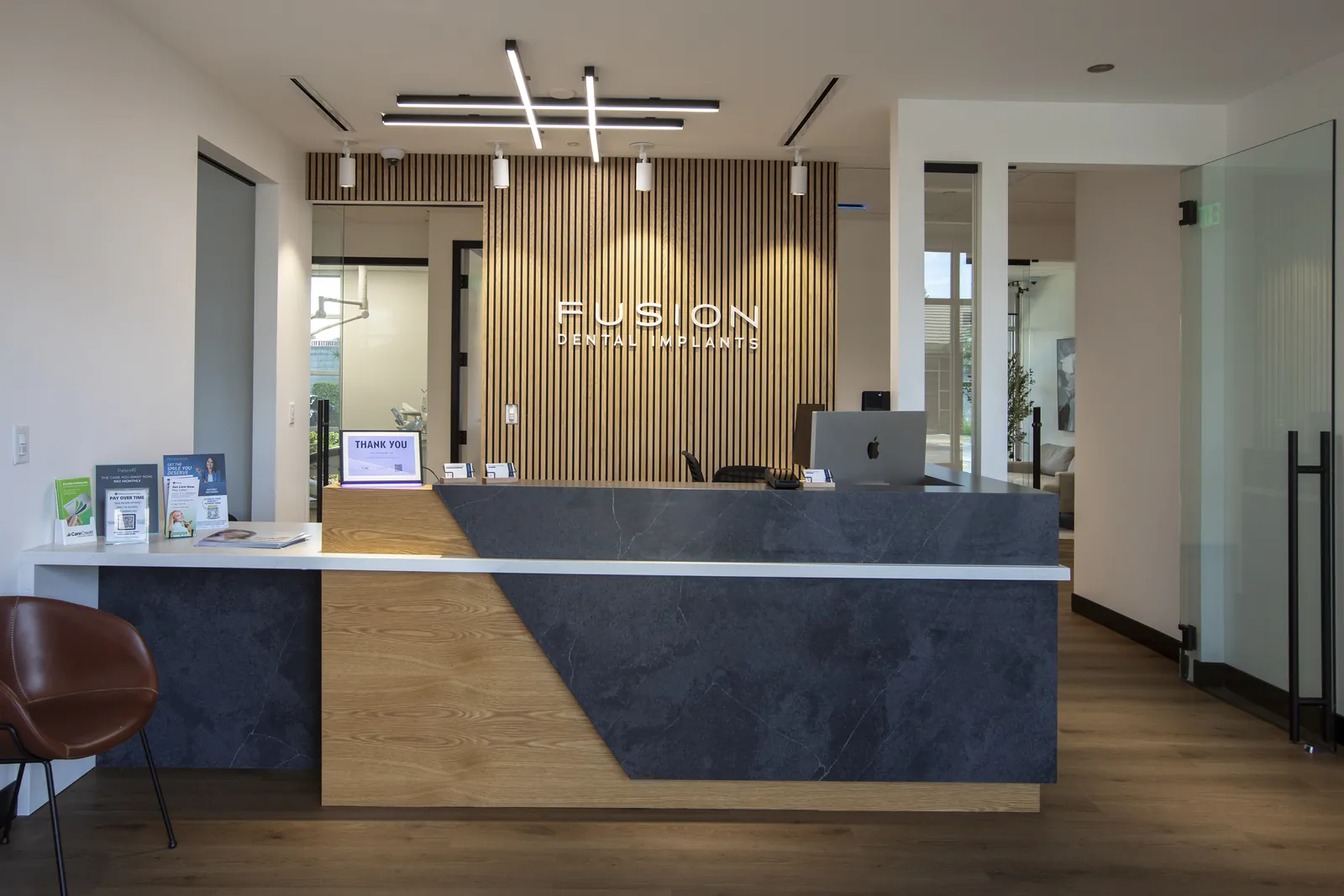
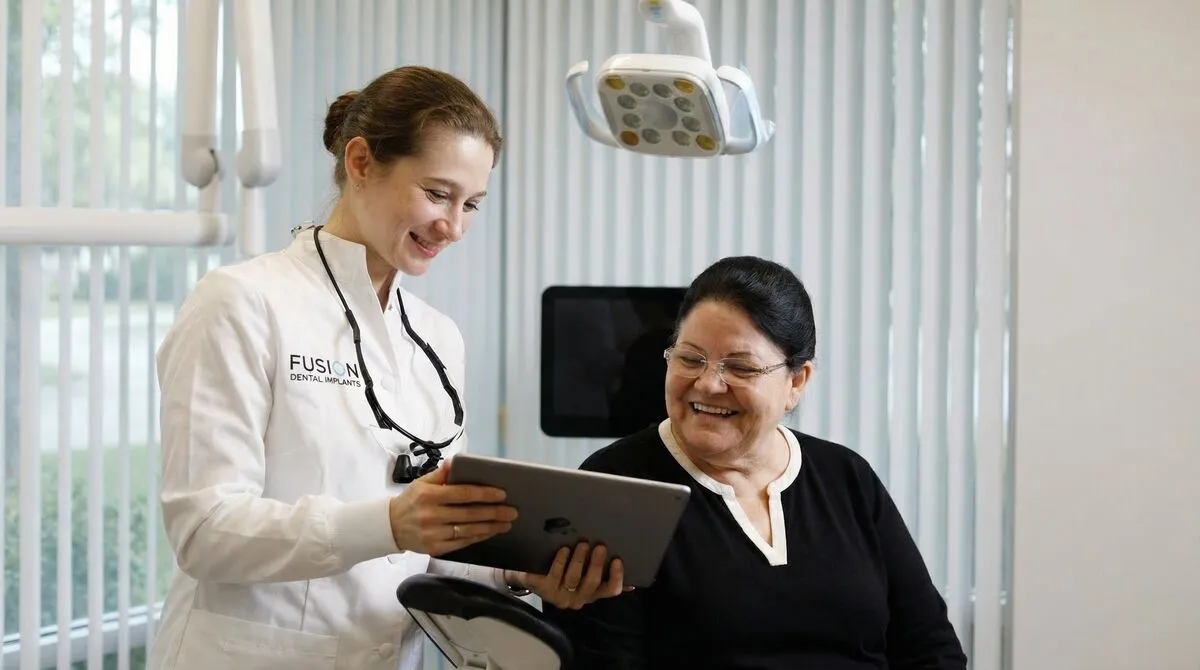
At Fusion Dental Implants, implant treatment is planned and performed under one roof at our Roseville and El Dorado Hills offices — surgical placement, IV sedation, and an in-house dental lab that fabricates restorations on site, which is what makes same-day teeth possible for qualifying full-arch cases. Care is led by Dr. Alexander Antipov, an oral and facial surgeon, and treatment planning starts with 3D CBCT imaging rather than guesswork.
You don't have to take any website's word for credentials — including ours. Look the license up, check the board's verification service, and then bring your questions to a free consultation. A good practice generally treats a well-informed patient as a good sign, not a challenge.
Frequently Asked Questions
What does board certified actually mean for a dental implant surgeon?
In the context of oral surgery, board certified generally refers to Diplomate status with the American Board of Oral and Maxillofacial Surgery (ABOMS). Earning it typically requires completing a multi-year hospital-based surgical residency after dental school, then passing the board's written and oral examinations. It is a voluntary credential that goes beyond what a dental license requires.
How can I verify a surgeon's credentials in California?
Two public lookups cover most of it. The Dental Board of California's license search (through the DCA license portal) shows whether a license is current and whether formal disciplinary actions are on record. For board certification, ABOMS offers a Diplomate verification service on its website. You can also simply ask the practice — a credentialed surgeon's team is generally glad to confirm the specifics.
Can a general dentist legally place dental implants in California?
Yes. A California dental license legally permits implant placement, so the credential question isn't about legality — it's about depth of surgical training. A general dentist may have learned implants through shorter continuing-education courses, while an oral and maxillofacial surgeon completed a dedicated surgical residency. For straightforward cases the gap may matter less; for complex ones, training depth typically becomes more important.
Does board certification guarantee a better outcome?
No credential can guarantee a surgical outcome, and you should be cautious of any provider who promises one. What board certification does document is that a surgeon completed formal residency training and passed independent peer examination. Combined with case volume, imaging technology, and how thoroughly the practice plans your case, it's one meaningful signal among several — not a warranty.
Is an implantologist the same as a board certified surgeon?
Not necessarily. Implantologist and implant dentist are marketing terms, not specialties recognized by the American Dental Association, so any licensed dentist can use them. That doesn't mean such a provider is unskilled — but the title alone tells you little. Asking which residency a provider completed and which board has certified them generally gives a clearer picture than the label on the website.
Why does sedation credentialing matter when choosing a surgeon?
California ties sedation permits to the level of sedation planned — moderate sedation and deep sedation/general anesthesia each have their own permit requirements and training expectations, including airway management and patient monitoring. Oral and maxillofacial surgeons typically train in anesthesia during hospital residency. It's reasonable to ask what level of sedation is planned, who administers it, what permit the practice holds, and how you'll be monitored.
Does a board certified surgeon cost more for dental implants?
Not necessarily. At Fusion Dental Implants, a single implant starts at $1,850 and full-arch All-on-4 treatment is $17,999 per arch — transparent all-inclusive figures quoted in writing after a free consultation and 3D CBCT scan. A price match guarantee applies to comparable local quotes, and 0% financing is available for qualified patients through third-party lenders.
What should I ask at an implant consultation?
Reasonable questions include: Are you a Diplomate of a surgical specialty board, and which one? How many cases like mine have you treated? Who handles the surgical and prosthetic phases, and are they under one roof? What imaging is used to plan placement? Who administers sedation and under what permit? What exactly does the quoted price include? A confident practice generally welcomes all of these.
This article is for educational purposes only and is not a substitute for professional medical advice, diagnosis, or treatment. Always consult a qualified dental professional about your specific situation.
Sources:
- U.S. Food & Drug Administration — Dental Implants: What You Should Know
- National Institute of Dental and Craniofacial Research — Oral Health Information
About Fusion Dental Implants: Fusion Dental Implants provides surgeon-led dental implant care at offices in Roseville and El Dorado Hills, California — including single implants, implant bridges, Snap-On Dentures, and full-arch All-on-4 restorations. With an in-house dental lab, 3D CBCT imaging, IV sedation, transparent all-inclusive pricing, and a lifetime warranty on full-arch restorations, patients can complete every phase of treatment under one roof. Free consultations include a 3D CBCT scan. Call (916) 292-9998 or book online.
Related reading:
Ready to Transform Your Smile?
Schedule your free consultation today and discover how dental implants can change your life.