Yes — teeth grinders can absolutely get dental implants. Bruxism is not a disqualifier; it is an engineering input. What changes is the plan: possibly more implants per arch, a stronger bridge material, shorter unsupported bridge ends, a carefully calibrated bite, and a night guard afterward. Implants fail grinders when the grinding is ignored — not because grinders cannot heal.
If your teeth are worn flat, if you wake with a sore jaw, or if a dentist has ever mentioned bruxism, this guide explains exactly how that history should shape your implant plan — and the questions to ask before anyone quotes you a price.
Why grinding is different from chewing
Chewing is intermittent: strong forces, brief moments, and your reflexes back off when something feels wrong. Grinding is the opposite — heavy, sustained, sideways forces applied for hours, usually at night when you cannot moderate them.
Natural teeth have a periodontal ligament — a microscopic shock absorber between root and bone. Implants do not. They fuse rigidly to the jaw through osseointegration, which is what makes them feel solid — but it also means grinding forces pass directly into the bridge, the screws, and the bone with nothing to cushion them. Sustained overload is one of the recognized mechanical contributors to implant complications.
The planning chain for grinders: 3D CBCT Scan → Bite & Wear Assessment → Implant Count and Position → Material Selection → Bite Calibration → Night Guard Protection
How bruxism changes the implant plan
Three of these deserve a closer look.
More anchor points, less stress per post
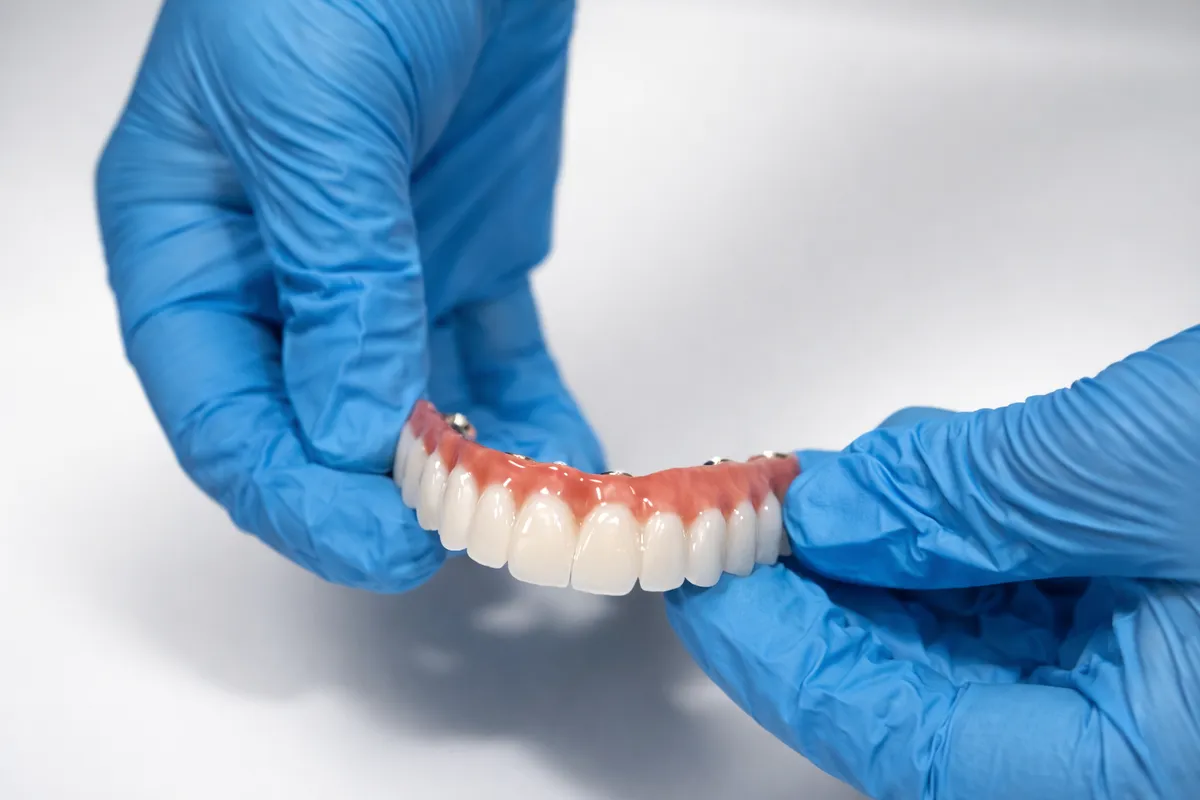
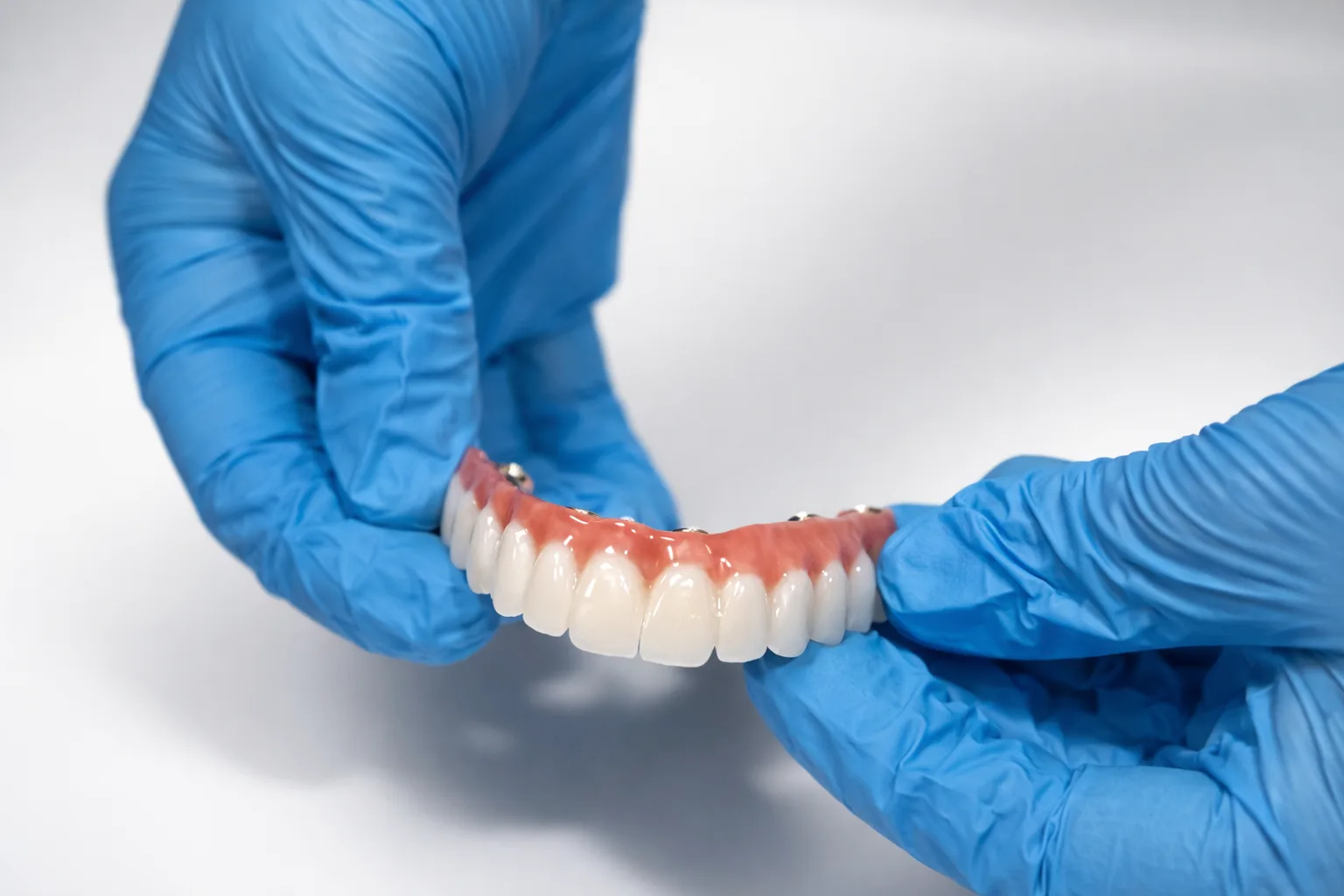
Think of a full-arch bridge as a physical bridge: the more pillars underneath, the less load each one carries. Adding a fifth and sixth implant spreads a grinder's forces across more anchor points — particularly valuable in the upper jaw, where bone is naturally softer. This is one of the classic scenarios in the All-on-4 vs All-on-6 decision, and it is anatomy-dependent: the 3D scan determines whether your bone can host the extra posts without grafting.
The cantilever: no diving boards for grinders
In many full-arch designs, the back teeth extend past the last implant. That unsupported section acts like a diving board — biting on the end multiplies leverage on the whole system. A moderate cantilever is fine for most patients; for a grinder applying sideways force all night, it is the first thing a careful surgeon shortens, either by trimming the bridge or by placing an implant further back so the heaviest forces land over support.
Material: where grinders should not economize
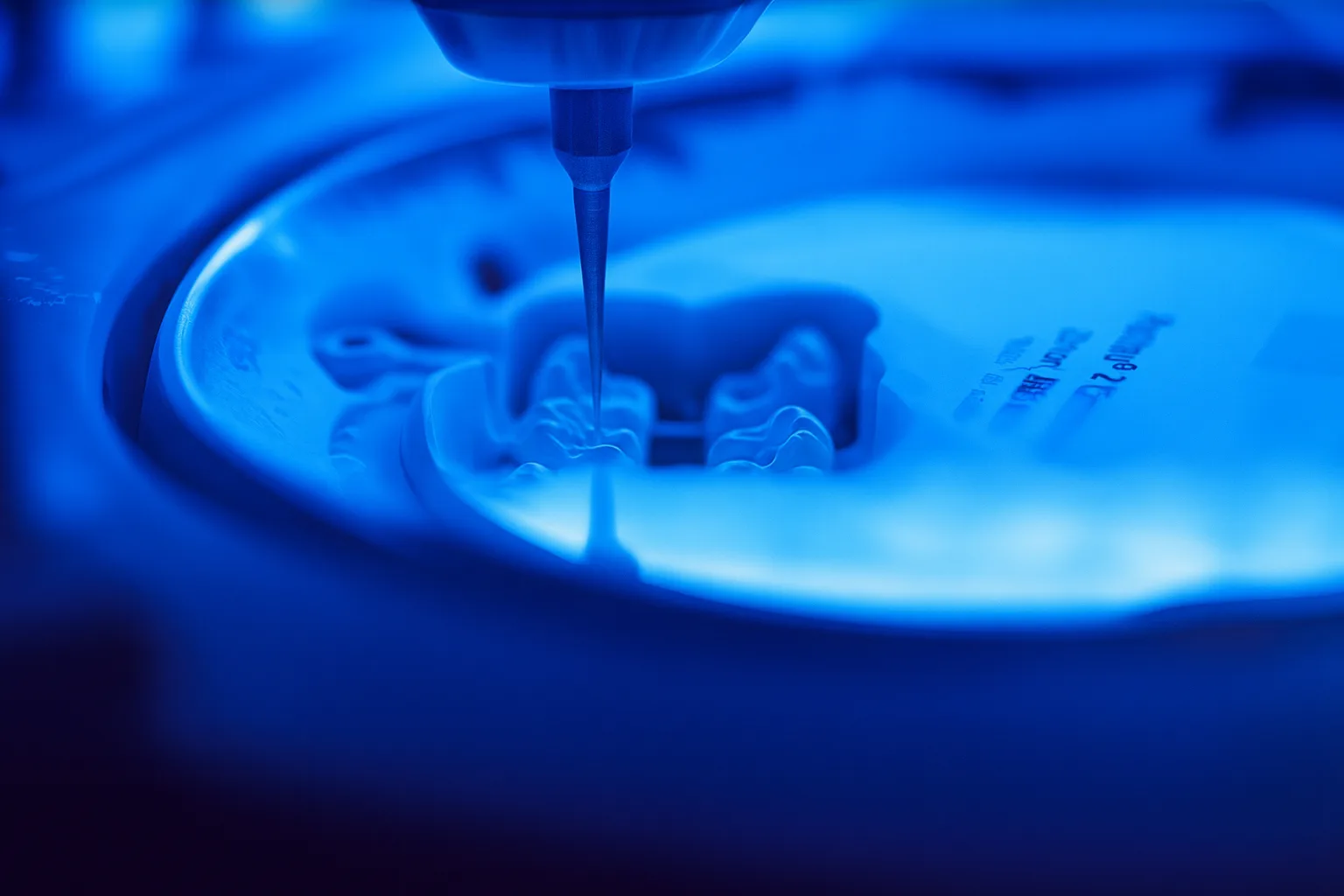
Acrylic-titanium hybrid bridges are proven and more affordable — but acrylic teeth wear flat and can chip under bruxism, bringing replacement forward by years. Monolithic zirconia resists exactly the kind of sustained abrasive force grinding produces, which is why it is generally the grinder's material; our zirconia vs acrylic comparison covers the trade-offs in detail.
The night guard: cheap insurance on a major investment
After treatment, a custom night guard becomes non-negotiable for grinders. It absorbs and distributes the forces your jaw generates at night — forces that would otherwise spend hours working on the bridge surface, the retaining screws, and the implants themselves. Relative to the cost of a full-arch restoration, a night guard is the cheapest protection you will ever buy for it. The NIH's oral health resources cover bruxism and its effects on teeth and dental work.
Grinders also benefit from slightly more vigilant follow-up: bite contacts are rechecked and adjusted at routine visits, and any new clicking, loosening, or chipping gets attention early — the same early-warning logic covered in our guide to whether a failing implant can be saved.
Can grinders still get same-day teeth?
Often, yes. Teeth-in-a-day protocols depend on implant stability at placement, and a grinder's plan simply builds in more protection: rigid splinting across all posts, a provisional bite adjusted to minimize force on the fusing implants, and strict night guard use during the healing window. Candidacy is case-by-case, confirmed by scan and bite assessment — not assumed.
Get a plan built for your bite
At our Roseville and El Dorado Hills offices, every full-arch consultation includes a free 3D CBCT scan and a bite and wear assessment — so the recommendation you receive reflects your actual jaw, not a template. Pricing is transparent and all-inclusive: All-on-4 from $17,999 per arch, single implants $1,850, with 0% financing options and a price match guarantee on comparable local quotes.
The FDA's dental implant overview is a useful independent primer on implant systems before your visit.
Schedule your free consultation
Why patients choose Fusion: In-House Dental Lab | Same-Day New Teeth | Transparent All-Inclusive Pricing | Lifetime Full-Arch Warranty | Price Match Guarantee
Frequently Asked Questions
Can you get dental implants if you grind your teeth?
Yes. Bruxism is not a disqualifier — it is a planning factor. Grinders routinely receive successful implants when the plan accounts for the extra force: sometimes more implants per arch, stronger bridge materials like zirconia, shorter unsupported bridge sections, and a night guard after treatment. What fails is ignoring the grinding, not the grinding itself.
Why does teeth grinding matter for dental implants?
Chewing generates strong forces for brief moments; grinding applies heavy, sustained, sideways forces for hours — often at night, when you cannot moderate them. Implants have no shock-absorbing ligament like natural teeth, so that sustained overload passes directly into the bridge, the screws, and the bone. Overload is one of the recognized mechanical causes of implant complications.
Do teeth grinders need more implants — All-on-4 or All-on-6?
Often, yes — when bone volume allows, adding implants spreads bite force across more anchor points, so each post and each section of bridge carries less stress. Heavy grinders are one of the classic cases where a surgeon leans toward six implants instead of four, especially in the softer bone of the upper jaw. The final call comes from your 3D scan, not a rule of thumb.
What is the cantilever effect and why does it matter for grinders?
In a full-arch bridge, the back teeth can extend past the last implant like a diving board. Biting on that unsupported end multiplies leverage on the posts and the bridge. For grinders, surgeons shorten the cantilever or add a further-back implant so the heaviest forces land over support instead of past it.
What bridge material is best if I grind my teeth?
Monolithic zirconia is generally the material of choice for grinders — it resists the wear and fracture that heavy sustained forces inflict on acrylic bridges. Acrylic-titanium hybrids can chip or wear flat under bruxism and typically need earlier replacement. Material choice is one of the few decisions a grinder should not economize on.
Will I need a night guard after getting implants?
If you grind, almost certainly yes. A custom night guard is inexpensive insurance for a full-arch investment: it absorbs and distributes grinding forces that would otherwise work on the bridge, screws, and implants all night. It protects the prosthetic from wear and the implants from overload.
Can grinding cause dental implants to fail?
Untreated overload can contribute to mechanical problems — loosened screws, chipped or fractured bridges, and in some cases disturbed bone support around implants. That is precisely why grinders get a modified plan rather than a standard one. With proper implant count, materials, bite calibration, and a night guard, grinders achieve success rates comparable to other patients.
How do I find out what my bite requires?
A free consultation with a 3D CBCT scan at our Roseville or El Dorado Hills office maps your bone and lets the surgical team evaluate wear patterns, jaw muscle development, and grinding history. From that, you get a specific recommendation — implant count, material, and protection plan — with transparent all-inclusive pricing and 0% financing options.
This article is for general patient education and is not a substitute for personalized medical advice, diagnosis, or treatment. Every patient's oral health, anatomy, and healing response are different. Consult Dr. Antipov or your dental professional before making treatment decisions.
Sources: FDA: Dental Implants — What You Should Know · NIH/NIDCR: Oral Health Topics
About Fusion Dental Implants: We specialize in advanced dental implant solutions with locations in Roseville and El Dorado Hills, California.
Related reading: