Temporary Crown: Care, Eating, and When to Call Your Dentist
A temporary crown, also called a provisional crown, protects a prepared tooth while the final restoration is being made or the treatment plan is being evaluated. It helps maintain appearance, spacing, and function, but it is not a reason to postpone the final appointment indefinitely.
On this page
Why a temporary crown is used
The ADA crown guide explains that a crown covers a tooth to restore its shape and strength. When a final crown is made by a laboratory, a temporary often protects the tooth between appointments. Some treatment plans use a provisional for longer to assess the bite or allow tissues to settle.
| Restoration | What it is used for | Important distinction |
|---|---|---|
| Temporary crown on a natural tooth | Protect a prepared tooth before a final crown | The underlying tooth may still be sensitive or vulnerable |
| Temporary bridge | Replace a missing tooth while supported by adjacent teeth or another planned support | Cleaning under the replacement tooth needs specific instructions |
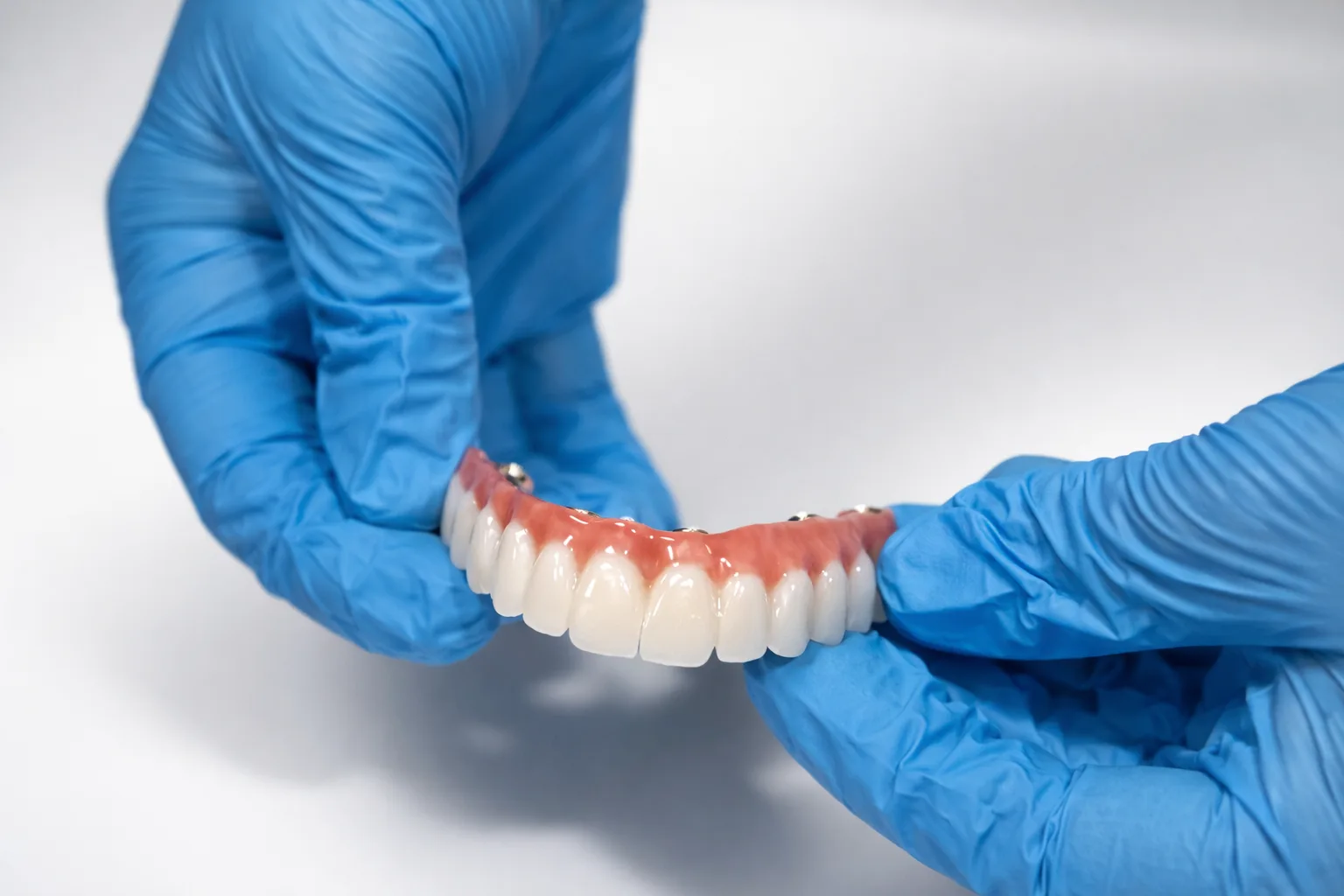
| Implant-supported temporary | Support appearance or function during an implant treatment plan | Loading restrictions depend on implant stability and healing |
| Final crown | The planned longer-term restoration | Still needs daily cleaning and professional maintenance |
This guide mainly concerns a temporary over a natural tooth. If you have an implant restoration, follow your surgical team's instructions and read about temporary teeth after same-day implants.
Eating and cleaning with a temporary
Wait until numbness has worn off before chewing so you do not injure your cheek or tongue. Choose foods that are comfortable and avoid sticky sweets, ice, hard nuts, and other foods that could dislodge or break the temporary. Use the other side when your dentist recommends it.
Brush gently around the gumline. Do not stop cleaning because you are worried about the restoration, but ask the team to demonstrate safe flossing. Sliding floss out to the side rather than pulling it upward may reduce the chance of catching the edge; your instructions depend on the restoration and surrounding teeth.
A temporary bridge needs a different cleaning approach underneath its replacement tooth. Do not force floss or an interdental device into an area where it catches. Call for guidance if you cannot clean comfortably.
If it feels high, loose, or painful
If the crowned tooth seems to contact first when you close, tell your dentist. A bite adjustment may be needed; do not try to wear it down by chewing hard foods or file it yourself.
Mild sensitivity can occur after preparation, but worsening pain, pain that wakes you, swelling, or significant pain on biting should be assessed. A dentist may need to check the bite, cement, underlying tooth, or tissue inside the tooth.
Cleveland Clinic's crown overview discusses crown treatment and potential complications. The cause of symptoms cannot be diagnosed from their timing alone, and pain does not automatically mean a root canal is required.
If the crown comes off
Keep the crown and contact the treating office promptly. Avoid chewing on the exposed tooth and do not use household glue. Do not force a restoration into place or leave a loose object in your mouth that could be swallowed or inhaled.
Your dentist can advise whether an interim dental product is appropriate for your particular situation. A product bought without assessment cannot establish whether the tooth has fractured or whether the crown still fits.
If you have breathing difficulty or suspect you inhaled a restoration, seek emergency medical help. Rapidly spreading facial swelling, trouble swallowing, or uncontrolled bleeding also needs emergency medical assessment.
Timing, cost, and your final appointment
The interval before a final crown varies with laboratory work, gum health, and the overall plan. Keep the arranged appointment and call if it must be delayed. A comfortable temporary is not automatically suitable as a permanent replacement.
Ask whether the temporary and any necessary recementation are included in the written estimate. There is no universal fee that applies to every crown case. The final appointment may include removing the temporary, checking fit and contacts, assessing the bite, and confirming the planned shade.
For treatment decisions, see crowns versus veneers and our general crown guide. If the original issue was a fracture, the chipped-tooth repair guide explains how different diagnoses lead to different plans.
Frequently Asked Questions
Is a provisional crown the same as a temporary crown?
Yes. Both terms generally describe an interim restoration used until the planned final crown is ready.
How long should a temporary crown stay on?
Follow your dentist's schedule. Many are used for a short laboratory interval, but some treatment plans require longer provisional care and monitoring.
Can I eat with a temporary crown?
Usually, with precautions. Follow your dentist's instructions, avoid sticky or hard foods, and do not chew while the area is still numb.
What if my temporary crown comes off?
Save the crown, avoid chewing on the exposed tooth, and contact your dentist promptly. Do not use household glue or force it back into place.
Is sensitivity normal?
Some sensitivity can occur, but persistent, worsening, spontaneous, or severe pain needs assessment. A temporary does not make all discomfort harmless.
Can I brush and floss around it?
Keep the area clean and follow the technique your dental team demonstrates. Avoid snapping floss upward against the temporary; ask whether sliding it out to the side is appropriate.
Does a loose temporary mean my final crown will fail?
Not necessarily. Temporary materials and cement differ from final restorations. The dentist still needs to check the tooth, fit, and bite.
Is a temporary crown the same as temporary implant teeth?
Not always. A crown over a prepared natural tooth has different considerations from an implant-supported temporary crown or full-arch bridge.
Contact your dental team
For an existing temporary, contact the office that placed it whenever possible. Fusion's offices are in Roseville and El Dorado Hills. Call (916) 292-9998 or request an appointment. Appointment starts are Monday through Friday, 8 AM through the last 4 PM Pacific slot; same-day availability is not guaranteed.
Ready to Transform Your Smile?
Schedule your free consultation today and discover how dental implants can change your life.