
Dental Implant Procedure for a Front Tooth: Planning, Healing, and Your Final Crown
A dental implant procedure for front tooth replacement typically involves an examination, a plan for both the implant and visible crown, implant placement, healing, and fitting the final restoration. The biggest practical questions are often what happens to the visible space while you heal and how the gumline and new tooth will look beside your natural teeth. Neither a same-day tooth nor a particular cosmetic result is automatic.
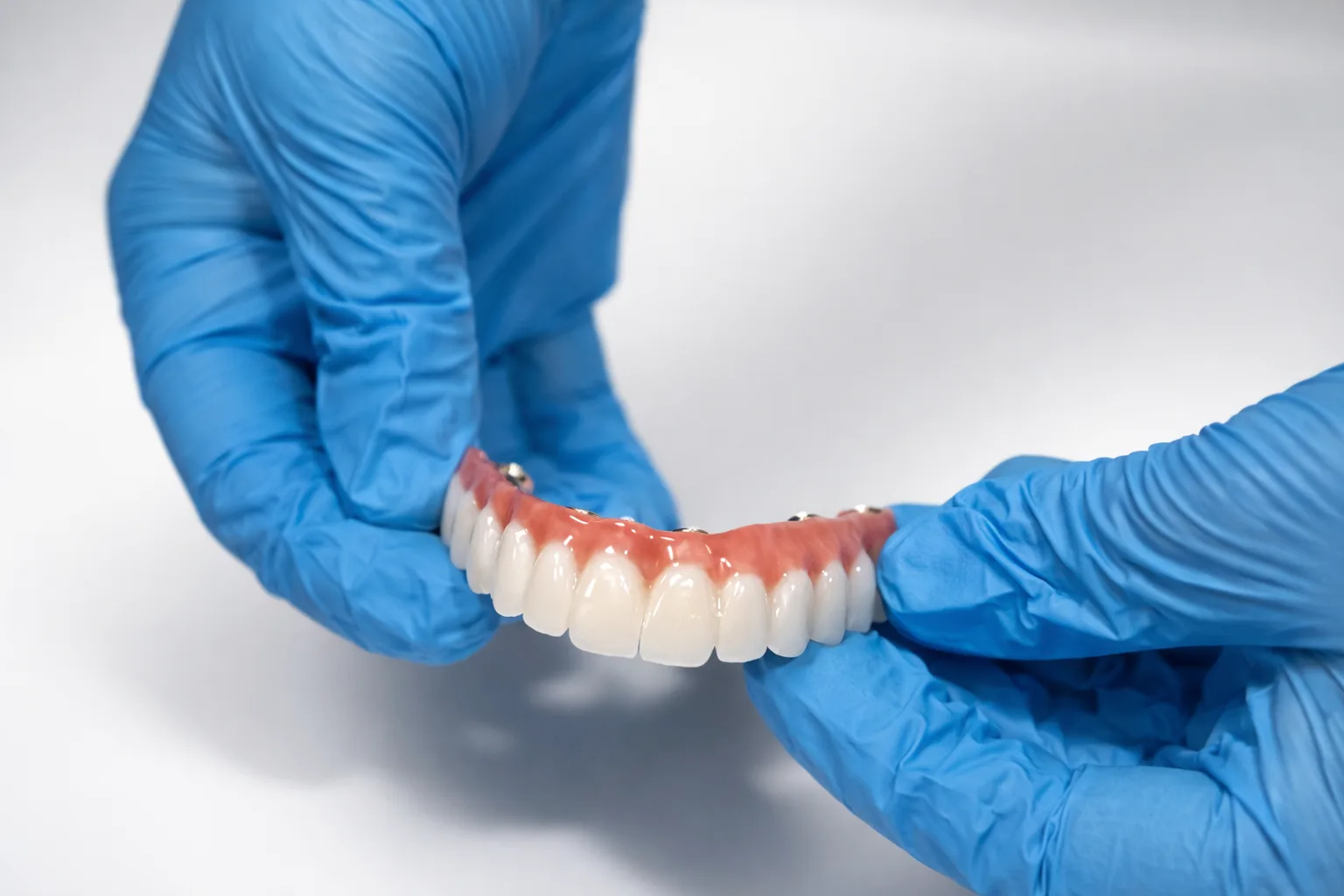
An implant is a post placed in the jawbone to support replacement teeth. An abutment connects the implant to its crown, the visible part of the replacement. The FDA's patient information on dental implants explains the components, possible benefits, and risks. Replacing one front tooth is different from treating a back tooth because its shape, color, and tissue contours are easy to notice when you smile.
If your tooth is still present but damaged, ask whether it can be saved before deciding on extraction. If it is already missing, bring up how long the space has been open and what you currently wear there. Our guide to missing front tooth replacement options offers a broader starting point.
From consultation to the final crown
The path at a glance: Examination and imaging → site preparation if needed → implant placement → healing and reassessment → abutment and final crown.
Examination and restoration-first planning
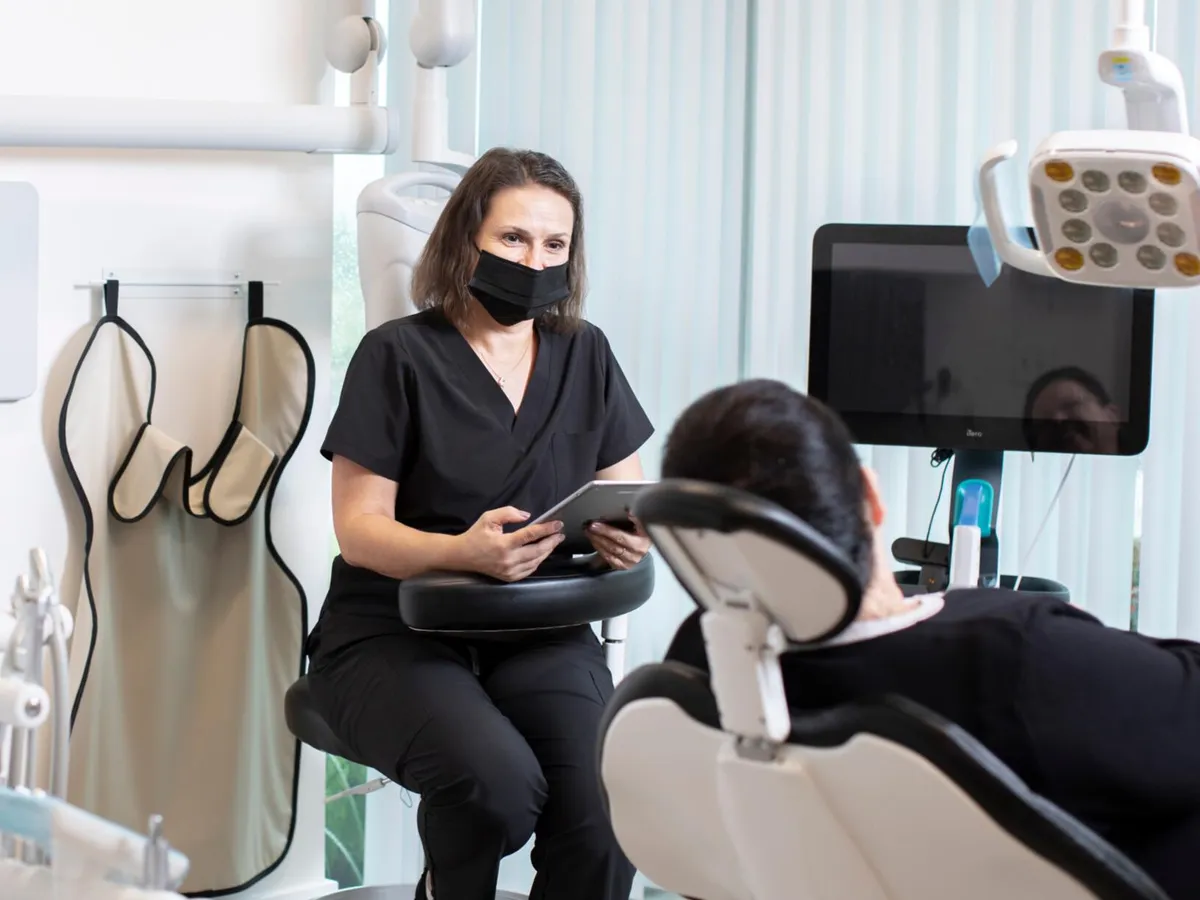
Your clinician reviews your health history, medications, dental history, and what matters most to you about your smile. An exam considers the gums, neighboring teeth, bite, and the tooth or space being treated. X-rays or three-dimensional imaging may be recommended to assess available bone, neighboring roots, and anatomy. Ask which images are needed and what decisions they will inform.
Before placing an implant, the team should discuss where the finished crown needs to sit. Front teeth are framed by the gumline and neighboring teeth; placing a post without considering the future crown could limit restorative choices. Bring photographs if you want to show how your smile looked before the tooth was lost, and ask how the team plans crown width, length, and position.
Extraction or preparatory treatment, if indicated
If the existing tooth cannot be restored, removal may come first. If the site lacks enough bone or tissue support, the clinician may discuss grafting or other preparatory care. These are possibilities, not universal steps. Whether an implant is placed at extraction or at a later visit depends on the condition of the site and your treatment plan. Ask how an infection, thin bone, or existing gum recession would affect sequencing.
If you have gum disease, discuss how it will be assessed and managed. Healthy surrounding tissues matter to long-term care around both natural teeth and implants. An implant does not eliminate the need for hygiene and professional follow-up.
Placement, healing, and restoration
During surgery the clinician positions the implant in the jaw. Healing involves the bone integrating with the implant. The team checks the site before deciding when the implant can support its final restoration; there is no universal date. Our implant healing stages guide explains the distinction between early recovery and later integration.
Once the clinician confirms readiness, an abutment and custom crown complete the replacement. The crown design should take into account the adjacent teeth, the bite, and the gum tissue framing the tooth. Discuss which clinician designs the crown, how its appearance will be assessed, and whether adjustments might be needed. A clear written plan should distinguish surgery, any temporary replacement, and the final restoration rather than treating “implant” as a single appointment.
Appearance and temporary teeth during healing
For a front tooth, the temporary arrangement deserves its own conversation before any procedure. You may be offered a removable temporary tooth, a tooth bonded or otherwise supported by neighboring teeth, or, in selected circumstances, a provisional attached to the implant. These options differ in stability, cleaning, and restrictions. A temporary does not necessarily indicate that the implant is ready for normal biting.
Ask specifically whether you will have a visible gap at any point, what the temporary will look like, who makes it, and how soon it can be fitted. If it is removable, learn when to take it out and how to clean it. If attached, ask what foods or biting habits to avoid and whom to call if it loosens. Temporary teeth after implants are an individualized decision, not a guarantee attached to the phrase “same day.”
The final crown can be planned for color, proportions, translucency, and position relative to nearby teeth. The surrounding gums also shape what you see: a receded or uneven gumline cannot simply be fixed by selecting a different crown shade. Tissue healing and the preexisting anatomy may change the appearance during treatment. Ask what is realistically achievable, what may remain different from a natural tooth, and whether a preview or provisional will help refine the restoration. No clinician can promise an exact cosmetic match.
Front tooth implant, bridge, or removable replacement?
An implant-supported crown is one option, not a verdict on every other option. A conventional bridge uses neighboring teeth for support and may make sense when those teeth already need crowns or implant surgery is unsuitable. A removable tooth can fill the space temporarily, and in some circumstances is chosen longer term. The ADA's overview of bridges gives useful context for discussing tooth-supported replacements.
| Consideration | Implant-supported crown | Conventional tooth-supported bridge | Removable partial or temporary tooth |
|---|---|---|---|
| Support | Implant in the jaw supports a separate crown | Neighboring teeth support a replacement tooth | Appliance rests against tissues and/or uses teeth for retention |
| Nearby teeth | Usually does not require them as bridge supports | Supporting teeth may need preparation | Design may use neighboring teeth but usually avoids bridge-style preparation |
| Treatment sequence | Surgery, healing, then final crown; additional preparation may be needed | Tooth preparation and bridge fabrication; no implant surgery | Fitting and adjustments; can be used during another treatment |
| Visible appearance | Custom crown and gumline need careful coordination | Replacement and adjacent crowned teeth are planned together | Appearance and stability depend on fit and design |
| Daily care | Clean around crown and implant; attend follow-up | Clean under the replacement and around supporting teeth | Remove and clean as instructed; monitor fit |
| Main limitation | Requires suitable anatomy and healing; surgery is involved | Involves supporting teeth and requires their ongoing health | May move or feel less secure; fit may change |
The choice is not only about avoiding surgery. If adjacent teeth have large restorations, a bridge may be reasonable; if they are healthy, preserving them may be a priority. If implant placement would require preparatory care you do not want, ask what a bridge entails instead. The single-tooth implant guide and implant procedure overview provide more background for that discussion.
What changes timing, candidacy, and recovery?
Your clinician needs to evaluate the site rather than infer candidacy from a photo. The amount and position of bone, the gums, neighboring roots, existing infection, bite forces, and health history can all affect the recommendation. Smoking, medications, and medical conditions are worth discussing frankly. A limited amount of bone may prompt a discussion of grafting or an alternative; it does not by itself tell you the outcome.
There are separate clocks for post-surgical recovery, implant integration, and fabrication of a final crown. Even if an implant can be placed on the day a tooth is removed, its permanent crown may come later. If grafting is needed, the plan may have additional stages. Ask for a proposed timeline with checkpoints and what findings might change it; avoid relying on a promised finish date for an unseen site.
Before surgery, ask about anesthesia, post-procedure instructions, diet, and who to call with concerns. Some soreness or swelling can occur, but your own team should tell you which changes need attention. Do not rely on a generic recovery calendar when your treatment includes extraction, grafting, or another additional procedure. Attend the planned reviews and follow the hygiene and eating directions specific to your provisional and implant.
Planning includes cost as well as biology. Fusion lists single implants from $1,850; this starting price is not a quote for a completed front-tooth plan. Extraction, grafting, a temporary restoration, the final crown, and other indicated services can change the total. Request a written itemization stating what is included and what might cost extra. Learn about implant financing and the price-match guarantee terms; financing is subject to approval and terms.
Choosing a provider and preparing your questions
Ask who evaluates your case, who places the implant, who designs and fits the crown, and how the clinicians coordinate. Request a clear explanation of the images and findings behind the recommendation. Relevant experience matters, but a credential or a gallery image cannot predict your particular outcome. You can ask what alternatives the team would consider if surgery is not appropriate and who handles follow-up or an unexpected complication.
A practical checklist for your visit:
- Is the tooth restorable, or why is removal recommended?
- What do imaging and examination show about bone, gums, adjacent teeth, and my bite?
- Which temporary tooth could cover the space, and what limitations would it have?
- What might change the timing of implant placement or the final crown?
- How will the crown shade and gumline be planned, and what cannot be guaranteed?
- What is included in my written estimate, and who provides ongoing maintenance?
Fusion Dental Implants has offices in Roseville and El Dorado Hills and serves patients from surrounding Northern California communities. Confirm the office for your consultation and follow-up. You do not need to choose treatment before understanding its alternatives, likely stages, and total proposed cost.
Frequently Asked Questions
What is the procedure for a front tooth dental implant?
After an exam and appropriate imaging, the clinician plans the final tooth and places an implant in the jaw if suitable. The implant heals before an abutment and custom crown are fitted. Extraction, grafting, or a temporary tooth may change the sequence.
Can I have a temporary tooth while the implant heals?
Often there are temporary options, but the design depends on the site and treatment plan. A removable appliance or other provisional may be considered; a tooth attached to the new implant is not appropriate in every case. Ask how to clean and use yours.
How long does a front tooth implant take from start to finish?
It often involves separate planning, placement, healing checks, and restoration visits over months. Extraction, grafting, gum health, implant stability, and your healing response can extend or change the sequence. Ask for an estimate specific to your exam.
Does placing a front tooth implant hurt?
Your team will discuss anesthesia and comfort measures before treatment. Soreness or swelling afterward can occur, and experiences vary. Follow your personalized instructions and contact your care team if symptoms concern you.
Will my front tooth implant look like my other teeth?
A custom crown can be designed with neighboring teeth and the visible gumline in mind. Shade, shape, tissue contours, and healing all influence appearance, so an exact match cannot be promised. Discuss these details during planning.
Is an implant better than a bridge for a front tooth?
Not for everyone. An implant supports its own crown without using adjacent teeth as bridge supports, but it requires surgery and adequate conditions at the site. A bridge may suit other clinical or personal priorities. Compare both after an exam.
What if I do not have enough bone for an implant?
The clinician may discuss grafting, another preparatory step, or a different replacement such as a bridge. Imaging and examination are needed to understand the available bone and whether an implant plan is appropriate.
How much does a front tooth implant cost?
Fusion lists single implants from $1,850; a front tooth plan may involve a crown, extraction, grafting, or other care that changes the total. Ask for an itemized estimate, what is included, and any financing terms before deciding.
The right front-tooth plan addresses the visible tooth, the underlying site, and the months between treatment stages. To compare a crown, bridge, and temporary options based on your own exam, request a consultation.
This article is for general patient education and is not a substitute for personalized medical advice, diagnosis, or treatment. Your dental professional can advise you based on your oral health and medical history.
About Fusion Dental Implants: We provide implant-focused care at offices in Roseville and El Dorado Hills, California.
Ready to Transform Your Smile?
Schedule your free consultation today and discover how dental implants can change your life.