
Dentures Without a Palate: The Open-Palate Options Explained
Yes, you can get upper dentures without a palate plate — but they need dental implants for support, because the plate is what holds a traditional denture in. Implant-supported designs move that job from the roof of your mouth to posts anchored in your jawbone, which is why they can leave the palate completely open. For many long-time upper denture wearers, that open palate — not just the stability — is the change they notice most at the first meal.
The path to a palate-free smile: Free consultation + 3D CBCT scan → choose fixed bridge or palate-free snap-in → implant placement → open-palate teeth
Why upper dentures cover the roof of your mouth
A conventional upper denture has no anchor. The acrylic plate spanning your palate creates suction and spreads chewing pressure across the gums — it's the denture's only means of staying put. That's also why the plate can't simply be trimmed away: cut the palate out of a traditional denture and it typically loses the suction that keeps it in place.
The cost of that design is sensory. The palate participates in how eating feels — sensing temperature, texture, and contributing to the overall experience of taste. Cover it with a full plate and many wearers report food tasting flatter, hot drinks feeling lukewarm, and speech sounding slightly muffled. For some, a plate reaching toward the soft palate also triggers the gag reflex. Fit, palate coverage, and other factors can contribute to these concerns; an assessment helps distinguish them.
Upper-jaw implant dentures: support before palate removal
The upper and lower jaws should not be treated as interchangeable. The available upper-jaw bone, sinus anatomy, bite, and denture design influence the number and position of implants. A two-implant lower overdenture plan should not be assumed suitable for the upper jaw.
An implant-retained upper denture is not automatically palate-free. Some designs still need palate coverage for strength or support. A clinician must assess the complete design before promising an open roof of the mouth. Never cut down an existing denture yourself; weakening its structure or losing retention can make it unusable.
Fixed and removable mean different daily routines
With a removable implant denture, you release the attachments and clean the appliance and implant areas according to your instructions. Retention inserts or other attachment parts may wear and need replacement. A fixed bridge stays attached while you brush and clean beneath it; only a dental professional removes it when appropriate.
The distinction matters for someone with limited dexterity. Removing and reseating a denture may be difficult, while cleaning under a fixed arch can also require practice. Ask to handle a demonstration model and discuss any assistance you might need. The Cleveland Clinic implant-supported denture guide explains both categories.
Questions about your upper-arch plan
- How many implants are proposed, and why is their distribution suitable?
- Will this design cover any part of the palate?
- How will the denture or bridge support my lips and affect speech?
- What temporary teeth are possible if grafting or staged healing is needed?
- Which attachment or hygiene items need regular replacement?
- What happens if an implant cannot be loaded as planned?
Do not judge suitability solely by how long you have worn dentures. Imaging and examination are needed to assess remaining bone. Our upper-jaw bone-loss comparison describes why some patients need a different approach.
At Fusion's Roseville and El Dorado Hills offices, request a written plan that identifies whether the proposed teeth are fixed or removable, their expected palate coverage, and the maintenance they require.
The two palate-free designs
In appropriately planned cases, implants can support designs that leave the palate open. Not every implant denture can safely omit palate coverage. Two options to discuss are:
| Fixed full-arch bridge | Palate-free snap-in denture | |
|---|---|---|
| Removable? | No — stays in around the clock | Yes — clicks on and off implants |
| Typical implants (upper) | 4–6 | Typically 4 |
| Palate coverage | None — open roof of mouth | None — horseshoe shape |
| Cleaning | Brushed in place, water flosser under the bridge | Removed for cleaning |
| Price at Fusion | $17,999 per arch (All-on-4) | $9,999 per arch — Snap-On Dentures |
Appropriately designed palate-free versions leave the roof of your mouth open. The difference is how they live in your mouth day to day — a decision covered in depth in our fixed vs. snap-in comparison.
The fixed full-arch bridge
The palate-free snap-in
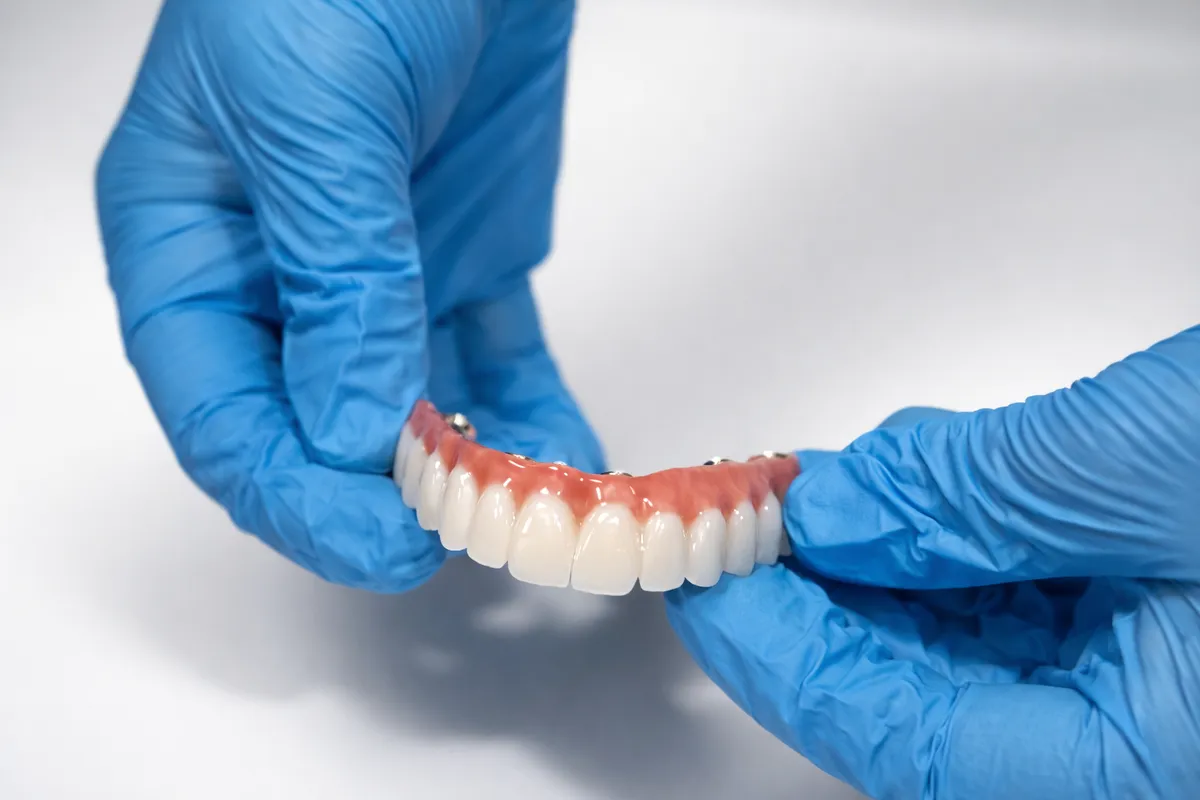
A Snap-On Dentures design typically clips onto four implants and is shaped like a horseshoe — open in the middle, no plate. It comes out for cleaning, which some patients prefer, and it costs less than a fixed bridge. How many implants your arch needs depends on your bone and jaw anatomy, which the CBCT scan settles before anything is scheduled.
"I've worn a full upper denture for years — am I still a candidate?"
Often, yes — but this is exactly the question the 3D scan answers. Long-term denture wear tends to shrink the jawbone underneath, because the bone no longer has tooth roots stimulating it. Techniques like tilted implant placement can make use of the stronger areas of remaining bone in many cases, and where more foundation is needed, grafting can rebuild it. Even patients previously told they lack bone are sometimes candidates once a surgeon reviews a full 3D image — it's worth the free scan to know your actual starting point rather than assuming.
What changes at the table
Patients switching from a full-coverage plate to an open-palate design commonly describe the same things: hot food feels hot again, textures register, and speech loses the slight muffle of acrylic against the tongue. We can't promise a specific sensory outcome — experiences vary — but restoring the palate's contact with food is the entire point of the design, and it's the reason "dentures without a palate" is one of the most common requests we hear from long-time upper denture wearers at our Roseville and El Dorado Hills offices.
Cost and how patients plan for it
Palate-free means implant-supported, so the investment is larger than a conventional denture — and the pricing should be transparent. At Fusion Dental Implants, snap-in implant dentures are $9,999 per arch and fixed All-on-4 treatment is $17,999 per arch, quoted as all-inclusive written figures after a free consultation with 3D CBCT scan. Patients commonly combine an insurance contribution, pre-tax HSA or FSA dollars, and monthly payment plans — including 0% financing for qualified patients through third-party lenders.
In-House Dental Lab | Same-Day New Teeth | Transparent All-Inclusive Pricing | Price Match Guarantee
Ready to taste your food again?
If the plate is the part of your denture you'd most like to lose, a free consultation with 3D CBCT imaging will show which palate-free design your bone supports — and you'll leave with an all-inclusive written price for it.
Frequently Asked Questions
Can you really get dentures without a palate?
Yes — but they need implants for support. A traditional upper denture relies on the palate plate for suction and stability, so removing the plate means the teeth must anchor to something else. Implant-supported designs — a fixed full-arch bridge or a palate-free snap-in denture — transfer that job to posts anchored in your jawbone, leaving the roof of your mouth open.
Why do traditional upper dentures cover the roof of the mouth?
The plate creates suction against the palate and spreads chewing force across the gums — it's the denture's only means of staying put and distributing pressure. That's also why it can't simply be trimmed away: cutting the palate out of a conventional denture typically destroys its stability.
Does a palate plate really affect taste?
Many wearers report that food tastes flatter and that they can't feel temperature or texture on the roof of the mouth with a full coverage plate in place. The palate contributes to how eating feels — sensing heat, texture, and some taste — so covering it with acrylic can dull the experience. Individual experiences vary.
What are my options for palate-free upper teeth?
Two implant-supported designs leave the palate open: a fixed full-arch bridge (non-removable, anchored on four to six implants) and a palate-free snap-in denture (removable, typically clipping onto four implants in a horseshoe shape). Which fits you depends on bone, budget, and how you feel about removable teeth.
What do palate-free options cost at Fusion Dental Implants?
Snap-in implant dentures are $9,999 per arch and a fixed All-on-4 full-arch bridge is $17,999 per arch — all-inclusive figures quoted in writing after a free consultation and 3D CBCT scan, with a price match guarantee for comparable local quotes and 0% financing for qualified patients through third-party lenders.
Do palate-free dentures help with gagging?
For some patients, yes. A plate that extends toward the back of the palate can trigger the gag reflex, and an open-palate design removes that contact entirely. If gagging has kept you from wearing an upper denture comfortably, it's worth raising at a consultation.
Am I a candidate if I've worn a full upper denture for years?
Often, yes — but long-term denture wear tends to shrink the jawbone that implants need, so candidacy comes down to a 3D CBCT scan. Techniques like tilted implant placement can make use of available bone in many cases, and where more foundation is needed, grafting can rebuild it.
Is a fixed bridge or a palate-free snap-in better?
Of the palate-free options we offer, the fixed bridge behaves most like natural teeth — it stays in around the clock and is brushed in place — while the snap-in is removable for cleaning and comes at a lower cost. Appropriately designed palate-free versions leave the roof of your mouth open; the right choice depends on your bone, budget, and lifestyle preferences.
This article is for general patient education and is not medical advice. Sensory outcomes and candidacy vary by individual; consult Dr. Antipov or your dental professional for guidance specific to your situation.
Sources: FDA: Dental Implants — What You Should Know · NIH/NIDCR: Oral Health Topics
About Fusion Dental Implants: We specialize in advanced dental implant solutions with locations in Roseville and El Dorado Hills, California.
Related reading:
Ready to Transform Your Smile?
Schedule your free consultation today and discover how dental implants can change your life.