Dental Implants for Missing Back Teeth: Molars, Premolars & Free-End Gaps
Medically reviewed byDr. Alexander Antipov— 2026-08-13
A missing back tooth is a structural problem, not a cosmetic one — and dental implants are generally the only replacement that restores the root, not just the visible tooth. Because nobody sees the gap, molars and premolars are teeth that some people leave unreplaced for years. But the back of the mouth is where your bite generally does its heaviest work, and it's also where a gap can quietly set off real mechanical trouble: tilting neighbors, an over-erupting opposing tooth, and shrinking bone.
The path: Free consultation + 3D CBCT scan → configuration chosen (single implant, or implant bridge for several teeth) → placement → healing → crown or bridge from our in-house lab
Why hidden gaps still cause visible problems
Your mouth is a balanced system, and back teeth are its load-bearing walls. When one goes missing, several things tend to start moving:
- Neighbors tilt. The teeth on either side of the gap can drift and tilt into the space, changing how your bite meets.
- The opposing tooth over-erupts. With nothing to bite against, the tooth above or below the gap can gradually move out of its socket — a process called supra-eruption.
- Load shifts forward. Chewing work migrates to premolars and front teeth that aren't built for it, which can accelerate wear.
- Bone resorbs. The jawbone under the gap no longer has a root stimulating it, and it typically begins to shrink — which is how a simple future implant can turn into an implant-plus-grafting plan.
None of this happens overnight. But it's why "I'll deal with it later" tends to make later more complex — and why what osseointegration does for the bone is the core argument for a root-replacing restoration in the back of the mouth.
Your options, by scenario
| Scenario | Implant solution | Why not a bridge or partial? |
|---|---|---|
| One missing molar or premolar | Single implant + crown | A bridge requires grinding down two healthy neighbors; a one-tooth partial is bulky for daily wear |
| Two or three missing back teeth in a row | Implant bridge — commonly two implants supporting three teeth | Same anchor-tooth sacrifice, with heavier posterior load on the anchors |
| Free-end gap (back-most teeth gone) | One or more implants — no rear anchor needed | A conventional bridge is not possible without a tooth behind the gap |
Two points worth underlining. First, you generally don't need one implant per missing tooth — configurations are engineered around your bone and bite, which is why how many implants you need is a scan question, not a catalog question. Second, the free-end gap is the scenario where implants aren't just the better option but often the only fixed one: a bridge needs support at both ends, and when the teeth behind the space are gone, there's nothing to hold it. That's precisely the situation implants were made for — they anchor in bone, not on teeth.
The engineering is different at the back of the mouth
Replacing a front tooth is largely an aesthetics problem; replacing a molar is a structural one. Back teeth generally absorb your heaviest chewing forces, so the planning priorities change:
- Stability over slenderness. Where bone allows, surgeons typically favor wider-diameter implants at molar sites — a broader base can help distribute bite force across more bone.
- Angles planned against the opposing bite. The implant's angle is mapped digitally from your CBCT scan, which is intended to help the new tooth meet its opposing tooth correctly — with the final fit assessed and refined clinically.
- The sinus question for upper molars. Upper back teeth sit near the sinus cavities. If the bone between is too thin, a sinus lift adds the height an implant needs. Lower molars sit in typically denser bone and rarely raise the same issue.
- Grafting when the gap has been empty for years. If resorption has already thinned the site, bone grafting rebuilds the foundation first — a common, well-established step, though it adds healing time.
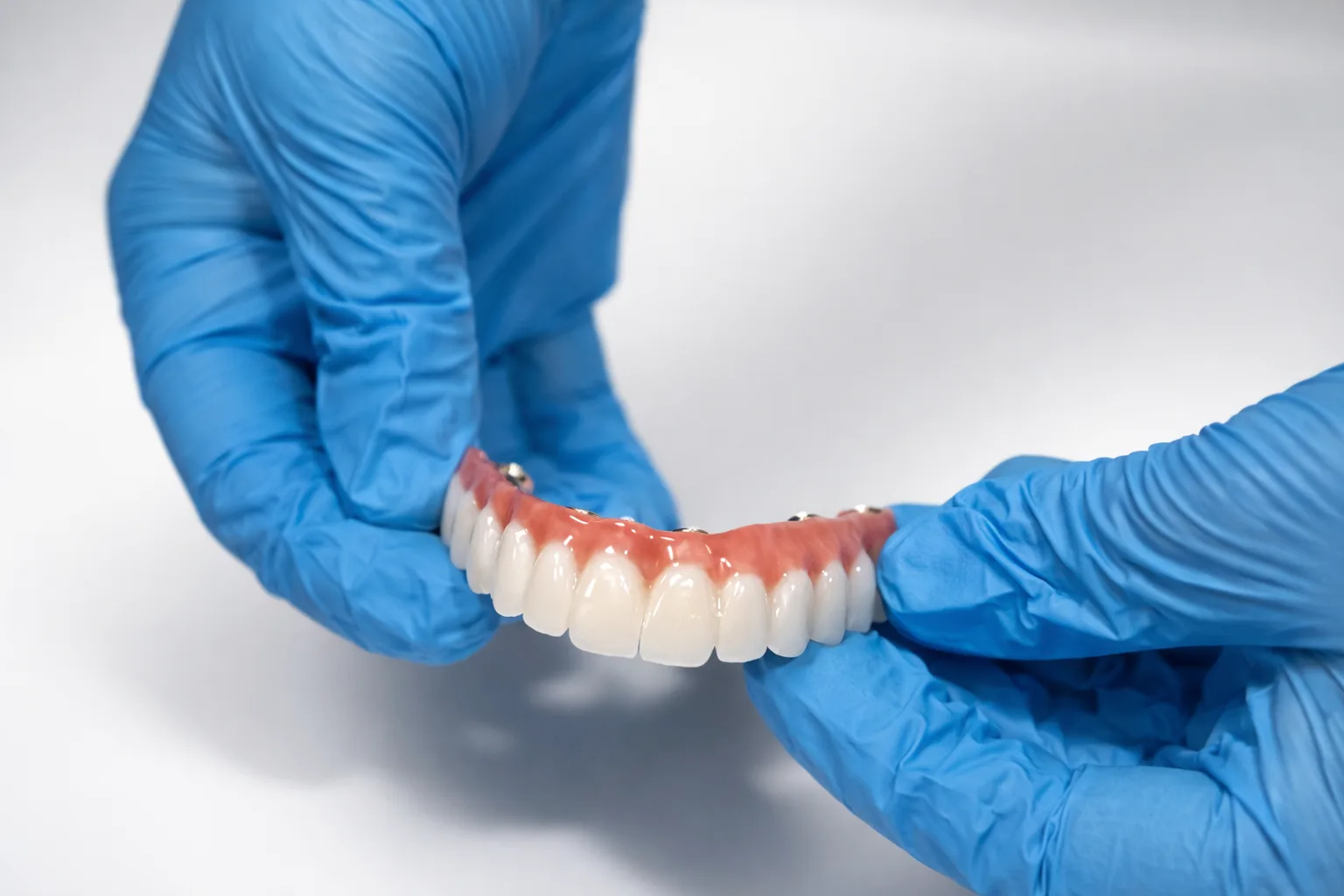
Materials follow the same logic: medical-grade titanium posts for their long track record under load, with crown materials chosen for the site — this is one place where zirconia's strength earns its keep.
What it costs and how to plan
At Fusion Dental Implants, a single implant starts at $1,850 — an all-inclusive written figure quoted after a free consultation and 3D CBCT scan, with a price match guarantee for comparable local quotes. Multi-tooth configurations are quoted the same transparent way, and patients commonly stack an insurance contribution, pre-tax HSA or FSA dollars, and monthly payment plans — including 0% financing for qualified patients through third-party lenders.
If you're comparing against a bridge quote, read our implant vs. bridge comparison first — depending on your case, the long-term picture can look different once you account for what each option asks of your remaining teeth over time.
In-House Dental Lab | Same-Day New Teeth | Transparent All-Inclusive Pricing | Lifetime Full-Arch Warranty | Price Match Guarantee
Find out what your gap actually needs
Whether your situation is one missing molar or a free-end gap that's been empty for years, the starting point is the same: a free consultation with 3D CBCT imaging at our Roseville or El Dorado Hills office. You'll leave with an assessment of your options, the configuration your bone supports, and an all-inclusive written price.
Frequently Asked Questions
Do I really need to replace a back tooth nobody can see?
Replacement is generally recommended, because the problems a missing back tooth causes aren't cosmetic. Neighboring teeth can tilt into the gap, the opposing tooth can drift out of its socket (supra-eruption), chewing load shifts onto teeth that weren't built for it, and the jawbone under the gap typically begins to shrink without a root stimulating it.
What happens if I just leave the gap?
Commonly, the teeth beside the gap tilt and the opposing tooth over-erupts, which can alter your bite over time. The jawbone in the area also tends to resorb without stimulation. None of this happens overnight — but the longer a gap sits, the more likely the eventual fix involves more than a single implant, sometimes including bone grafting.
Can implants replace several missing back teeth?
Yes, and you generally don't need one implant per missing tooth. Two implants can support a three-tooth implant bridge, for example. The right configuration depends on how many teeth are missing, where, and what your bone supports — which is what the 3D CBCT scan determines.
What is a free-end gap and why does it matter?
A free-end gap means your back-most teeth are missing, so there's no tooth behind the space to anchor a conventional bridge — a bridge needs support on both ends. Historically that left removable partial dentures as the main option. Implants changed that: they anchor in the bone itself, so no back tooth is needed.
Are back tooth implants different from front tooth implants?
The engineering priorities differ. Back teeth handle your heaviest chewing forces, so surgeons typically favor stability — often wider-diameter implants where bone allows — and plan placement angles against the opposing teeth using 3D imaging. Front teeth prioritize aesthetics; back teeth prioritize structural integrity.
Will I need a sinus lift for an upper back tooth implant?
Sometimes. Upper molars sit close to the sinus cavities, and if the bone between is too thin, a sinus lift adds height so the implant has enough to anchor into. It's a well-established procedure, but whether you need one is an anatomy question — your CBCT scan answers it before anything is scheduled.
What does a back tooth implant cost at Fusion Dental Implants?
A single implant starts at $1,850 — an all-inclusive figure quoted in writing after a free consultation and 3D CBCT scan, with a price match guarantee for comparable local quotes and 0% financing for qualified patients through third-party lenders. Multi-tooth configurations are quoted the same transparent way.
How long do implants for back teeth last?
The implant post is designed as a long-term replacement root — with healthy integration and good hygiene, implants commonly serve for decades. The crown on top endures your heaviest bite forces, so like a natural tooth's enamel, it can eventually show wear and may need maintenance over time. Regular checkups protect both.
This article is for general patient education and is not medical advice. Outcomes and candidacy vary by individual; consult Dr. Antipov or your dental professional for guidance specific to your situation.
Sources: FDA: Dental Implants — What You Should Know · NIH/NIDCR: Oral Health Topics
About Fusion Dental Implants: We specialize in advanced dental implant solutions with locations in Roseville and El Dorado Hills, California.
Related reading:
Ready to Transform Your Smile?
Schedule your free consultation today and discover how dental implants can change your life.