Types of Permanent Dental Implants: Which Kind Fits Your Case?
Medically reviewed byDr. Alexander Antipov— 2026-08-18
Standard endosteal implants — titanium posts set in the jawbone — are the type commonly placed today, and the real decision is usually what gets attached to them: a single crown, a multi-tooth bridge, a snap-in overdenture, or a fixed full-arch bridge. Specialized implant types (mini, zygomatic) exist for specific anatomical situations, but they're the exception. This guide sorts the whole landscape so the jargon stops being a barrier.
The path: Free consultation + 3D CBCT scan → the surgical team assesses bone and bite → written all-inclusive quote for the restoration type that fits your case
First, untangle two questions people usually mix together
"Types of dental implants" actually covers two separate choices:
- The implant type — the hardware anchored in bone. This is mostly a clinical call based on your anatomy.
- The restoration type — the teeth attached to that hardware. This is where cost, lifestyle, and preference genuinely come into play.
Much of the confusion around implant options comes from blending the two. We'll take them in order.
Implant types: the hardware in the bone
- Standard endosteal implants. The workhorse of modern implant dentistry: a threaded titanium post placed in the jawbone, which typically fuses with the bone over a few months (osseointegration). These are typically used across the full range of cases, from single teeth through full arches.
- Mini dental implants. Narrower-diameter posts that can suit thinner ridges and are commonly used to help stabilize dentures with a less involved procedure. For restorations expected to carry heavy long-term chewing loads, standard-diameter implants are generally the more widely used choice — our mini vs standard implants comparison covers the tradeoffs.
- Zygomatic implants. Much longer posts anchored in the cheekbone, generally reserved for severe upper-jaw bone loss where standard placement would first require extensive grafting. They're a specialized solution for a minority of cases — see our zygomatic implants guide.
- Subperiosteal implants — frames placed under the gum on top of the bone — are largely a historical footnote; modern grafting and zygomatic techniques have made them rare.
If that list feels short, that's the point: for many patients, the implant type isn't really the decision. Bone condition matters more — and even significant bone loss can often be addressed with grafting rather than exotic hardware.
Restoration types: the teeth on top
This is the choice that shapes your daily life and your budget:
| Restoration | What it is | Removable? | Fusion price |
|---|---|---|---|
| Single implant crown | One implant, one crown — no grinding down neighbors | No | Starts at $1,850 all-inclusive |
| Implant bridge | Commonly two implants supporting three or more teeth | No | Quoted after CBCT scan |
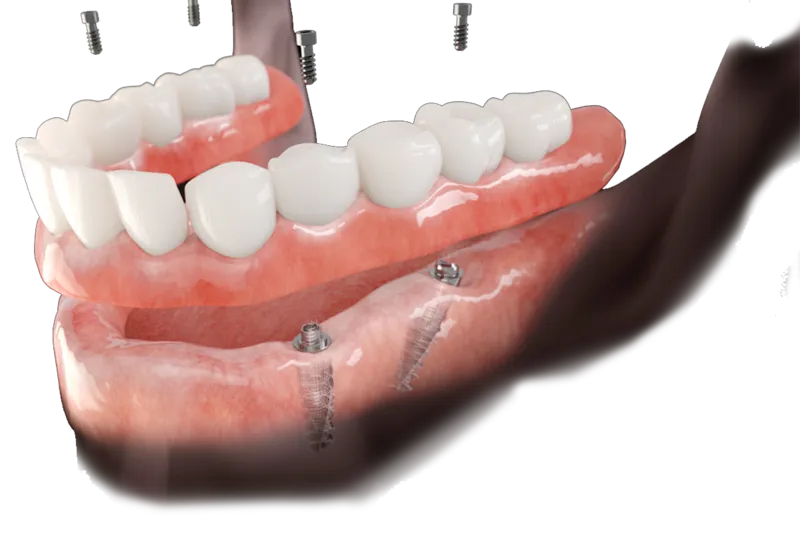
| Snap-On Dentures | Implant-retained overdenture that clips on and off | Yes — for cleaning | $9,999 per arch |
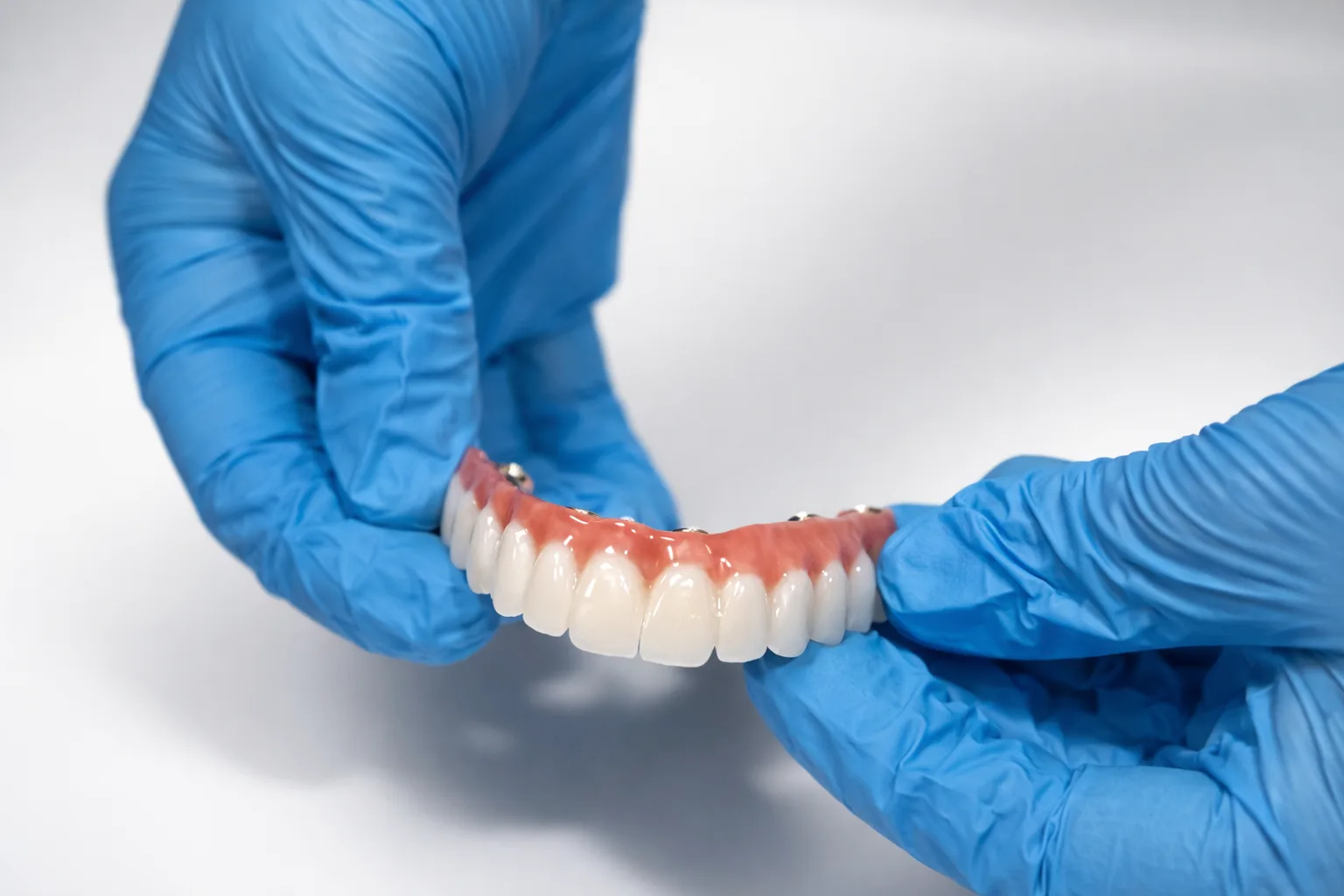
| Fixed full-arch (All-on-4) | Full arch of teeth fixed to four or more implants | No — only a dentist removes it | $17,999 per arch, lifetime warranty |
A few clarifications the table can't hold:
- "Permanent" has a nuance with snap-ins. The implants are permanent; the overdenture is removable by design. Some people value taking it out to clean; others want teeth that never leave their mouth. Our fixed vs snap-in comparison walks through that decision in depth.
- Implant count isn't a quality score. All-on-4 supports a full fixed arch on four implants, often tilting the back posts to use available bone; some cases warrant more. What your arch needs is an anatomy question — the All-on-4 vs All-on-X comparison explains how surgeons decide.
- Single implants protect the neighbors. Unlike a traditional bridge, an implant crown doesn't require reshaping adjacent healthy teeth — a key reason implants are often favored for replacing individual teeth.
How the choice actually gets made
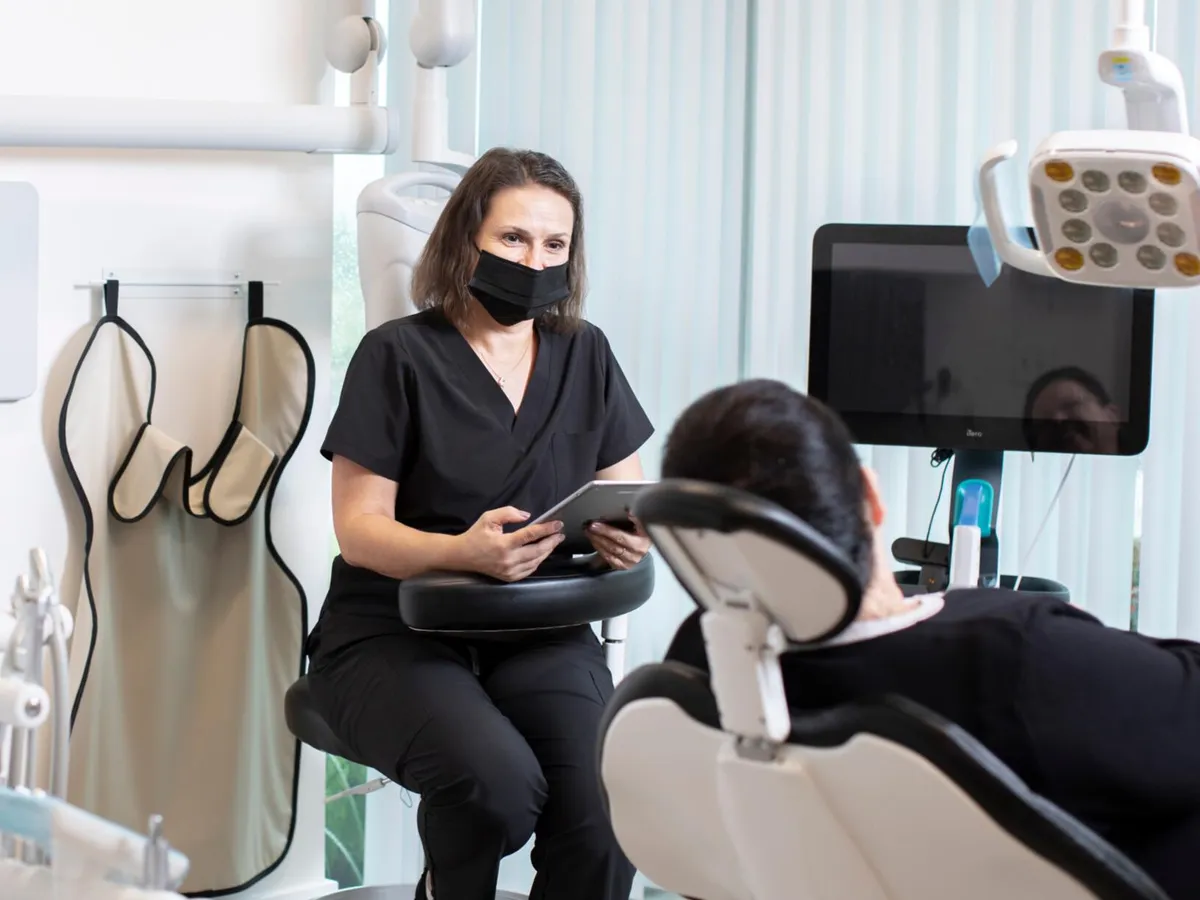
Not from a blog post — from imaging and an exam. A 3D CBCT scan helps the surgical team assess bone height, width, and density; the clinical evaluation adds your bite, health history, and goals. From there, the recommendation is often simpler than expected: commonly standard implants, in whatever configuration your situation calls for, with grafting considered where the scan supports it.
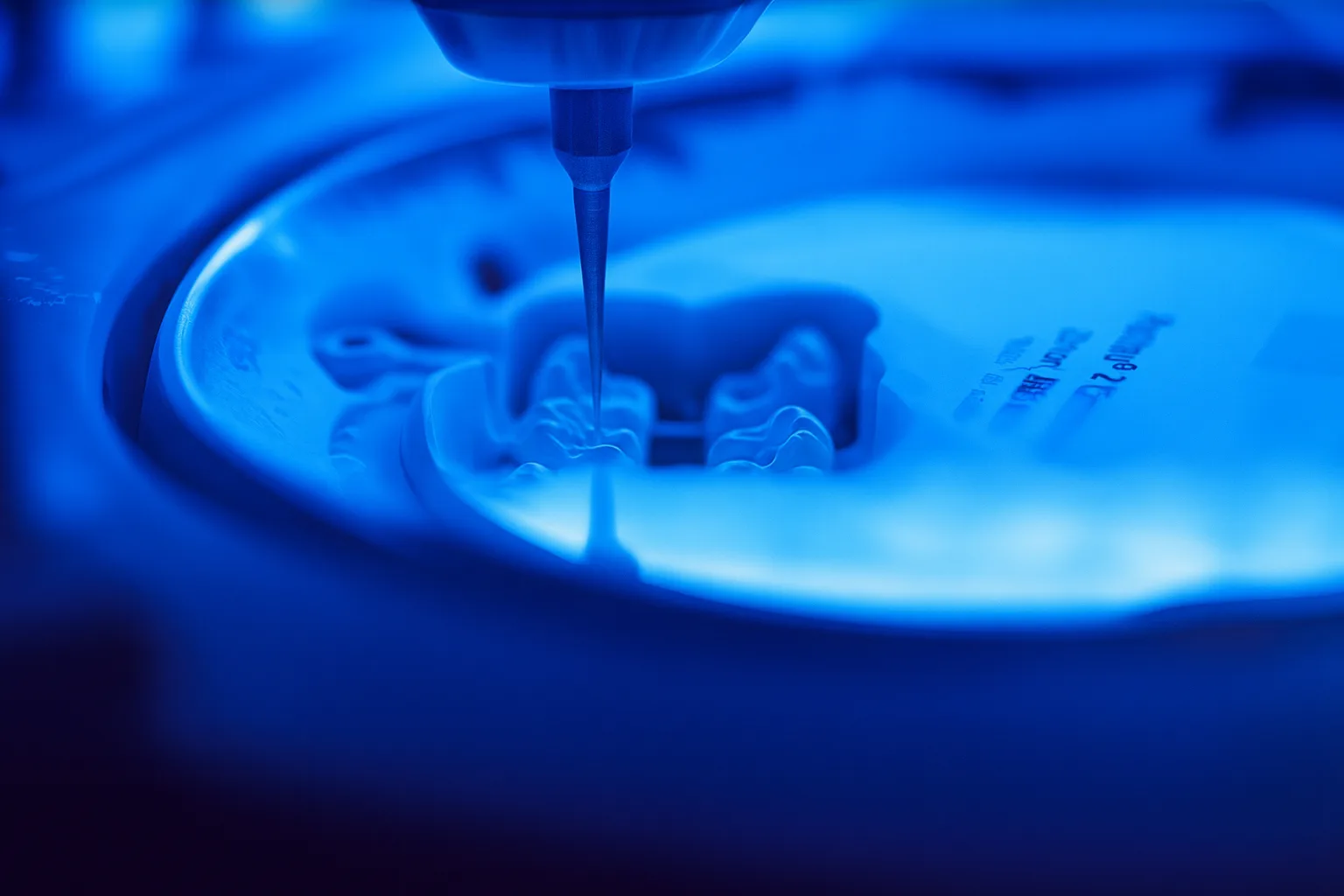
At Fusion Dental Implants, that assessment is part of a free consultation — CBCT scan included — and treatment plans come with a written all-inclusive quote. A price match guarantee applies to comparable local quotes, and 0% financing is available for qualified patients through third-party lenders. For qualifying full-arch cases, an in-house dental lab supports same-day delivery of a fixed provisional arch, with timing dependent on implant stability achieved at surgery.
In-House Dental Lab | Same-Day New Teeth | Transparent All-Inclusive Pricing | Lifetime Full-Arch Warranty | Price Match Guarantee
One roof, every type
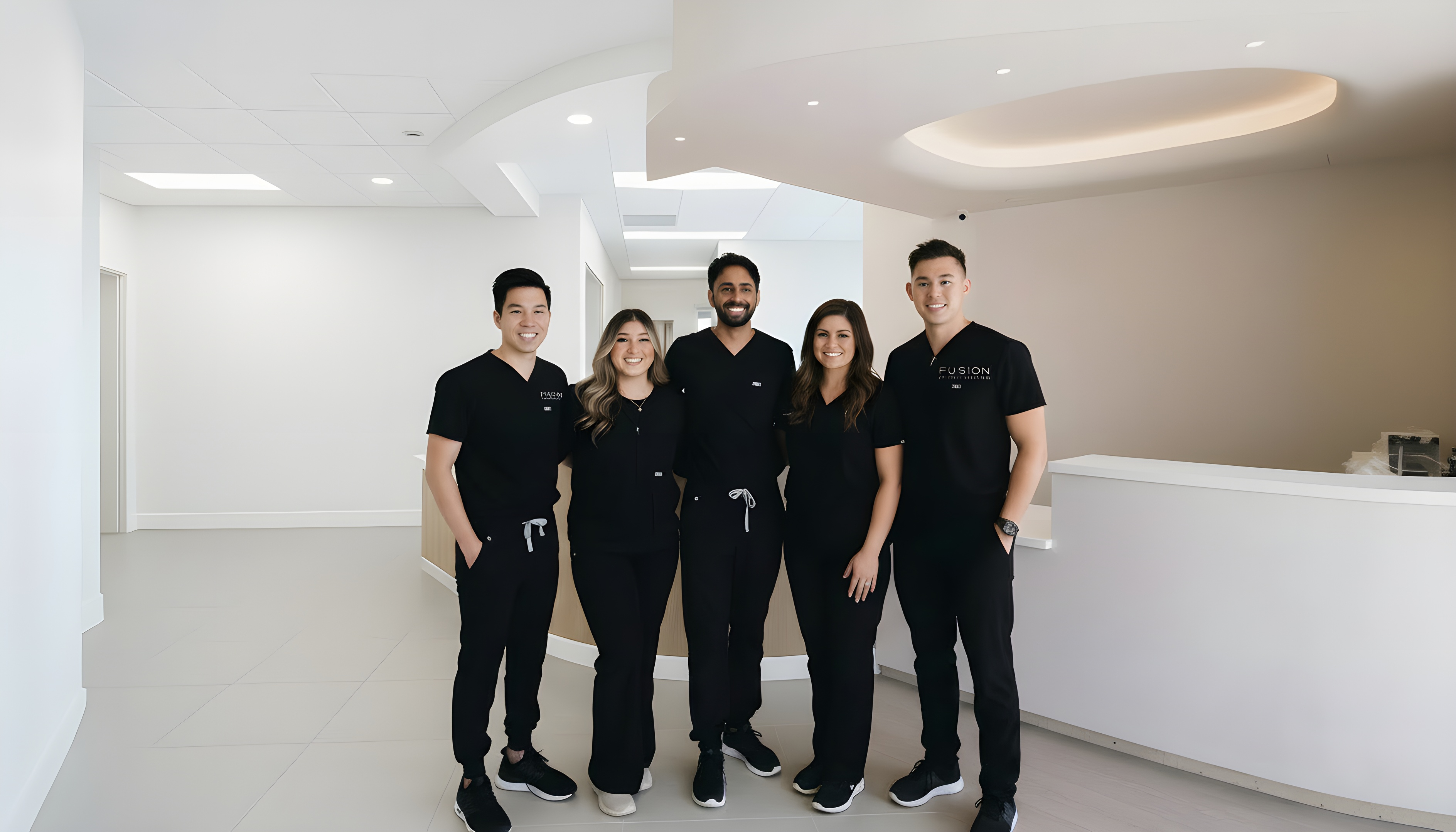
Because Fusion's offices in Roseville and El Dorado Hills handle the full range — single crowns, bridges, Snap-On Dentures, and fixed full-arch restorations, with 3D CBCT planning, IV sedation, and an in-house lab — every restoration type is on the table when your options are discussed. If you've been trying to decode implant types from search results, a free consultation replaces the guesswork with a scan, an exam, and a number in writing.
Frequently Asked Questions
What are the main types of permanent dental implants?
Standard endosteal implants — titanium posts set directly in the jawbone — are the type commonly placed today. Variations exist for specific situations: mini implants (narrower posts, often used to stabilize dentures), and zygomatic implants (longer posts anchored in the cheekbone for severe upper-jaw bone loss). The bigger practical distinction is usually what goes on top: a single crown, an implant bridge, a snap-in overdenture, or a fixed full-arch bridge.
What's the difference between an implant type and a restoration type?
The implant is the post placed in (or anchored to) the bone; the restoration is the tooth or teeth attached to it. In practice, treatment decisions often come down to the restoration — one crown on one implant, a bridge on two implants, or a full arch on four or more — while the implant type itself is typically standard endosteal unless anatomy calls for something else.
Are snap-in dentures a permanent dental implant option?
Partly. The implants themselves are permanent fixtures in the jaw, but the overdenture that clips onto them is removable — you take it out for cleaning. That's different from a fixed full-arch bridge, which only a dentist removes. Both are implant-supported; whether removability is a feature or a drawback is largely personal preference and budget.
How many implants does a full arch of permanent teeth need?
Commonly four to six per arch. The All-on-4 protocol supports a fixed full-arch bridge on four implants, with the back implants often tilted to use available bone; some cases use more implants for additional support. The right number depends on bone volume and bite forces, which the surgical team assesses from a 3D CBCT scan and clinical exam.
What are zygomatic implants and who needs them?
Zygomatic implants are significantly longer posts anchored in the zygomatic (cheek) bone instead of the upper jaw. They're generally considered when severe upper-jaw bone loss would otherwise require extensive grafting before standard implants could be placed. They're a specialized option for a minority of cases — most patients, even with meaningful bone loss, can be treated with standard implants, sometimes after grafting.
Are mini dental implants as good as standard implants?
They serve different roles. Mini implants are narrower, which can allow placement in thinner ridges with a simpler procedure, and they're commonly used to help stabilize dentures. For single crowns and fixed bridges expected to carry full chewing loads long-term, standard-diameter implants are generally the more widely used choice. A consultation determines which suits your bone and goals.
What do the different permanent implant options cost?
At Fusion Dental Implants, pricing is all-inclusive and published: a single implant starts at $1,850 (implant, abutment, and crown), Snap-On Dentures are $9,999 per arch, and fixed full-arch All-on-4 treatment is $17,999 per arch with a lifetime warranty on full-arch restorations. Every plan starts with a free consultation that includes a 3D CBCT scan, and a price match guarantee applies to comparable local quotes.
How do I find out which type of implant I need?
Imaging plus an exam. A 3D CBCT scan helps the surgical team assess bone height, width, and density, and a clinical evaluation covers your bite, health history, and goals. From there you get a written recommendation — which may be simpler than you expect, since most cases are handled with standard implants and the choice mostly concerns the restoration on top.
This article is for educational purposes only and is not a substitute for professional medical advice, diagnosis, or treatment. Always consult a qualified dental professional about your specific situation.
Sources:
- U.S. Food & Drug Administration — Dental Implants: What You Should Know
- National Institute of Dental and Craniofacial Research — Oral Health Information
About Fusion Dental Implants: Fusion Dental Implants provides surgeon-led dental implant care at offices in Roseville and El Dorado Hills, California — including single implants, implant bridges, Snap-On Dentures, and full-arch All-on-4 restorations. With an in-house dental lab, 3D CBCT imaging, IV sedation, transparent all-inclusive pricing, and a lifetime warranty on full-arch restorations, patients can complete every phase of treatment under one roof. Free consultations include a 3D CBCT scan. Call (916) 292-9998 or book online.
Related reading:
Ready to Transform Your Smile?
Schedule your free consultation today and discover how dental implants can change your life.